
Apindo: National electric motorbike could make manufacturing the main economic driver
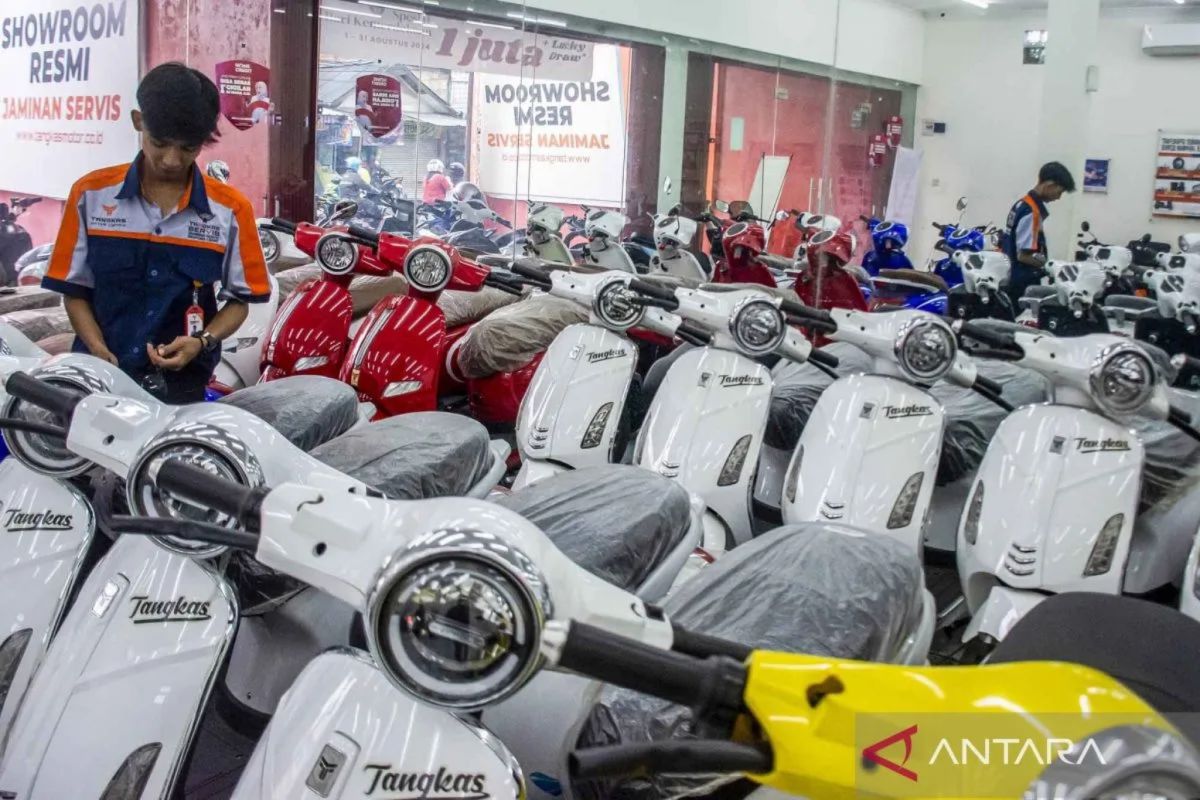
Jakarta (ANTARA) - Ajib Hamdani, economic policy analyst at the Indonesian Employers’ Association (Apindo), believes President Prabowo Subianto’s plan to launch a national electric motorcycle could be an important moment to revitalise the manufacturing sector as the main driver of the national economy.
According to him, the initiative has the potential to advance the reindustrialisation process that Indonesia has long needed, amid the manufacturing sector’s still low contribution to gross domestic product (GDP).
“This is certainly a breath of fresh air so that the manufacturing sector can be revitalised and become the locomotive driving the national economy, as well as a sector that absorbs quality labour,” said Ajib in a statement issued in Jakarta on Tuesday.
Ajib explained that the manufacturing sector’s contribution to Indonesia’s GDP currently stands at around 19.2 per cent. According to him, this situation shows that Indonesia still faces the challenge of deindustrialisation, so job creation and increased industrial value-added have not been optimal.
He believes the target of economic growth above six per cent and the creation of 19 million jobs over five years will be difficult to achieve if the manufacturing sector’s contribution to GDP remains below 20 per cent.
By comparison, Ajib cited Vietnam, which has developed its manufacturing sector through regulations supporting domestic industry and the creation of more competitive business costs.
As a result, manufacturing’s contribution to GDP in that country has exceeded 23 per cent, and in some sectors has reached 30 per cent.
While welcoming the government’s plan positively, Ajib believes the success of the national electric motorcycle programme depends heavily on implementation at the ministerial and institutional level.
According to him, a national electric motorcycle must not only be produced domestically, but must also have high local content and be able to build a domestic supply chain.
“To be called a national electric motorcycle and deliver a trickle-down effect for small and medium industries, the product must meet at least two elements. First, it must have a Domestic Component Level (TKDN) of more than 50 per cent, including local intellectual property, for example the chassis, body pack, wiring, and so on,” Ajib explained.
In addition, he said the development of the national electric motorcycle must involve small and medium industries as part of the supply chain, including cooperatives and automotive component businesses.
That way, the economic benefits of the project can be felt more widely by the public.
Furthermore, he identified at least three main benefits once the electric motorcycle is realised. First, the vehicle can be designed according to people’s needs, so that it is not only a means of transport but also supports productive economic activity.
Second, the use of electric motorcycles is considered capable of reducing exhaust gas emissions by more than 95 per cent, in line with the government’s agenda to promote a green economy.
Third, the programme has the potential to reduce the burden of fuel subsidies. With the number of motorcycles in Indonesia estimated to have reached more than 145 million units, the shift to electric vehicles is expected to significantly reduce subsidised fuel consumption.
Ajib also reminded the government to ensure the national electric motorcycle is genuinely the result of domestic industrial development and not merely a foreign product given a local brand.
“If Indonesia can genuinely produce a national electric motorcycle, this will be a moment for reindustrialisation to build a strong domestic economic ecosystem and drive economic growth above 6 per cent,” Ajib concluded.