
Apindo Hopes Suahasil Will Enhance Fiscal Credibility and Sustainability
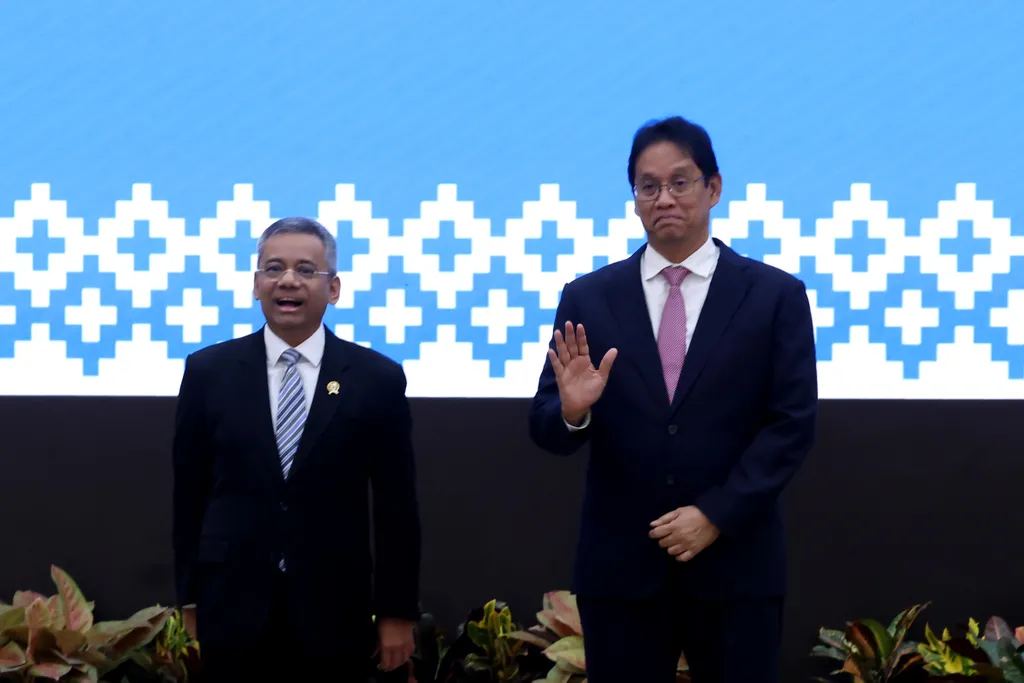
JAKARTA, KOMPAS — The business community hopes the change of finance minister will not abruptly alter the direction of fiscal policy. Policy certainty is considered essential for maintaining the trust of business actors and investors amid global economic uncertainty.
Chairwoman of the Indonesian Employers Association (Apindo), Shinta Kamdani, said the replacement of the finance minister is the President’s prerogative to ensure the effectiveness of government. However, she hopes the transition will preserve the credibility of fiscal management and policy certainty.
“What matters most to us is that this leadership transition proceeds smoothly while maintaining the credibility of fiscal management, certainty in policy direction, and the trust of business actors and investors in the Indonesian economy,” Shinta said in a written reply to Kompas on Tuesday (15/9/2026).
Shinta believes Suahasil Nazara’s experience in national fiscal policy management can help the transition. Suahasil previously served as Deputy Finance Minister and as Head of the Fiscal Policy Agency at the Ministry of Finance.
“In an economic situation full of uncertainty like today, we hope this continuity can help ensure the leadership transition does not bring about changes in policy direction that are too abrupt,” Shinta said.
The business community also emphasised the importance of balancing fiscal health with the need to drive economic growth. The state budget (APBN) must continue to be managed prudently and sustainably while also sustaining purchasing power, encouraging investment, raising productivity, and strengthening the real sector.
Shinta said policy predictability is vital for businesses making decisions, particularly regarding taxation, customs, investment incentives, government spending, and fiscal policies affecting business costs.
Therefore, any change in fiscal policy should be measured and accompanied by communication and dialogue with the business community. This is necessary so companies have certainty when drawing up investment and expansion plans.
The challenges facing the next finance minister, according to Shinta, are not light. The government must finance numerous development priorities while maintaining fiscal space and the credibility of the APBN amid global uncertainty.
Spending quality, the effectiveness of state revenues, fiscal discipline, and market confidence all require attention. Revenue policy should not be oriented solely towards short-term revenue increases but must consider the competitiveness and capacity of productive sectors to grow.
“For the business community, the measure is not merely the change of figure, but the consistency and quality of policy after the transition,” Shinta said.
The business community is optimistic that the trust of businesses and investors can be maintained if fiscal management is credible and prudent, policy is predictable, and the APBN effectively supports economic activity and investment.
Wijayanto Samirin, an economist at Paramadina University, considers the change of finance minister a positive step. According to him, Suahasil is an experienced bureaucrat who can provide stability in management and improve fiscal policy coordination.
“However, fiscal policy transformation will only proceed if Suahasil is given the authority and latitude to innovate in policy,” Wijayanto said.
The President’s message to Suahasil to safeguard the credibility of the APBN while simultaneously steering the government’s strategic programmes is no easy task. The two agendas may conflict if strategic programmes are not matched with fiscal capacity.
On the other hand, the government needs to end policies that could add pressure on the business world. The withholding of tax refunds and aggressive tax collection involving law enforcement are considered disruptive to company operations while worsening the investment climate.
For the 2027 state budget, Wijayanto believes there is still room for adjustment because budget deliberations will only be approved at the end of October.
Several basic assumptions — such as the rupiah exchange rate, the yield on 10-year government bonds, world oil prices, economic growth, and inflation — need to be reviewed as they are considered overly optimistic.
If changes to the assumptions cannot be made before the budget is ratified, Wijayanto said Suahasil needs to prepare adjustment scenarios through changes to the budget’s posture by presidential regulation, revision of budget implementation documents (DIPA), and automatic adjustment mechanisms.
Nevertheless, Wijayanto believes several policies initiated by Purbaya need to be continued. These include the eradication of illegal cigarettes, reform of the Directorate General of Customs and Excise, and strengthened governance of the Directorate General of Taxes.
In the industrial sector, fiscal policy reform is also considered important to prevent deeper premature deindustrialisation. This condition not only hampers the growth of state revenue and the creation of quality jobs, but also suppresses the economy’s competitiveness.
“The finance ministry is only a small screw in a large system in the context of industrialisation, but it is a very important screw — indispensable,” Wijayanto said.
Wijayanto views legal and regulatory uncertainty as one of the root causes of deindustrialisation. This condition makes investors tend to choose sectors with short supply chains, particularly primary sectors based on natural resources.
“For sophisticated products, investors choose other countries, such as Singapore, Malaysia, and Vietnam, which offer greater certainty,” he said.
According to him, this means Indonesia still depends on commodity exports, which account for around 60 per cent of total exports. The employment structure is also still dominated by the informal sector, estimated at 60–70 per cent, so it has not yet delivered optimal welfare.
Industrialisation requires comprehensive policy reform — monetary, fiscal, and sectoral. On the fiscal side, tax policy needs to be made simple, clear, and supportive of manufacturing industry through incentives.
Meanwhile, sectoral policy needs to be more consistent and competitive, particularly regarding labour, local content requirements (TKDN), and logistics.
Source: jawawa.id (https://jawawa.id/newsitem/apindo-hopes-suahasil-will-enhance-fiscal-credibility-and-sustainability-1789487427)
Originally published by kompas.id (https://www.kompas.id/artikel/tantangan-menkeu-baru-ciptakan-kepastian-berusaha?open_from=Section_Berita), translated from Indonesian