
Apindo Highlights Potential for Labour Bill to Hinder Investment and Job Creation
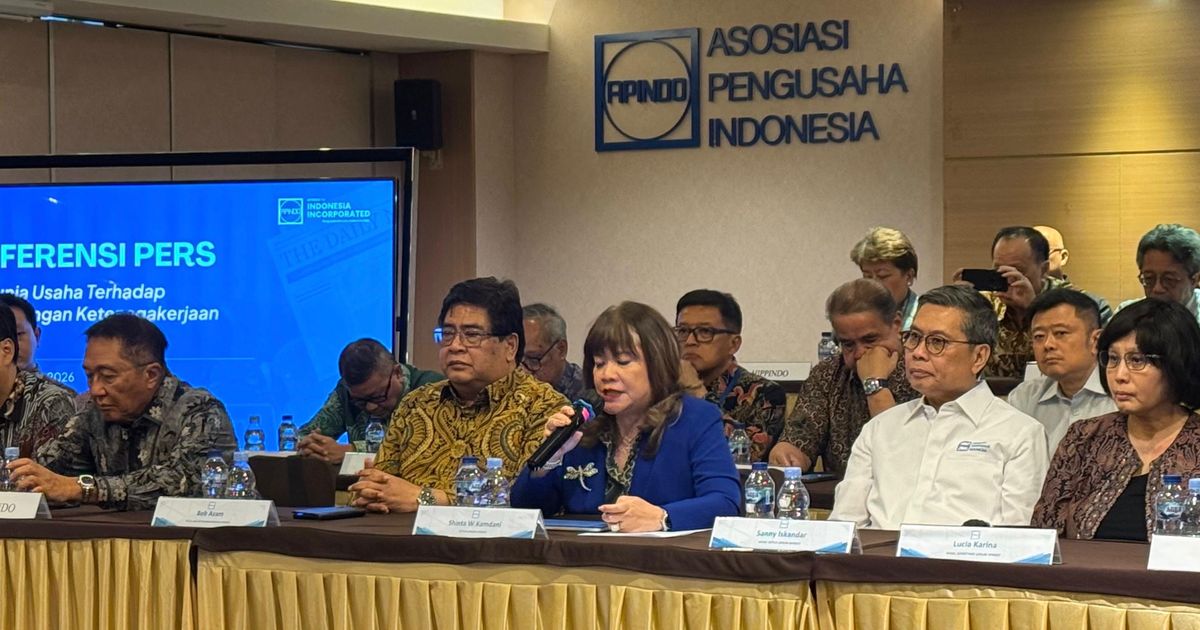
The Indonesian Employers Association (Apindo) has expressed concerns that the contents of the Draft Labour Protection Bill could potentially hinder investment and job creation if passed without substantive updates tailored to current economic and labour market conditions.
The business community believes the Bill does not yet fully address cross-sectoral labour challenges. One issue highlighted is the tendency to revert to certain regulations from Law Number 13 of 2003 concerning Manpower, which is deemed inadequate for facing the changes in the business world over the last two decades.
Apindo General Chair, Shinta W. Kamdani, stated that labour reform must consider the balance between worker protection, the expansion of job opportunities, and business sustainability.
“Workers need certainty regarding rights and decent income. Job seekers need opportunities. To meet both, companies must be able to survive, invest, and recruit. If regulations instead narrow that capability, it will impact workers and their families who bear the consequences,” Shinta said on Wednesday (30/09/2026).
According to Apindo, the challenges facing the business world today are increasingly complex, ranging from geopolitical uncertainty, changes in global supply chains, and competition to attract investment, to the demand for increased productivity. On the other hand, technological changes, the green transition, and climate change are also driving changes in production processes, business models, and worker skill requirements.
These pressures occur as Indonesia faces the entry of approximately 3-4 million new members of the workforce every year, high youth unemployment, a large informal workforce, low worker competency, and widespread layoffs (PHK).
The business world also faces rising energy and raw material costs, weakening global and domestic demand, the potential for rising loan interest rates, and pressure on public purchasing power.
Apindo believes these conditions mean that labour policy cannot focus solely on increasing obligations for companies, restricting employment relationships, or expanding sanctions.
New provisions, according to Apindo, need to be tested against the ability of companies to maintain jobs, expand, and recruit new workers, while considering the characteristics of each sector and business scale.
Apindo considers the sustainability of investment to be a key factor in expanding formal employment. Based on data from the Ministry of Investment and Downstreaming/BKPM, investment realisation in the first half of 2026 reached Rp1,010.6 trillion and absorbed 1,448,862 Indonesian workers.
From those figures, there is an aggregate of approximately 1,434 workers absorbed for every Rp1 trillion of investment. However, Apindo emphasises that this ratio is influenced by sectoral composition and investment characteristics.
Shinta stated that the government needs to maintain investment momentum while simultaneously encouraging growth in sectors with a greater capacity to absorb labour.
“Job creation requires real investment. We must attract new investment while ensuring that companies already in operation can expand their businesses. We must not allow labour policies to hinder both when the public needs more formal jobs,” she asserted.
Source: jawawa.id (https://jawawa.id/newsitem/apindo-highlights-potential-for-labour-bill-to-hinder-investment-and-job-creation-1790794413)
Originally published by investortrust.id (https://investortrust.id/business/117958/apindo-soroti-potensi-ruu-ketenagakerjaan-hambat-investasi-dan-lapangan-kerja), translated from Indonesian