
APINDO Highlights Investment Challenges in Central Sulawesi: Regulation and Tax Burdens
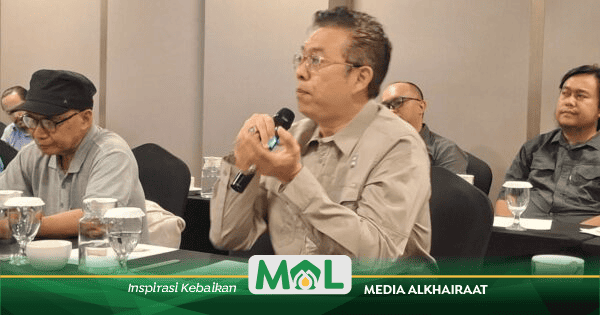
The Chairman of the Central Sulawesi Provincial Leadership Board of the Indonesian Employers’ Association (APINDO), Wijaya Chandra, stated on Thursday (23/05) that the business community continues to face significant investment challenges that are hindering regional economic growth. These remarks were made during a Multi-Stakeholder Discussion titled ‘Decentralisation Policies for Energy Management and Their Impact on Economic and Environmental Improvement in Central Sulawesi’, organised by the Indonesian Parliamentary Center (IPC) and the Palu City Alliance of Independent Journalists (AJI) at the Aston Hotel, Palu.
According to Wijaya Chandra, one of the primary investment challenges for business actors is not only economic slowdown but also the need to improve the quality of human resources. Furthermore, an increasingly heavy tax burden and frequent regulatory changes are further complicating the business climate in the region. This regulatory uncertainty, Wijaya noted, makes it difficult for businesses to develop effective long-term plans. He highlighted changes in regulations regarding ‘Galian C’ mining permits and the provisions for the Work Plan and Budget (RKAB) as concrete examples of these investment hurdles.
“Many business actors who have already invested are now forced to halt activities because the implementation of rules lacks clarity,” said Wijaya Chandra. Consequently, several construction projects have been delayed, material distribution has been disrupted, and some companies have been forced to reduce operations, adding to the list of investment challenges. He emphasised that the government needs to provide regulatory certainty to ensure investment is not impeded.
APINDO, Wijaya Chandra continued, frequently expresses objections during minimum wage discussions, as increases in the regional minimum wage (UMR) are not always aligned with economic growth. Meanwhile, increasing tax pressures are making business efficiency increasingly difficult for entrepreneurs to achieve. Additionally, Wijaya criticised the high cost of distribution caused by the difficulty of obtaining subsidised fuel (BBM). He stated that many business actors are forced to purchase fuel at prices far above the official rate.
The government is also urged to consider the environmental impact of mining activities. “Environmental guarantee funds, which are part of a company’s obligations, must truly be utilised for restoration in the event of environmental damage,” said Wijaya Chandra. Concluding his statement, Wijaya Chandra emphasised that not all entrepreneurs commit violations. “We hope the government can distinguish between business actors who comply with the rules and those proven to have broken the law,” asserted the Chairman of APINDO Central Sulawesi. “Entrepreneurs who operate compliantly are often the ones bearing the impact of policies that fail to provide certainty,” he added, expressing hope that the government will create a fair and supportive business climate.
Source: jawawa.id (https://jawawa.id/newsitem/apindo-highlights-investment-challenges-in-central-sulawesi-regulation-and-tax-burdens-1785433845)
Originally published by media.alkhairaat.id (https://media.alkhairaat.id/apindo-soroti-tantangan-investasi-sulteng-regulasi-beban-pajak/), translated from Indonesian