
Apindo: DSI Can Strengthen Export Governance Without Burdening Businesses
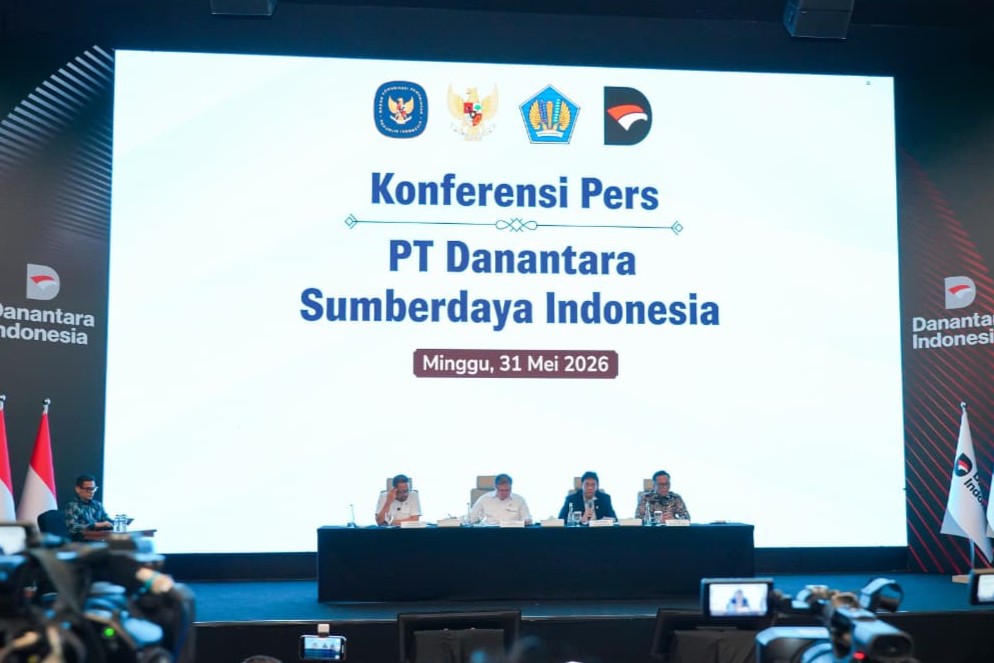
The Indonesian Employers Association (Apindo) believes that PT Danantara Sumberdaya Indonesia (DSI) can strengthen the governance of strategic commodity exports, provided that its implementation does not impose new burdens on the business world.
Apindo’s Vice Chairman for Public Policy, Chandra Wahjudi, stated that DSI can assist in export supervision through data integration and risk analytics. According to him, such an approach is essential to suppress under-invoicing practices without creating additional layers of licensing.
“DSI can help suppress under-invoicing through data integration and risk analytics, without adding licensing layers,” Chandra said in an official statement received in Jakarta on Thursday.
Chandra emphasised that the strengthening of export governance must be accompanied by procedural certainty and a space for clarification for exporters. This is necessary to ensure that export supervision operates effectively without disrupting the investment climate.
He noted that all of DSI’s operational mandates must have a clear and accountable legal basis, and be executed without increasing the administrative burden on business actors.
Apindo also views DSI’s commitment to recruiting professional talent from the market positively. Chandra believes this step can strengthen the institution’s technical capacity in performing its supervisory functions.
“DSI’s commitment to recruiting the best professionals available in the market is a positive signal. This also shows that DSI intends to work professionally and responsively in facing global geopolitical dynamics,” he said.
Nevertheless, Chandra noted that market players are still awaiting the realisation of the recruitment process. Key concerns include the transparency of the selection process, the credibility of the management profile, and clear conflict-of-interest policies.
Chandra explained that DSI can support the enforcement of trade governance if its supervisory system is connected with the banking sector, port authorities, customs, and other relevant parties. Cross-sector data integration is expected to close the loopholes often exploited by non-compliant exporters. At the same time, such a mechanism should not necessitate additional manual processes for businesses that are already compliant.
According to Chandra, active consultation with exporters and associations must continue so that business input is reflected in policy implementation. Thus, supervision can be balanced between national interests and business certainty.
Apindo also views the policy transition period leading up to 1 January 2027 positively. Chandra noted that this transition period provides an adaptation period for businesses. He added that current obligations, which focus on export reporting without altering trade routes, could reduce the risk of regulatory shocks.
Meanwhile, the Coordinating Minister for Economic Affairs, Airlangga Hartarto, stated that DSI will play a role in strengthening export supervision and governance.
“The goal is to prevent practices such as under-invoicing, transfer pricing, and issues related to the flight of export proceeds (DHE),” said Airlangga.
In the initial stage, there are three main commodities to be regulated by DSI: coal, palm oil, and ferroalloys. In 2025, these three commodities are projected to have an export value of US$66.13 billion, or approximately Rp1,187 trillion, equivalent to 23.4% of total national exports.
The government ensures that the implementation of DSI will prioritise business certainty, maintain the smooth flow of goods, respect existing contracts, and consider the interests of trading partners. Through a data-driven and risk-analytical approach, DSI is expected to strengthen the supervision of strategic commodity exports without hindering compliant businesses.