
Apindo Chief Responds to Factory Relocation to Vietnam Issue, Here Are Her Proposals
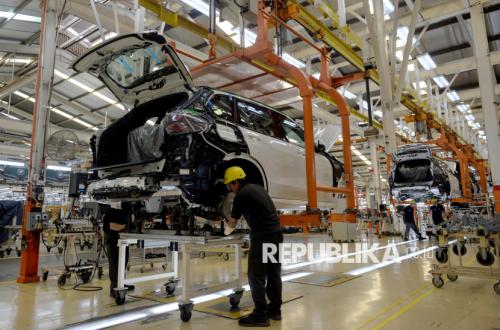
The Chairwoman of the Indonesian Employers’ Association (Apindo), Shinta Kamdani, has spoken out regarding the discourse on relocating part of the automotive component industry’s production from Indonesia to Vietnam. She believes this information needs further verification. “Production relocation decisions are usually very specific and depend on each company’s conditions, global principal strategies, industry type, cost structure, and market demands,” Shinta said when contacted in Jakarta on Tuesday (23/6/2026).
However, generally speaking, beyond this discourse, Apindo sees that competition between countries to attract and retain manufacturing investment is increasingly tight. Looking at trends over the past few years, global companies have also been increasingly consolidating their production networks, including reducing or streamlining production capacity in several countries and centralising it in the most efficient, productive, and strategic locations to serve regional and global markets.
Therefore, Shinta continued, relocation or production consolidation decisions do not always stand alone but are often part of a restructuring of global supply chains and principals’ strategies to adapt to changes in technology, production costs, markets, and industrial policy directions in various countries. She stated that global companies do not only consider one cost aspect but also the readiness of the entire industrial ecosystem, from regulatory certainty, investment incentives, local supply chains, labour productivity, logistics efficiency, availability of industrial land, ease of licensing, to support from authorities in resolving operational obstacles.
“Indonesia actually has a fairly strong manufacturing foundation. One indicator of this is Manufacturing Value Added (MVA),” Shinta continued. In 2024, Indonesia’s MVA value reached approximately 265.07 billion US dollars, placing Indonesia 12th globally and fifth in Asia after China, Japan, South Korea, and India. This means that in terms of industrial scale, Indonesia is not a small player and is one of the important manufacturing bases in the region.
“However, Indonesia’s main challenge today is not just the size of the industry, but the speed of its industrial transformation,” she revealed. In the 2020–2024 period, she continued, Indonesia’s MVA grew by about 16.1 percent, still lower than India’s growth of around 29.2 percent and Vietnam’s growth of about 46.3 percent over the same period. Shinta said this shows that although Indonesia’s manufacturing scale is currently still larger than Vietnam’s, competitor countries in the region are moving more aggressively to strengthen production capacity, supply chains, manufacturing exports, and their industrial ecosystems.
“We continue to observe the movements of competitor countries in the region, such as Vietnam, which is quite aggressive in building an integrated industrial ecosystem, strengthening manufacturing clusters, expanding market access through free trade agreements (FTAs), ensuring regulatory certainty and support, and improving investor services,” Shinta continued. In other words, she added, Indonesia has great capital, but this advantage must be continuously strengthened through policy certainty, consistent and impactful incentives, fast licensing, logistics efficiency, strengthening vocational training, and various other aspects.
Without this transformation, Shinta continued, Indonesia risks being outpaced by countries that are more aggressive in building integrated manufacturing ecosystems that are responsive to the needs of global investors. “Therefore, the step the government needs to take is not only to respond when there is already a relocation plan, but also to strengthen early warning mechanisms and investor aftercare,” she revealed. Shinta said proactive dialogue needs to be continuously conducted with existing companies, including their global principals, to understand the obstacles they face and find solutions before a relocation decision is actually made.
Shinta assessed that Indonesia needs to create momentum to improve the competitiveness of the national manufacturing ecosystem. She invited all parties not only to see relocation as an individual company decision, but also as a signal that Indonesia needs to move faster in strengthening investment certainty, productivity, logistics, licensing, supply chains, and industrial roadmaps so that it remains a competitive production base in the region. “In the spirit of Indonesia Incorporated, Apindo is ready to be the government’s partner to achieve this goal,” Shinta said.
Source: jawawa.id (https://jawawa.id/newsitem/apindo-chief-responds-to-factory-relocation-to-vietnam-issue-here-are-her-proposals-1782269692)
Originally published by Republika (https://ekonomi.republika.co.id/berita/th45w8490/bos-apindo-respons-isu-relokasi-pabrik-ke-vietnam-ini-usulannya), translated from Indonesian