
APINDO Batam Concerned that Labour Bill Could Suppress Investment and Job Creation
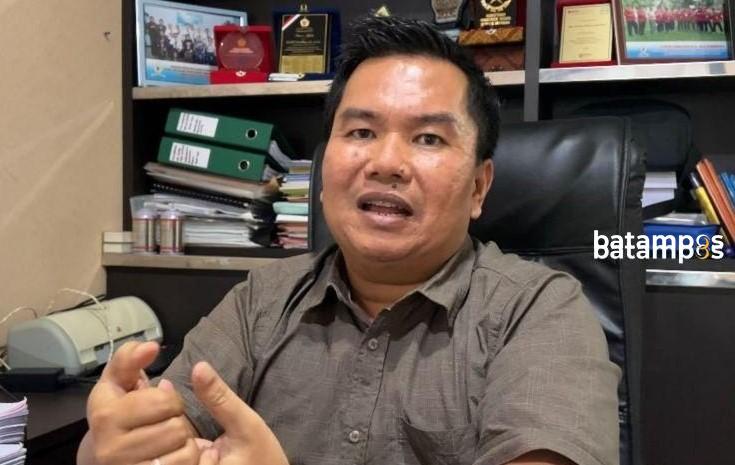
The business community in Batam is highlighting the ongoing discussions regarding the Labour Protection Bill. The regulation is deemed to require a comprehensive review to ensure that worker protections remain effective without adding undue pressure to investment and job creation.
Rafki Rasyid, Chairman of APINability Batam, stated that labour regulations must adapt to current working conditions and industrial challenges. He argued that new rules should not limit a company’s ability to survive, grow, and create employment opportunities.
“This Bill must truly reflect today’s labour conditions and future challenges. We must ensure that the regulations created do not restrict the ability of companies to survive, expand, invest, and open new jobs,” Rafki said on Thursday (1/10).
Rafki noted that the business world is facing several pressures, ranging from changes in global supply chains and investment competition to technological advancements and rising energy and raw material costs.
These conditions are being felt particularly in Batam’s manufacturing sector. According to Rafki, the changing global business landscape and the massive rise of Artificial Intelligence (AI) present significant challenges to the industry.
“Manufacturing in Batam is currently facing heavy pressure from changing business conditions, from the easing of the US-China trade war to the increasingly massive use of Artificial Intelligence (AI),” he said.
He noted that changes in global trade conditions could influence investor decisions and the demand for manufactured products produced in Batam, especially electronics.
One risk that needs to be anticipated, according to Rafki, is the possibility of some investors moving their investments back to China. Simultaneously, the widespread use of AI has the potential to alter the demand for electronic products and hardware.
“What we fear is the possibility of investors returning to China. On the other hand, the increasingly massive use of AI also has the potential to slow down demand for electronic goods,” he said.
Rafki believes that a decrease in demand could impact the manufacturing industry and lead to pressure on labour absorption.
“This means that demand for hardware products from Batam is likely to decrease in the near future. We are certainly concerned that this will impact workforce reductions in Batam,” he said.
He warned that the risk of mass layoffs (PHK) could increase if the pressure on the industry continues.
“If this condition persists, an explosion of layoffs cannot be avoided. Therefore, we hope all parties will assist so that the manufacturing sector in Batat can continue to survive amidst the increasingly difficult current conditions,” Rafki emphasised.
Rafki stated that worker protection and business continuity should not be positioned as two conflicting interests. He believes both must go hand in hand to maintain the creation of formal employment.
“What we hope for is a regulation that can provide protection to workers, but at the same time provides space for companies to adapt to economic and industrial changes,” he said.
He also requested that the implementation of labour rules consider the characteristics of each sector and business scale, noting that the needs of manufacturing, services, and trade are not always identical.
Consequently, APINDO is encouraging the discussion of the Labour Protection Bill to involve the government, Parliament (DPR), employers, and workers substantively.
“Do not look at it from only one side. The voice of the worker is important, but the voice of the business world and job seekers must also be considered. The ultimate goal must be how to expand job opportunities while ensuring worker protection is maintained,” he said.
Rafki assessed that Indonesia’s labour issues are not solely related to industrial relations. Other challenges include the creation of formal jobs, increasing competence, labour productivity, and the high number of workers in the informal sector.
He noted that labour policy must also encourage companies to expand and open new jobs, as investment and business growth are directly linked to the capacity for labour absorption.
Data from the Ministry of Investment and Downstreaming/BKPM, cited by APINDO, recorded that investment realisation in the first half of 2024 reached Rp1,010.6 trillion, absorbing 1,448,862 Indonesian workers.
“Investment and jobs are closely linked. When investment enters and companies grow, there is a need for new labour. Therefore, labour policy must help create a climate that allows companies to continue growing,” said Rafint.
Rafki mentioned that the principle of ‘flexicurity’—a balance between worker protection, labour market flexibility, and business certainty—should be a key consideration in labour reform.
He argued that companies need flexibility to face market and technological changes, but such flexibility must be accompanied by protections for workers.
“Worker protection must be real. Workers’ rights must be fulfilled, social security must be available, and when layoffs occur, there must be a clear protection mechanism. However, companies must also have the space to adapt so they do not lose their ability to create jobs,” he explained.
Beyond regulation, increasing labour competence is also deemed vital. Technological changes mean that worker skills must be continuously updated to meet industrial needs.
Rafki encouraged training and competency certification to be more closely linked to industrial requirements. In doing so, workers will not only secure jobs but also have opportunities to increase productivity and career progression.
Source: jawawa.id (https://jawawa.id/newsitem/apindo-batam-concerned-that-labour-bill-could-suppress-investment-and-job-creation-1791010263)
Originally published by metropolis.batampos.co.id (https://metropolis.batampos.co.id/apindo-batam-khawatir-ruu-ketenagakerjaan-tekan-investasi-dan-lapangan-kerja/), translated from Indonesian