
APHI Pushes for Revival of Papua's Forestry Industry from Upstream to Downstream
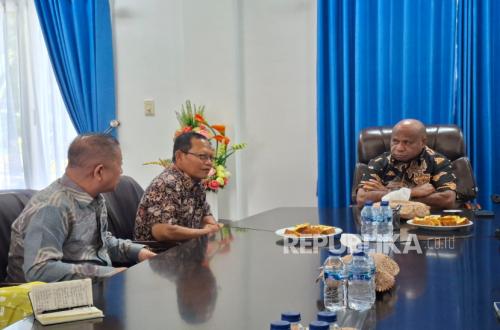
The Indonesian Forest Entrepreneurs Association (APHI) is pushing for the revival of Papua’s forestry industry through the formulation of a forestry development roadmap for the next five to ten years. This step is aimed at strengthening sustainable forest management while simultaneously developing the forest products industry from the upstream to the downstream sectors.
The roadmap is expected to serve as a guide for developing a more competitive forestry sector in Papua, increasing the added value of forest products within the region, and expanding the sector’s contribution to the economy and community welfare.
APHI General Chairman Soewarso stated that Papua possesses immense potential to become one of the national forestry industry transformation hubs through the implementation of Multi-business Forestry (MUK).
“Papua has very great potential to develop forestry business transformation through a Multi-business Forestry approach that not only optimises timber yields but also non-timber forest products and environmental services. With policy support aligned between the central and regional governments, Papua’s forestry sector can provide a much larger contribution to state revenue, regional income, infrastructure development, job creation, and the improvement of community welfare,” said Soewarso during a meeting with the Governor of Papua, Mathius D. Fakhiri, at the State Building in Jayapura.
He explained that APHI is currently conducting roadshows to several regions to strengthen collaboration with local governments, universities, and other stakeholders to accelerate the transformation of the national forestry sector.
According to Soewarso, drafting the Papua forestry development roadmap is a crucial step in reviving the forestry industry from upstream to downstream. The document will also serve as a reference for developing the forest product processing industry near raw material sources, utilising carbon environmental services, and refining policies to increase the competitiveness of Papua’s forestry products.
During the meeting, APHI also proposed the opening of direct export routes for sawn timber from Papua, the refinement of processed timber cross-section policies to increase the use of wood species other than Merbau, and the harmonisation of central and regional government policies to accelerate the implementation of Multi-business Forestry.
Papua Governor Mathius D. Fakhiri welcomed the various initiatives offered by APHI. According to him, the provincial government supports the development of a forestry sector capable of increasing community welfare without neglecting environmental sustainability.
“We welcome various programmes that can increase the contribution of business actors to regional income while driving the welfare of the Papuan people through sustainable forest management that does not damage the environment. Papua wants to run, not just walk, in utilising all its potential through collaboration with all parties and coordination with relevant ministries and agencies,” said Mathues.
He stated that the regional government continues to strengthen infrastructure to support the development of the forestry industry. These efforts include increasing the capacity of Jayapura Port and constructing a port in Sarmi Regency to smooth the distribution and export of forest products from Papua.
According to Mathius, the proposals for direct exports of sawn timber and the expansion of processed timber policies require comprehensive scientific studies. The results of these studies will be incorporated into the Papua forestry development roadmap as a basis for aligning policies between the regional and central governments.
In addition to meeting the Governor of Papua, the APHI Board of Directors also held discussions with the Faculty of Agriculture, Forestry, and Marine Sciences at Ottow Geissler University Papua. Both parties agreed to follow up on the cooperation through the signing of a memorandum of understanding covering the implementation of the Tri Dharma of Higher Education, public lectures, guest lectures, and internship programmes for forestry students within APHI member companies.
APHI also conducted technical discussions with the Papua Provincial Forestry and Environmental Office regarding the preparation of the roadmap for Papua’s forest management for the next five to ten years.
The roadmap is expected to strengthen sustainable forest management, increase forest product productivity, develop processing industries within the region, expand the use of carbon environmental services, and provide greater economic benefits for the government, indigenous communities, and the business world.
Source: jawawa.id (https://jawawa.id/newsitem/aphi-pushes-for-revival-of-papuas-forestry-industry-from-upstream-to-downstream-1782445968)
Originally published by Republika (https://ekonomi.republika.co.id/berita/th7yvq522/aphi-dorong-kebangkitan-industri-kehutanan-papua-dari-hulu-hingga-hilir), translated from Indonesian