
APHI proposes four governance measures to prevent forest and land fires and protect livelihoods
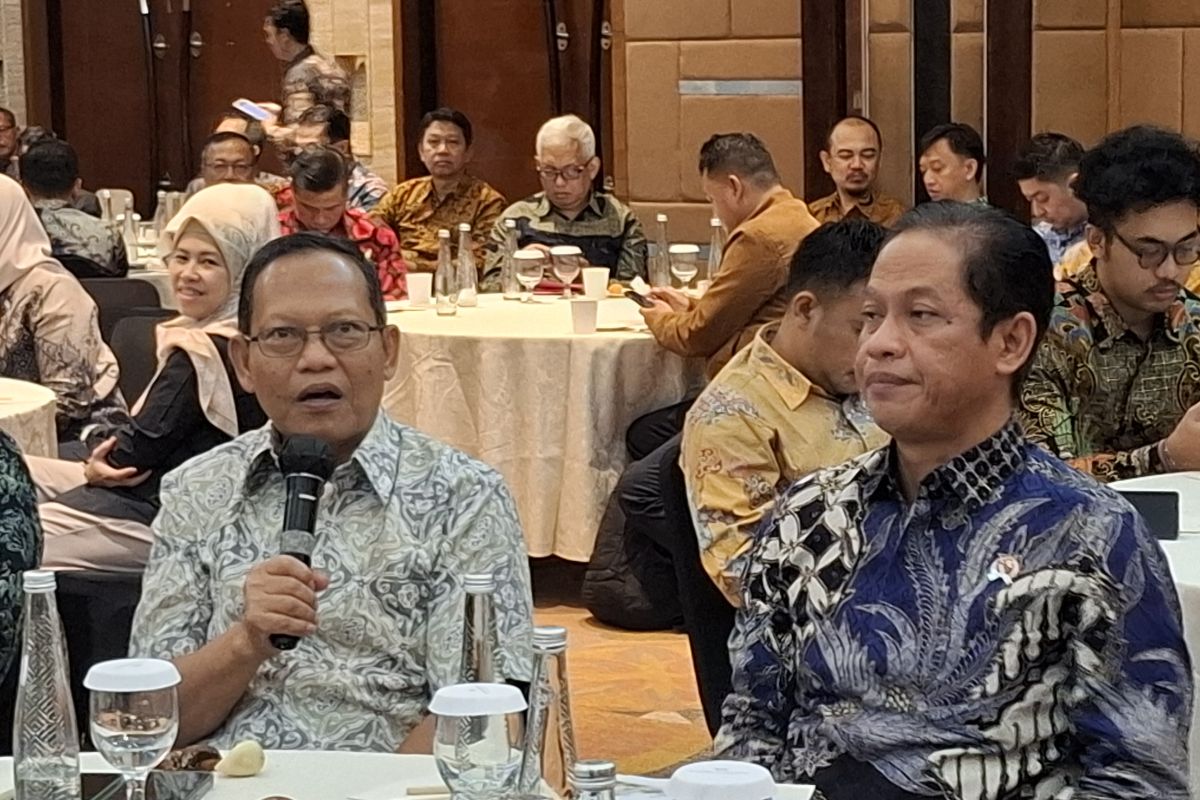
The Indonesian Forest Concessionaires Association (APHI) has proposed strengthening four aspects of governance to prevent recurring forest and land fires, while protecting land productivity and local livelihoods.
APHI chairman Soewarso made the proposal at a coordinating meeting on fire prevention convened by the Coordinating Ministry for Food Affairs in Jakarta on Thursday. He said the areas requiring improvement were land, water, community and local socio-economic governance.
“Most importantly, we need to work together to build the social and economic governance of communities,” Soewarso said.
He explained that tackling forest and land fires required more than extinguishing them: underlying problems on the ground also needed to be addressed to prevent fires from recurring.
The first area is land governance, particularly in open-access areas. APHI says these need clear management arrangements, productive uses and an identified party responsible for preventing and dealing with fires.
“First, land governance, especially in open-access areas, must be addressed immediately,” he said.
Soewarso said responsibilities needed to be clearly assigned so that fire response was not delayed by parties shifting authority to one another.
The second area is water management, particularly in peatland regions. This requires better management of water sources and the construction of reservoirs to ensure water is available for fire prevention and suppression.
“I also think it is important to provide reservoirs in the future,” he said.
He said experience in tackling fires in South Kalimantan had shown the importance of securing water sources before operating pumps and other fire-fighting equipment.
The third area concerns community governance, including raising awareness to reduce the use of fire for land clearing. This includes engaging with traditional farming practices that still rely on burning.
Soewarso cited sonor in South Sumatra, a farming practice involving the burning of land, saying it would require an approach aimed at changing community behaviour.
The fourth area is socio-economic governance, which should provide alternatives to land-clearing by burning so that farming and people’s livelihoods can continue.
He said changes to land-clearing methods needed to be accompanied by practical solutions for communities, rather than relying solely on restrictions on the use of fire.
Separately, Indonesian Palm Oil Association (GAPKI) chairman Eddy Martono called for the planned revision of provisions on land burning in Law No. 32/2009 to take local communities’ needs into account.
“What alternatives will local communities have if they want to clear land without burning?” Eddy said.
He said communities needed alternatives that would allow planting, including local crop varieties, to continue without burning.
Deputy Coordinating Minister for Food Affairs Hanif Faisol Nurofiq said the government was improving peatland management by controlling canals, rewetting land and strengthening cooperation between the government, businesses and communities.
“Going forward, we must manage these canals as well as possible,” Hanif said after the meeting.
He said canal management needed to be systematic, including through canal blocking and the restoration of peatland water systems to make the land more resilient to fires.
The government is also preparing a financing approach involving contributions from concession holders, government support, and potential international funding and carbon-economy instruments to support peatland restoration.
“We have to work together with everyone,” he said.
Hanif said the government and businesses were working on about 10,000 hectares of priority areas in South Kalimantan, including around 8,500 hectares of agricultural land and about 1,500–1,600 hectares of peatland.
In Central Kalimantan, the government plans to mobilise nearly 500 businesses to strengthen fire prevention alongside local authorities, including in areas mapped in Palangka Raya and Pulang Pisau Regency.
The Environment Ministry is also designing a climate-finance scheme to help communities switch to land-clearing methods that do not involve burning, while the Forestry Ministry is expanding guidance on using leftover vegetation as an alternative to burning.
These measures form part of broader efforts to strengthen fire prevention in line with Presidential Instruction No. 11/2026 on enforcing the ban on land clearing by burning and controlling forest and land fires.
Source: jawawa.id (https://jawawa.id/newsitem/aphi-proposes-four-governance-measures-to-prevent-forest-and-land-fires-and-protect-livelihoods-1792047141)
Originally published by Antara (Indonesian) (https://www.antaranews.com/berita/5787797/aphi-mengusulkan-empat-tata-kelola-cegah-karhutla-dan-jaga-ekonomi), translated from Indonesian