
APHI Encourages Research-Based Development of Non-Timber Forest Product Commodities
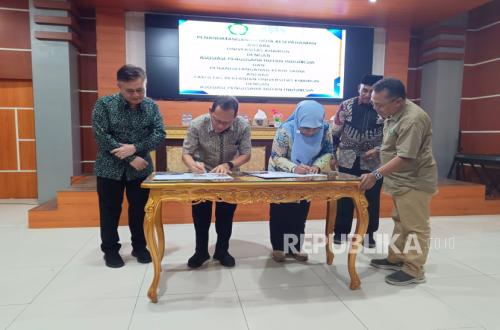
The Indonesian Forestry Entrepreneurs Association (APHI) is encouraging the development of non-timber forest product (NTFP) commodities based on research through collaboration with universities. This step is considered important to strengthen the transformation of forest management to be more productive, sustainable, and capable of increasing added value for the community. APHI Chairman Soewarso stated that the policy transformation through Multiusaha Kehutanan, which integrates the utilisation of timber forest products, non-timber forest products, and environmental services, will become the mainstream of forest management in the future. Therefore, research support from universities is a necessity to develop the potential of superior commodities in various regions. “Research support from universities is greatly needed to develop superior non-timber forest product commodities, from cultivation, processing, and increasing added value, to market development,” Soewarso said during the signing of a Memorandum of Understanding and Cooperation Agreement between APHI and Khairun University in Ternate. He noted that the current dynamics of forest management require the support of scientific knowledge, competent human resources, and innovation capable of answering needs in the field. Universities also need to adjust forestry education curricula to align with policy developments, technology, business needs, and changes in forest management orientation. Soewarso assessed that North Maluku has great potential for developing various non-timber forest product commodities that can strengthen forestry business performance while increasing economic benefits for communities in and around forest areas. The research is expected to produce superior commodities according to the ecological, social, and economic characteristics of each region. Vice Rector for Academic Affairs at Khairun University, Hasan Hamid, said the cooperation with APHI is an important step to strengthen the link between higher education and the needs of the forestry business world. The collaboration is also expected to support the implementation of the Tridharma of Higher Education while preparing graduates who meet industry needs. Dean of the Faculty of Agriculture at Khairun University, Lily Ishak, added that the cooperation will focus on managing the Khairun University Educational Forest as a location for learning, research, innovation development, and sustainable forest management practices. The area will also be utilised as a field laboratory for testing the implementation of Multiusaha Kehutanan as well as a student internship location.