
APGLI Promotes Green Logistics to Curb Carbon Emissions
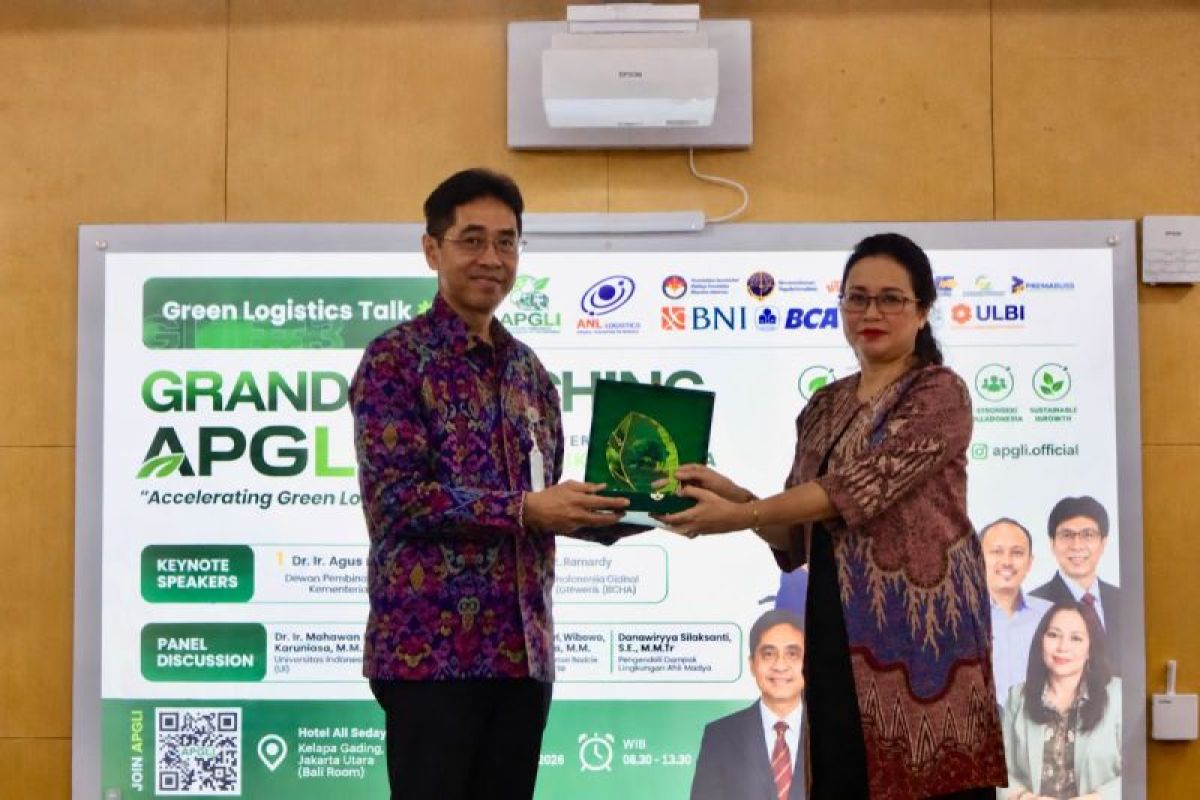
Semarang, Central Java (ANTARA) - The Indonesian Green Logistics Entrepreneurs Association (APGLI) is encouraging the adoption of green logistics to reduce emissions through energy efficiency, carbon measurement, low-carbon technology and sustainable domestic supply chains.
APGLI Chairwoman Netty Sri Rejeki said logistics businesses needed to start measuring emissions from the transport of goods by land, sea and air.
“I think that in the future there should be records of the exhaust emissions produced by logistics businesses transporting goods by land, sea and air,” Netty said in a statement received in Semarang, Central Java, on Saturday.
Such records would provide a basis for determining emissions-reduction measures while improving companies’ operational efficiency.
The shift to green logistics is beginning to focus on more measurable operational steps, from recording fleet emissions to improving energy efficiency and using low-carbon technology. However, implementation still faces challenges including investment costs, access to financing and the industry’s readiness to meet sustainability standards.
One step towards implementation is establishing a forum for logistics businesses that recognise the importance of environmentally friendly practices.
“To provide a platform for this, the Indonesian Green Logistics Entrepreneurs Association (APGLI) was formed and held its grand launch on Thursday (29 October 2026),” she said.
The urgency of this transition is reflected in the transport sector’s contribution to national emissions. Data from the World Resources Institute (WRI) Indonesia show that the transport sector accounted for 27 per cent of the country’s total greenhouse gas emissions, which reached 165.788 million tonnes of CO2e in 2023.
Land transport accounted for 93 per cent of transport-sector emissions, amid reliance on fossil fuels and an increase in the number of motor vehicles.
APGLI is preparing several programmes to encourage green logistics, including training and free carbon calculations for companies, the development of a Green Logistic Zone, webinars and publications.
The association is also exploring collaboration with the Ministry of Forestry to support tree planting as part of carbon-offsetting efforts.
Netty said changes could begin with existing operations, such as regularly maintaining fleets in accordance with manufacturers’ instructions to prevent excessive emissions.
She said businesses needed to start paying attention to environmental and social considerations in their operations.
However, limited funding remains an obstacle for companies seeking to switch to lower-emission technologies. Netty pointed to the high price of electric lorries, which she said was driven in part by import charges, and urged the government to review the tariff.
“If possible, the Ministry of Finance or the Coordinating Ministry for Economic Affairs should review the 40 per cent import duty on electric lorries. We are seriously constrained by the cost, but we want to go green,” she said.
Agus Justianto, an advisory board member of the Ministry of Forestry’s FOLU Net Sink 2030 initiative, said APGLI’s launch was an opportunity to strengthen business involvement in supporting low-carbon development.
He said achieving a balance between emissions and carbon absorption required support from all sectors of the economy, including transport, logistics, industry and national supply chains.
The transition to a green economy, he said, required changes to business activity, with logistics serving as a key link in the movement of goods, trade and distribution.
He hoped APGLI would act as a bridge for collaboration between the government and businesses to promote green logistics and strengthen Indonesia’s sustainable economic competitiveness.
Hartanto, a senior expert at the Presidential Staff Office, said green logistics development needed to go hand in hand with efforts to improve the competitiveness of the national logistics sector so that Indonesia could strengthen its position in regional competition.
He hoped APGLI would improve coordination among the government, businesses, academics, associations and the media to deliver measurable improvements.
Hartanto noted the price gap between goods in western and eastern Indonesia, even though the sea-toll programme had helped reduce distribution disparities.
He therefore urged the industry to keep pace with technological developments and global sustainability standards by developing green ports and green logistics corridors, as well as improving workforce skills.
YW Junardy, president of the UN Global Compact Network Indonesia (IGCN), said he hoped APGLI would provide a forum for companies and associations to translate global sustainability principles into industrial practices in Indonesia.
“Alongside capacity-building and emissions measurement, access to transition financing is an area of cooperation that needs to be strengthened,” Junardy said.
Source: jawawa.id (https://jawawa.id/newsitem/apgli-promotes-green-logistics-to-curb-carbon-emissions-1793422281)
Originally published by Antara (Indonesian) (https://www.antaranews.com/berita/5823235/apgli-dorong-industri-logistik-hijau-demi-tekan-emisi-karbon), translated from Indonesian