
APEKSI National Meeting Formulates 10 Strategic Recommendations to Strengthen City Governments
The XVIII National Working Meeting (Rakernas) of the Association of Indonesian City Governments (APEKSI) has produced ten strategic recommendations as a shared agenda for city governments to strengthen resilient, adaptive, and sustainable urban development.
These recommendations are the result of discussions held across various forums during the XVIII APEKSI National Working Meeting, which carried the theme ‘Resilient Cities, Sovereign Nation’.
APEKSI Executive Director Alwis Rustam stated that the ten recommendations are the result of consolidation from various forums and discussions during the meeting. He noted that city governments possess direct experience in facing various development challenges, and therefore, the formulated inputs are expected to become part of the strengthening of national policy.
“The issues facing city governments today are no longer merely technical. The solution requires space for dialogue and political will so that various regional recommendations can truly become policy,” Alwis said in his statement on Friday (3/7/2026).
He shared this during the Resilient City Dialogue and Mayors Talk held at the Grand City Hall Ballroom, Medan, on Wednesday (1/7).
The APEKSI XVIII recommendations include: (1) strengthening fiscal capacity and reforming central-regional financial relations; (2) restructuring policies for Civil Servants (ASN) and Government Employees with Work Agreements (PPPK) and regional expenditure flexibility; (3) strengthening the governance of National Strategic Programmes in the regions; (4) accelerating infrastructure and regional connectivity; (5) transforming governance and the digitalisation of public services; (6) strengthening environmental resilience and sustainable urban planning; (7) strengthening the local economy and inclusive development; (8) strengthening spatial planning, regional cooperation, and regional development; (9) strengthening legal advocacy and regulatory certainty; and (10) involving the younger generation in the planning, implementation, and monitoring of urban development.
These ten recommendations emphasise that urban resilience is not only related to disaster preparedness but also encompasses the strengthening of fiscal capacity, improving the quality of public services, economic development, digital transformation, environmental management, and inter-governmental collaboration to achieve public welfare.
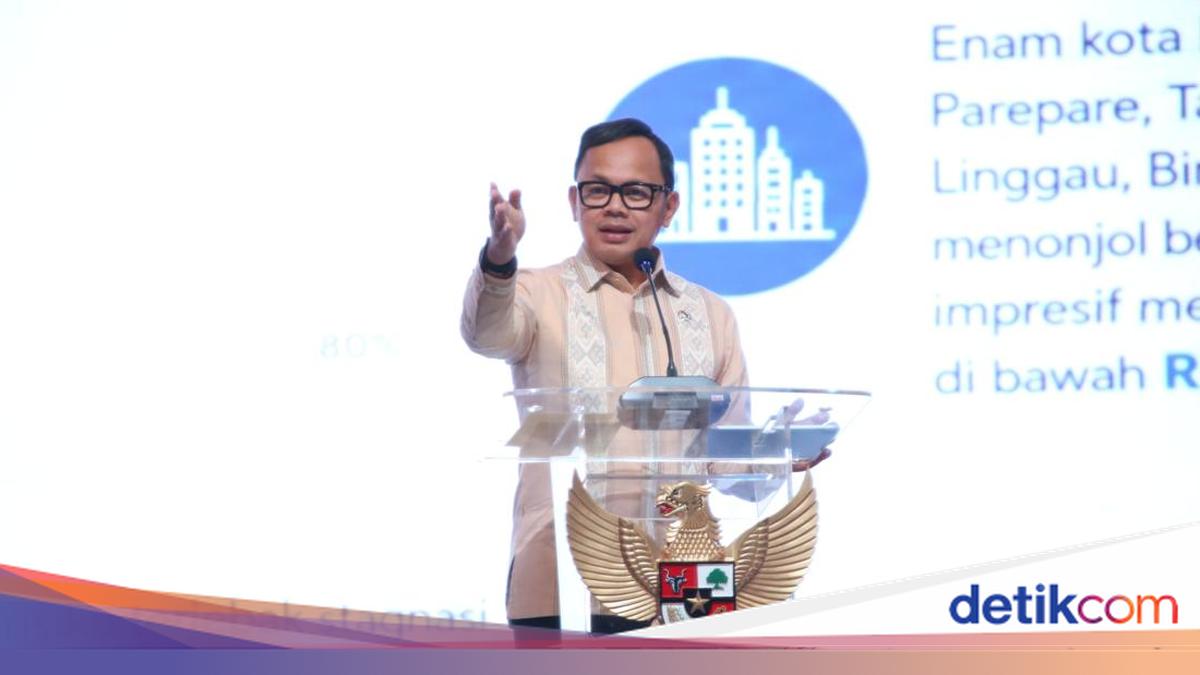
Meanwhile, the Deputy Minister of Home Affairs, Bima Arya Sugiarto, emphasised that the XVIII APEKSI National Working Meeting is not merely a ceremonial agenda, but a strategic forum for city governments to share experiences, exchange best practices, and devise collective solutions to various development challenges.
Amidst regional fiscal constraints, geopolitical dynamics, and national economic conditions, city governments require space to learn from one another and strengthen inter-regional collaboration.
“Best practices exist among our peers. We in the Ministry of Home Affairs, through the Directorate General of Regional Autonomy, can also receive data from APEKSI; we view with pride and optimism how these cities act as transformers and survivors through various initiatives,” Bounded Bima during the opening of the meeting.
He added that the National Working Meeting also strengthens the bond between regional heads by setting aside political, bureaucratic, or feudalistic barriers.
Furthermore, Bima encouraged city governments to continue increasing Regional Original Income (PAD) through governance innovation. He noted that several cities have successfully increased PAD through payment digitalisation, strengthened collaboration, and the leadership of regional heads who are directly involved in programme implementation.
Bima expressed hope that the results of the XVIII APEKSI National Working Meeting could serve as a foundation for both central and regional governments in realising cities that are increasingly resilient, adaptive, and sustainable.
For information, the XVIII APEKSI National Working Meeting took place from 28 June to 4 July 2026 in Medan, serving as a platform for city governments to exchange experiences, expand networks, and formulate solutions to various urban challenges. In addition to organisational sessions, the event featured the Youth City Changers (YCC), Ladies Program, Forum of Regional Development Planning Agency (Bappeda) Heads, Environmental Forum, Digital Communication Forum (Komdigi), Food Forum, Business Forum, Nusantara Cultural Carnival, and the Indonesia City Expo (ICE).
Source: jawawa.id (https://jawawa.id/newsitem/apeksi-national-meeting-formulates-10-strategic-recommendations-to-strengthen-city-governments-1783072430)
Originally published by detikcom (https://news.detik.com/berita/d-8558508/rakernas-xviii-apeksi-rumuskan-10-rekomendasi-strategis-penguatan-pemkot), translated from Indonesian