
APEKSI National Meeting Formulates 10 Agendas to Strengthen City Governments
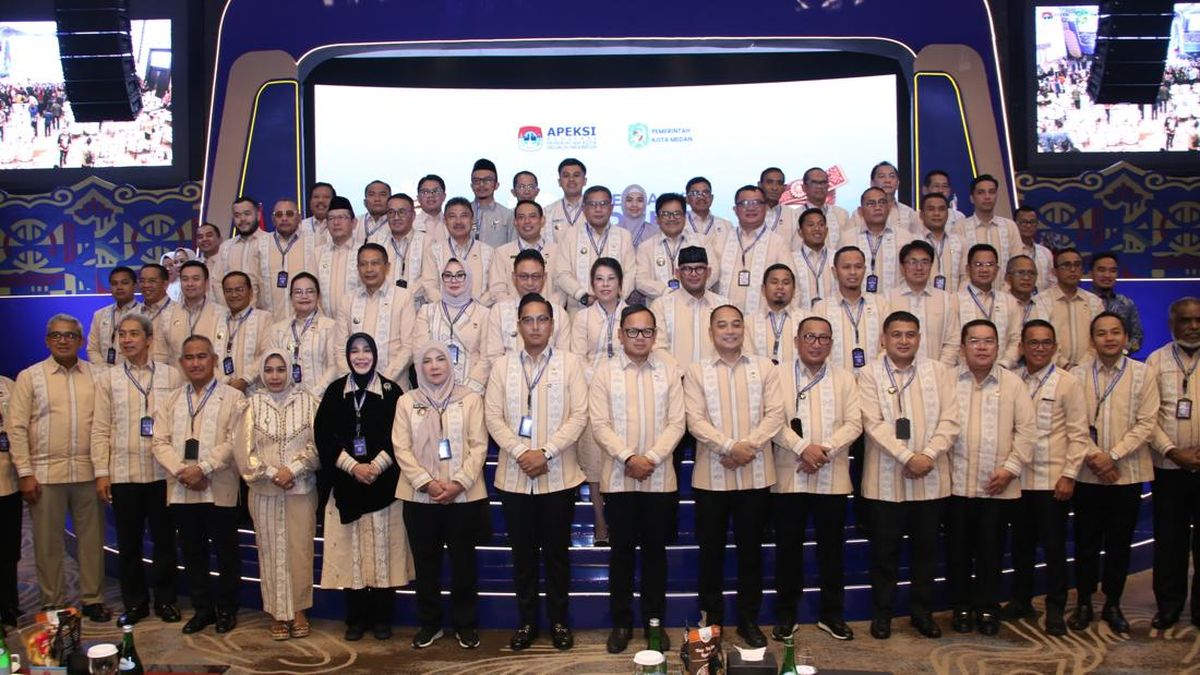
The XVIII National Working Meeting (Rakernas) of the Association of Indonesian City Governments (APEKSI) has formulated ten strategic recommendations to serve as a joint agenda for strengthening resilient, adaptive, and sustainable urban development. These recommendations resulted from various forum discussions during the Rakernas, which carried the theme ‘Resilient Cities, Sovereign Nation’. All inputs are expected to contribute to strengthening central government policy in addressing various regional development challenges.
APEKSI Executive Director Alwis Rustam stated that the ten recommendations were the result of consolidation from various forums and discussions during the meeting. According to him, city governments possess direct experience in facing diverse development challenges, so the formulated inputs are hoped to become part of strengthening national policy. ‘The problems of city governments today are no longer purely technical. The solutions require space for dialogue and political will so that regional recommendations truly become policy,’ Alwis said during the ‘Resilient City Dialogue and Mayors Talk’ at the Grand City Hall Ballroom in Medan on Wednesday (1/7).
The recommendations from the APEKSI XVIII National Working Meeting include strengthening fiscal capacity and reforming central-regional financial relations, structuring civil servant (ASN) and government employee with work agreement (PPPK) policies and regional spending flexibility, strengthening governance of National Strategic Programs in regions, accelerating infrastructure and regional connectivity, transforming governance and digitising public services, strengthening environmental resilience and sustainable urban planning, strengthening local economies and inclusive development, strengthening spatial planning, regional cooperation, and regional development, strengthening legal advocacy and regulatory certainty, and involving the younger generation in planning, implementation, and monitoring of city development. These ten recommendations affirm that city resilience is not only related to disaster preparedness but also encompasses strengthening fiscal capacity, improving public service quality, economic development, digital transformation, environmental management, and intergovernmental collaboration to realise public welfare.
Meanwhile, Deputy Minister of Home Affairs Bima Arya Sugiarto emphasised that the APEKSI XVIII National Working Meeting was not merely a ceremonial agenda but a strategic forum for city governments to exchange experiences, share best practices, and formulate joint solutions to development challenges. According to Bima, amidst regional fiscal constraints, geopolitical dynamics, and national economic conditions, inter-city collaboration is becoming increasingly important. ‘The best practices are among our own colleagues. We at the Ministry of Home Affairs, through the Directorate General of Regional Finance and the Directorate General of Regional Autonomy, also obtain data from APEKSI, and we see with pride and optimism how these cities become transformers, survivors with various initiatives,’ Bima stated when opening the APEKSI XVIII National Working Meeting. He added that the meeting also strengthens solidarity among regional heads by setting aside political, bureaucratic, and feudalistic barriers.
Furthermore, Bima encouraged city governments to continue increasing their Regional Original Revenue (PAD) through governance innovation. He noted that several cities have successfully increased their PAD through payment digitalisation, strengthened collaboration, and leadership where regional heads are directly involved in programme implementation. Bima expressed hope that the outcomes of the APEKSI XVIII National Working Meeting would serve as a foundation for central and regional governments in realising cities that are more resilient, adaptive, and sustainable.
The APEKSI XVIII National Working Meeting took place from 28 June to 4 July 2026 in Medan, serving as a platform for city governments to exchange experiences, expand networks, and formulate solutions to various urban challenges. In addition to organisational sessions, the event featured Youth City Changers (YCC), a Ladies Programme, a Forum for Regional Development Planning Agency Heads, an Environmental Forum, a Digital Communication Forum (Komdigi), a Food Forum, a Business Forum, a Nusantara Cultural Carnival, and the Indonesia City Expo (ICE).