
APEKSI Formulates 10 Recommendations for Strengthening City Governments
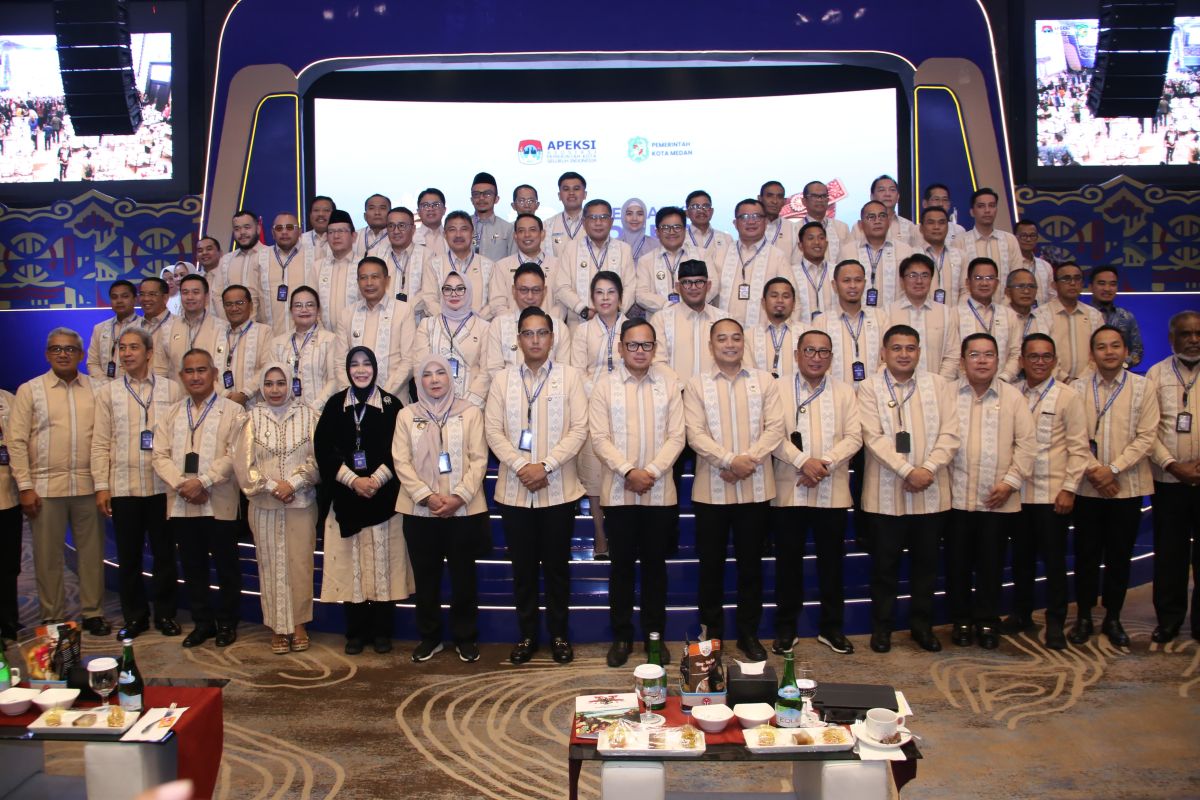
The Association of Indonesian City Governments (APEKSI) has produced ten recommendations following its XVIII National Working Meeting (Rakernas) held in Medan. The recommendations are designed as a strategic agenda for city governments to strengthen resilient, adaptive, and sustainable urban development.
Executive Director of APEKSI, Alwis Rustam, stated that the ten recommendations were the result of consolidating various forums and discussions during the meeting. “The issues facing city governments today are no longer purely technical. Solutions require space for dialogue and political will so that various regional inputs can truly become policy,” he said in a statement on Friday.
The recommendations include strengthening fiscal capacity and reforming central-regional financial relations, reorganising the civil service (ASN) and government employees with work agreements (PPPK), and enhancing flexibility in regional spending. Other points cover strengthening spatial planning, regional cooperation, and regional development, as well as reinforcing legal advocacy and regulatory certainty.
Furthermore, the recommendations emphasise involving the younger generation in the planning, implementation, and monitoring of city development. Alwis noted that urban resilience is not only about disaster preparedness but also encompasses fiscal capacity, public service quality, economic development, digital transformation, environmental management, and inter-regional collaboration.
Deputy Minister of Home Affairs Bima Arya Sugiarto, who opened the meeting, stated that the Rakernas was a strategic forum for sharing experiences and formulating joint solutions. “The best practices are among ourselves. We at the Ministry of Home Affairs see how cities become transformers and survivors through various initiatives,” he said.
Bima Arya also encouraged city governments to increase locally-generated revenue (PAD) through governance innovation. He highlighted that several cities have successfully boosted PAD by digitalising payment systems, strengthening collaboration, and ensuring direct leadership involvement in programme implementation. He expressed hope that the outcomes of the meeting would serve as a foundation for central and regional governments to realise cities that are more resilient, adaptive, and sustainable.
The XVIII APEKSI National Working Meeting took place from 28 June to 4 July 2026 in Medan City, serving as a platform for city governments to exchange experiences, expand networks, and formulate solutions to urban challenges.