
APEC highlights energy supply chain threats due to Middle East conflict
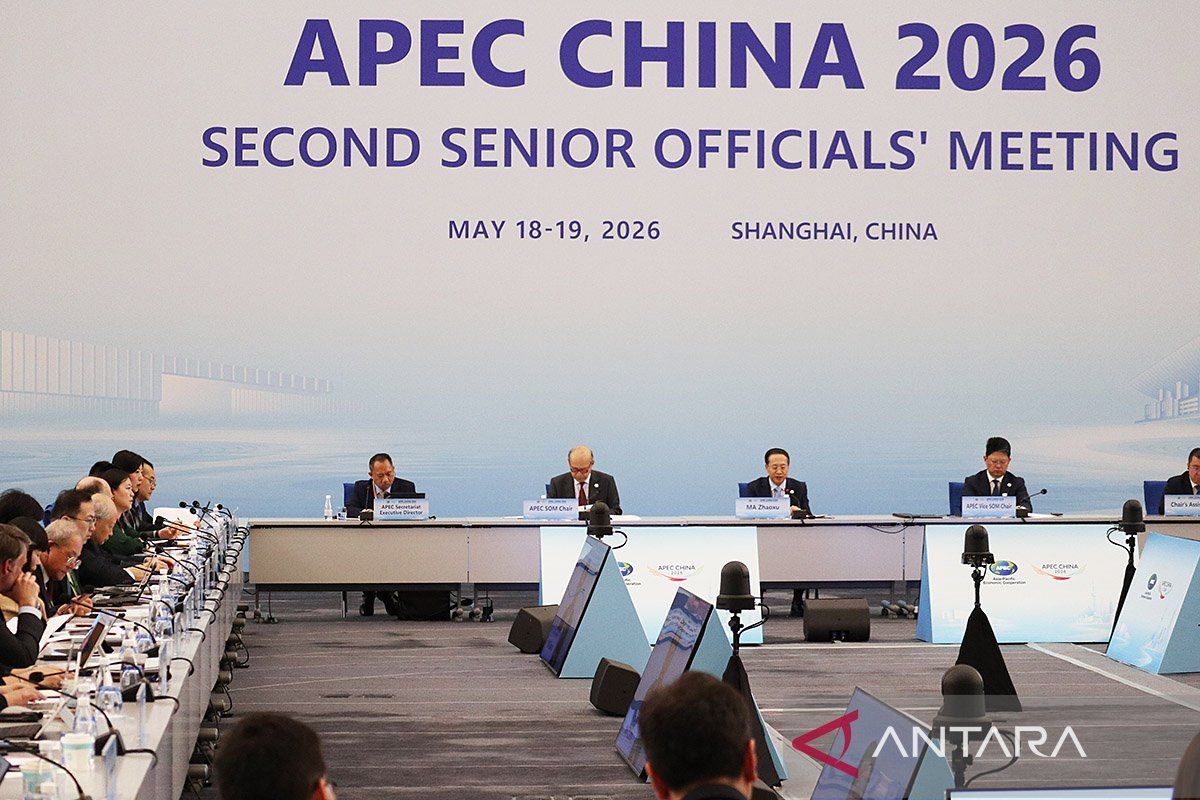
Suzhou, China (ANTARA) - Trade ministers from 21 economies in the Asia-Pacific region have underscored the importance of maintaining resilient supply chains for energy and other essential products amidst the conflict in the Middle East. This was stated in a joint communique on Saturday, following a two-day ministerial meeting of the Asia-Pacific Economic Cooperation (APEC) forum in Suzhou, China.
“Ensuring that trade continues to flow and critical infrastructure continues to support the continuity and integrity of global supply chains,” the statement read. The declaration comes amid concerns regarding the effective closure of the Strait of Hormuz, a primary waterway for energy transport, which has triggered supply fears and surges in crude oil prices following US and Israeli actions involving Iran.
APEC trade ministers also acknowledged the potential of Artificial Intelligence (AI) to transform the landscape of international trade and committed to expanding regional trade related to AI. To realise the benefits of AI for all parties, the ministers called for enhanced security, accessibility, reliability, and credibility.
With China serving as the APEC chair this year, the outcomes of this ministerial meeting are expected to provide input for APEC leaders during the summit to be held in Shenzhen, China, this coming November. Chinese Trade Minister Wang Wentao stated during a press conference that the Suzhou meeting highlighted the readiness of Asia-Pacific economies to cooperate amidst global challenges, such as rising geopolitical tensions and unilateralism.
“This fully demonstrates that open regionalism and true multilateralism enjoy broad support, and that a complementary and collaborative approach aligns with the fundamental interests of all economies,” said Wang. He added that the meeting focused on leveraging cutting-edge technology, including AI, noting a shared hope among nations to further strengthen regional economic development through innovation.
As part of the APEC ministerial proceedings, China also hosted the first dialogue between members of the Regional Comprehensive Economic Partnership (RCEP) and the Comprehensive and Progressive Agreement for Trans-Pacific Partnership (CPTPP), two large-scale frameworks, according to Lin Feng, a senior Chinese trade official. Lin noted that 18 members from both trade agreements and ASEAN Secretary-General Kao Kim Hourn participated in the dialogue to discuss measures for advancing regional economic integration.
China is one of the 15 members of RCEP, which includes 10 ASEAN members, Japan, South Korea, Australia, and New Zealand. However, China is not a member of the CPTPP, for which it submitted an application in 2021. RCEP entered into force in January 2022, but lacks the equivalent standards of the CPTPP, whose members include Canada, Australia, Japan, Mexico, and Singapore. Japanese Trade Minister Ryosei Akazawa did not participate in the RCEP-CPTPP dialogue, according to a senior Japanese official, as Tokyo does not recognise the event as being based on a consensus between the members of both frameworks.