
APBI says the coal sector faces an ESG trilemma
APBI says the coal sector faces an ESG trilemma
When it comes to coal, this is no longer a dilemma but a trilemma. There is a need to safeguard energy security, to meet demands for emission reductions, and to bear the costs of implementing ESG.
Jakarta — The Indonesian Coal Mining Association (APBI) says the implementation of Environmental, Social and Governance (ESG) principles in the coal sector faces a trilemma among energy security, environmental protection and economic costs.
Ignatius Wurwanto, Vice Chairman of APBI for ESG and Good Mining Practice, said the coal industry still has to safeguard national energy supply, meet calls to reduce emissions, and bear the costs of implementing ESG which are not small.
‘When we talk about coal, this is no longer a dilemma but a trilemma. There is a need to maintain energy security, there are demands to reduce emissions, and there are costs that must be borne,’ Wurwanto said in Jakarta on Thursday.
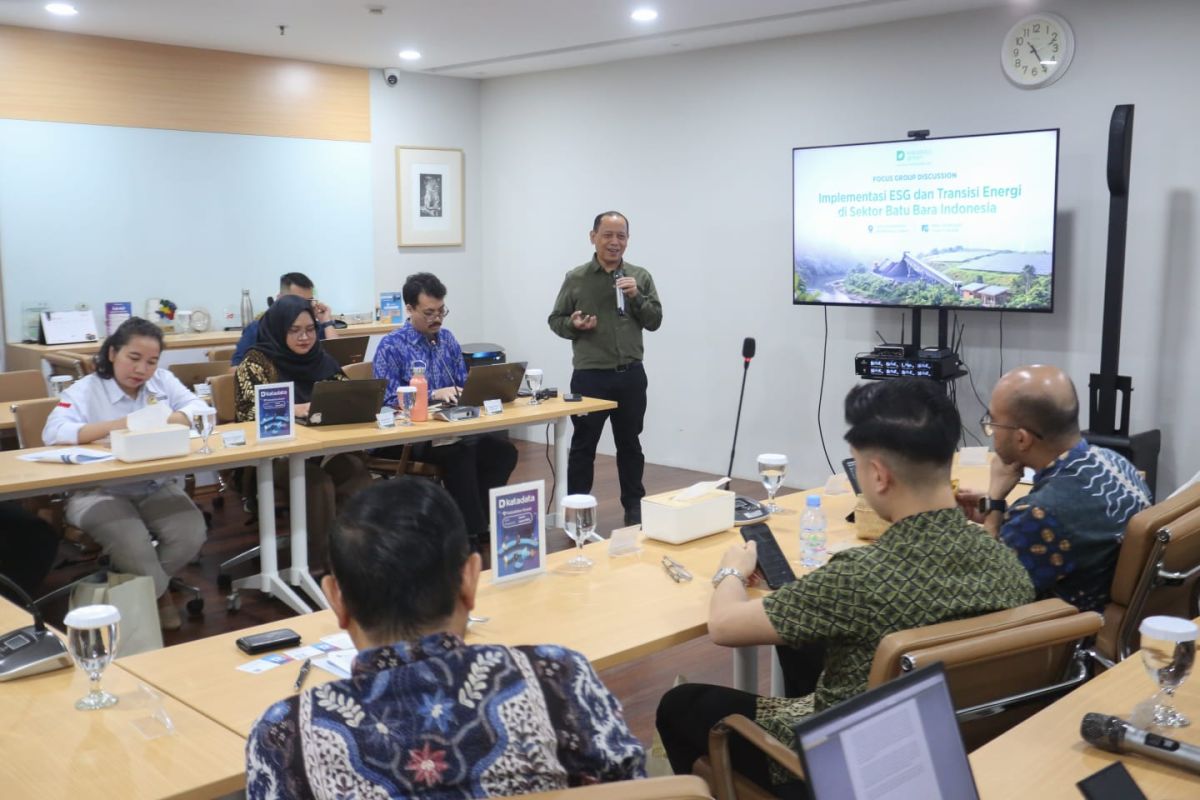
In a discussion themed ‘Implementation of ESG and Energy Transition in the Indonesian Coal Sector’, he explained that the three challenges must be pursued simultaneously by coal companies.
According to him, the coal industry is not only required to reduce emissions and protect the environment, but also to ensure energy supply remains available at affordable costs.
He assessed that ESG implementation in the mining sector cannot be equated with other industries due to the complexities of operations, technical requirements, environmental concerns, workplace safety, and community development that mining companies must meet.
Therefore, according to Wurwanto, many companies still view ESG as a compliance obligation rather than a long-term risk- and opportunity-based business strategy.
‘Many still see ESG as a programme or compliance, whereas it should be risk- and opportunity-based,’ he said.
APBI currently has 93 active coal mining member companies, contributing around 66 percent of national coal production.
Meanwhile, among nearly 960 coal mining companies in Indonesia, Wurwanto assessed that the understanding and implementation of ESG vary widely.
To promote ESG implementation, APBI uses the Good Mining Practice (GMP) approach through strengthening operational practices such as conservation, environmental protection, mining safety, and technical standardisation.
Wurwanto said another challenge facing the coal sector is regulatory uncertainty, which forces companies to continually adjust investment and operational strategies.
‘If regulations keep changing, companies must be highly adaptable,’ he said.
A similar view was expressed by Nur Hikmat, Assistant Researcher at the Purnomo Yusgiantoro Center (PYC), who assessed that ESG implementation in the initial stage would add cost pressures for mining companies.
‘Practically, ESG implementation at the initial stage will surely be the first-hit cost that places substantial financial pressure on companies,’ Nur Hikmat said.
He explained that around 65 percent of Indonesia’s coal production is still destined for export markets, while the domestic market only absorbs about 35 percent of national production.
According to him, main export markets for Indonesia’s coal such as China and India have not yet made ESG standards a primary requirement as much as European markets and other developed countries.
Meanwhile, several companies are beginning to transform toward low-carbon businesses. One example is TBS Energi Utama, which divested its steam power plant (PLTU) in 2025, resulting in an emission reduction of about 85 percent.
SVP Public Affairs of TBS Energi Utama, Josefhine Chitra, said the company is also preparing an investment of around USD 600 million for the development of a green economy business through a climate transition plan.
‘Technically, coal is increasingly seen as having limited prospects. Meanwhile, the green economy sector is growing very rapidly,’ Josefhine said.
Josefhine noted that business transition cannot be done instantly and requires strong commitment from management.
She added that since 2021, TBS has formed a sustainability team to drive decarbonisation and the development of a low-carbon business.