
Apartment Stock in Jakarta Piles Up to Tens of Thousands of Units, What Does It Signify?
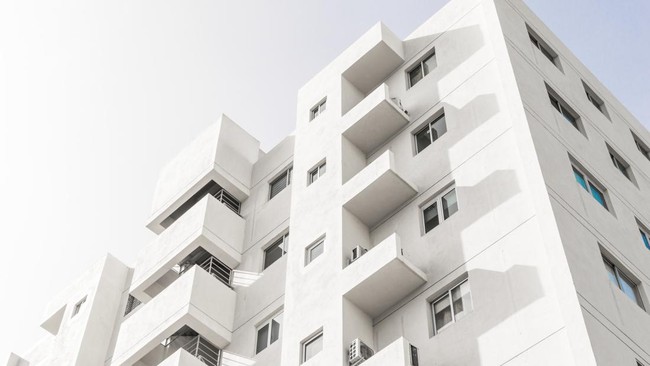
The government is encouraging the utilisation of existing housing so that it can be maximised to meet housing needs in Jakarta. This step is considered important amid limited land availability and high property prices in the capital. This means developers are not only encouraged to build new projects, but also to find ways for the existing housing stock to be absorbed by the public. One key is expanding financing options so that prices and people’s purchasing power can be brought together.
Director of Systems and Strategy for Settlement Area Implementation at the Ministry of Housing and Settlement Areas (PKP), Kreshnariza Harahap, said vertical housing is a difficult choice to avoid for Jakarta because land availability is increasingly limited. However, the housing problem does not stop at the construction of new units. According to her, existing homes must also be optimised so they can reach people in need.
“Existing housing stock needs to be seen as part of housing assets that can be immediately optimised. When housing products, financing and community needs can be brought together, the existing housing stock can become part of the solution to meeting housing needs,” said Kreshnariza in her statement, quoted on Friday (29/8/26).
The government has prepared a number of policies to expand public access to flats. One is through Minister of PKP Decree Number 1721/KPTS/M/2026 concerning Criteria for Public Flat Units in Central Government Facilitation, stipulated on 6 August 2026. In this policy, the government provides several financing relaxations, including a maximum tenor of up to 40 years with interest of 6% per year or tiered interest, IJP support that can be borne by the government, and a change from Down Payment Assistance Subsidy (SBUM) to a subsidy for FLPP process costs for public flats.
For the Greater Jakarta area, the selling price of public flats is set at around Rp13 million to Rp14.5 million per square metre. The unit sizes offered range from 21 to 45 square metres. The government is also promoting the KPR Susun Inden and KPR Danantara schemes. Under KPR Danantara, the effective interest rate is tiered, starting from 2.75% in the first to third years and a maximum of 12.5% in years 21 to 30. The credit tenor can reach 30 years.
Financing ease must be accompanied by developers’ ability to provide products that suit the needs of urban communities. Consumers do not only consider price when buying a home. Factors such as unit size, design, payment flexibility, building quality and location also determine purchasing decisions. “Housing development is not enough if it only pays attention to price. Unit size, design, payment flexibility, building quality and location are also important factors so that products truly suit community needs,” explained Kreshnariza.
For information, Chairman of the DPD Real Estate Indonesia (REI) DKI Jakarta, Arvin F. Iskandar, referring to Colliers Indonesia research data, said there are around 29,000 apartment units in Jakarta that have not been absorbed by the market. “Part of the solution is already in front of our eyes. Now how do we make it accessible to people in need,” said Arvin at the REI DKI Jakarta regional working meeting, quoted on Friday (28/8/26).
The existence of available units should be utilised to accelerate the fulfilment of housing needs in Jakarta. However, the problem is that housing prices and people’s ability are not always at the same point. Therefore, policies, incentives and financing instruments are needed to narrow the gap.
Source: jawawa.id (https://jawawa.id/newsitem/apartment-stock-in-jakarta-piles-up-to-tens-of-thousands-of-units-what-does-it-signify-1787925065)
Originally published by CNBC Indonesia (https://www.cnbcindonesia.com/news/20260828141523-4-763128/stok-apartemen-di-dki-numpuk-sampai-puluhan-ribu-unit-pertanda-apa), translated from Indonesian