
AP2LN: Ikusei Shuro to be a Momentum to Enhance the Quality of Indonesian Internships
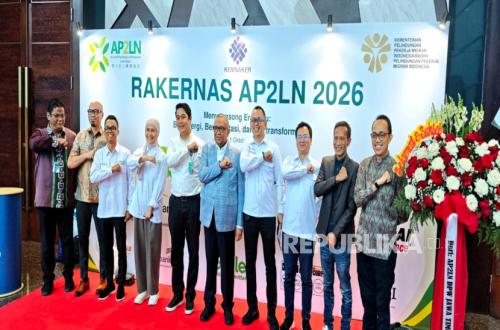
The Association of Overseas Internship Organisers (AP2LN) believes that the implementation of the Ikusei Shuro system in Japan, starting 1 April 2027, serves as a momentum for Indonesia to enhance the quality of overseas internship management, particularly in education, Japanese language training, competency certification, and the readiness of participants before departure.
As an association overseeing hundreds of Labour Training Institutes–Sending Organisations (LPK-SO), AP2LNs is involved in managing tens of thousands of overseas internship processes annually in a professional and integrated manner. AP2LN views the systemic changes in Japan as something that must be met with readiness from all stakeholders, including participants, organising institutions, and the government.
The General Chairman of AP2LN, Firman Budiyanto, stated that this change is an opportunity to strengthen the quality of the Indonesia–Japan internship ecosystem as a whole.
“The transition towards Ikusei Shuro is a momentum for Indonesia to improve the quality of prospective participants from within the country. Strengthening education, Japanese language proficiency, competency certification, as well as mental and cultural readiness before departure, is becoming increasingly important so that participants can meet the standards set by Japan while adapting to the working environment there,” he said during the AP2LN National Working Meeting at the Manhattan Hotel, Jakarta, (1/10).
Ikusei Shuro will replace the Technical Intern Training Program (TITP), with an orientation that focuses more on competency development and meeting human resource needs in Japan, including skill development towards the Specified Skilled Worker (SSW) standard.
According to Firman, this systemic change also requires internship organising institutions in Indonesia to adjust regulations, training standards, and programme implementation mechanisms. Therefore, AP2LN members are encouraged to increase their capacity to ensure the transition process can proceed orderly and provide optimal benefits for participants.
On the other hand, AP2LN is closely monitoring the ongoing discussions regarding the possible transfer of authority for managing overseas internships from the Ministry of Manpower to the Ministry of Indonesian Migrant Worker Protection (KP2MI). AP2LN believes that regulatory certainty and programme continuity must be a shared concern.
AP2LN appreciates the role of the Ministry of Manpower in building, fostering, and supervising the overseas internship ecosystem, including the cooperation established with the Japanese Government. At the same time, the migrant worker protection function, which is the focus of KP2MI, is also considered vital to ensure the safety, welfare, and fulfilment of the rights of Indonesian citizens abroad.
“We see the internship development function and the migrant worker protection function as two equally important aspects. Therefore, what is needed is coordination and synergy so that any changes in governance will still consider the characteristics of Ikusei Shuro, the continuity of Indonesia–Japan bilateral cooperation, and the readiness of all stakeholders,” said Firman.
Furthermore, AP2LN believes that policy certainty is necessary to maintain the operational continuity of Sending Organisations, the departure process of prospective participants, the continuity of cooperation with partners in Japan, and the protection of Indonesian participants currently in Japan.
AP2LN hopes that discussions on governance and transition mechanisms will be conducted in a coordinated manner involving relevant ministries and agencies, the Japanese government, industry players, and internship organisers. The involvement of organisers is deemed crucial as they possess direct experience in the processes of selection, education and training, language preparation, and placement in Japan.
“AP2LN respects all government discussion and decision-making processes. We hope that internship organisers can also be involved in the formulation of policies and transition mechanisms, so that changes can be measurable, provide certainty for all parties, and continue to prioritise the interests and protection of participants,” added the Vice General Chairman of AP2LN, Arif Ramadhan.
AP2LN assesses that the implementation of Ikusei Shuro can be part of a collective effort to improve the quality of Indonesian human resources to be competent and internationally competitive. With better preparation domestically and governance that provides certainty, Indonesia–Japan cooperation in the field of human resource development is expected to continue developing sustainably.