
Anwar Hafid Fights for Central Sulawesi DBH, Bahlil Responds Positively
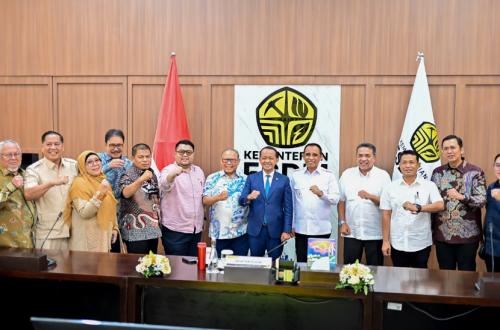
Energy and Mineral Resources Minister Bahlil Lahadalia has opened the possibility of revising the natural resources revenue-sharing policy (DBH) following aspirations raised by Central Sulawesi Governor Anwar Hafid. An evaluation is deemed necessary so that regions serving as both production and mineral processing centres obtain more equitable fiscal benefits.
Bahlil said the government would re-examine the current DBH scheme. The government, he said, does not rule out making changes if the current policy is considered not to reflect the contribution and burden borne by regions.
“We will look at it and we will open the opportunity for revision. The important thing is that the policy must provide a sense of justice for the regions,” Bahlil said after receiving Anwar Hafid and members of the Central Sulawesi Regional Legislative Council (DPRD) in Jakarta on Wednesday (19/8/2026).
Bahlil stressed that the central government is open to the aspirations of natural resource-producing regions. According to him, input from Anwar and the Central Sulawesi DPRD regarding DBH fairness can form part of the policy evaluation.
“According to the Energy and Mineral Resources Minister, the aspirations regarding DBH fairness from Governor Anwar Hafid and the Central Sulawesi DPRD were well received,” Bahlil said.
During the meeting, Anwar highlighted the position of Morowali and North Morowali regencies in the national nickel industry chain. The two regions, according to him, are no longer merely mining production sites but have developed into large-scale nickel-based processing and industrial centres.
Anwar believes this change in economic character should also be taken into account in the revenue-sharing scheme between the central and regional governments.
“If a region has become part of the processing stage, then that contribution must be recognised in fiscal policy,” Anwar said.
According to Anwar, nickel industry activity in Morowali and North Morowali contributes to the national economy while creating jobs. However, the industrial expansion also brings consequences for regional governments.
The growth of industrial estates increases the need for infrastructure, public services and various other supporting facilities. This burden, according to the former two-term Morowali regent, needs to be considered by the central government in formulating fiscal policy related to natural resources.
Anwar therefore asked that a region’s contribution not be calculated solely based on its status as a mining-producing area. When economic activity has moved to the processing and industrialisation stage, he said, that contribution should be reflected in regional revenue.
“Regions should not merely be labelled as producing regions while the burden they bear grows ever larger,” Anwar said.
He expressed hope that the restructuring of the DBH would allow the economic benefits of natural resource exploitation and processing to be felt more proportionally by communities in the areas where the industry operates.
The DBH issue is strategic for Central Sulawesi because Morowali and North Morowali are two important areas in Indonesia’s nickel industry chain. The debate over DBH therefore concerns not only the size of fiscal transfers but also the distribution of economic benefits between the central government and regions that directly bear the impact of mining and mineral processing industrial expansion.