
Anwar Abbas Defends Former Religious Affairs Minister Yaqut in Court, Citing Benefits of Additional Hajj Quota Allocation
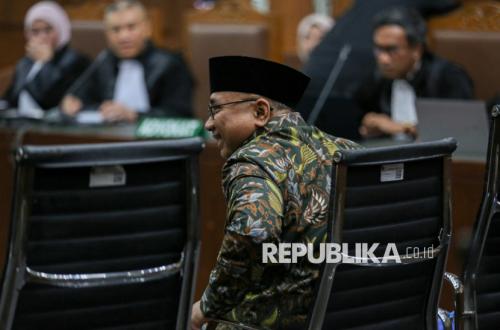
JAKARTA — KH Anwar Abbas, Deputy Amirul Hajj for the 2024 pilgrimage, said he did not object to former Religious Affairs Minister Yaqut Cholil Qoumas’s policy on allocating the additional 2024 Hajj quota, and described it as a prudent decision.
Abbas said the policy of dividing the additional quota equally between regular and special Hajj pilgrims was intended to help safeguard pilgrims’ wellbeing.
He made the remarks while appearing as a witness for Yaqut’s legal team at a further hearing in the case concerning alleged corruption in the Ministry of Religious Affairs’ additional Hajj quotas for 2023–2024. The hearing was held at the Central Jakarta District Court’s Corruption Court on Thursday, 29 October 2026. Yaqut’s lawyers initially asked Abbas for his views on the possibility of increasing the number of regular pilgrims.
Abbas said that adding pilgrims without taking accommodation capacity into account could lead to excessive crowding and potentially cause conflict among pilgrims.
“I think if more are added, the pilgrims could end up fighting. In the end, instead of organising the Hajj pilgrimage, they would be busy quarrelling with one another,” Abbas said during the hearing.
Abbas then described a saying from his home province of West Sumatra to illustrate the condition of pilgrims who are exhausted and need rest.
“Where I come from in West Sumatra, there are three kinds of people you must not disturb: someone who is hungry, someone who needs to go to the toilet, and someone who is sleepy. So if pilgrims are already sleepy and there is no bed, they will become furious,” he said.
Abbas said increasing the quota without accounting for accommodation capacity could result in extreme overcrowding. For example, he said, increasing the number of pilgrims from 10,000 to 20,000 could make conditions at accommodation sites much more congested.
“That is why, in my view, if the quota is increased — say from 10,000 to 20,000 — there will certainly be extraordinary overcrowding. I do not think that would solve a problem; it would instead cause harm,” Abbas said.