
Anwar Abbas Calls Yaqut-era 50:50 Split of Additional Hajj Quota a Wise Decision
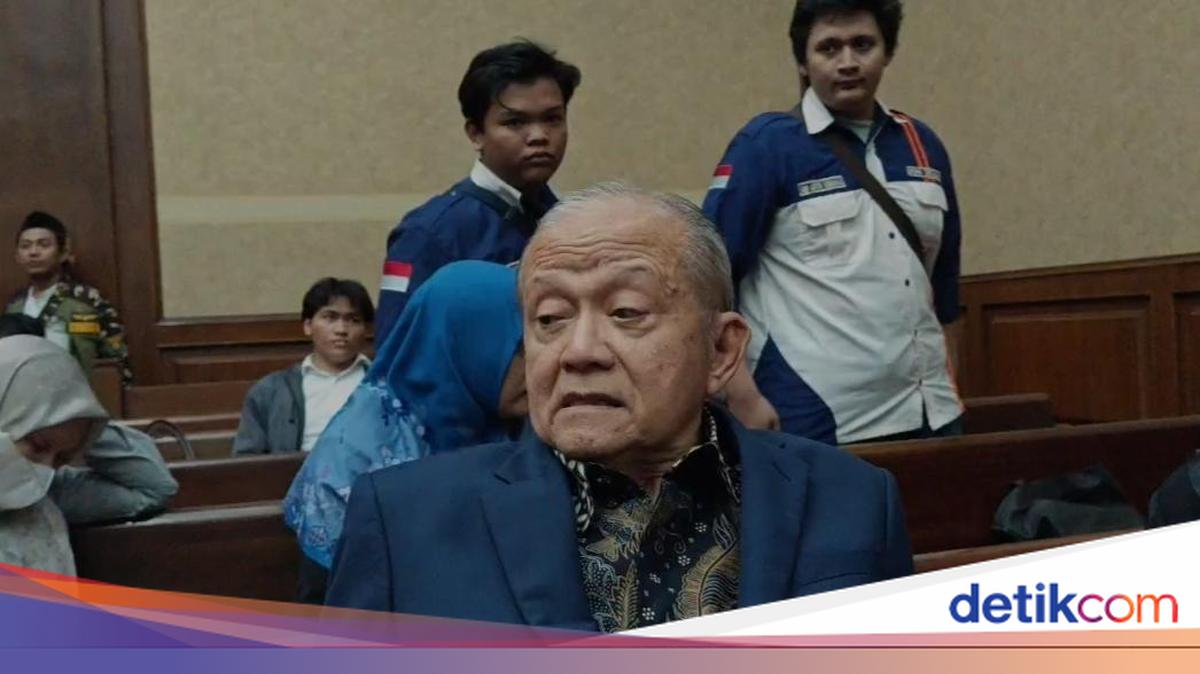
Indonesian Ulema Council (MUI) deputy chairman Anwar Abbas praised the decision, made during the tenure of former Religious Affairs Minister Yaqut Cholil Qoumas in 2024, to divide the additional Hajj quota equally between regular and special pilgrims. Anwar said the decision was wise in view of overcrowding in Mina.
Anwar made the remarks while testifying as a defence witness for Yaqut in a case concerning alleged corruption in additional Hajj quotas in 2023–24 at the Jakarta Corruption Court on Thursday (29 October 2026). He initially explained how he was appointed Naib Amirul Hajj, or deputy head of the Hajj delegation, in 2024.
“Could the witness explain the process by which he was appointed Naib Amirul Hajj, or deputy head of the Hajj delegation?” Yaqut’s lawyer, Dodi S Abdulkadir, asked.
“Usually, the Ministry of Religious Affairs writes to Muhammadiyah’s central executive board, asking it to nominate someone to serve as Naib Amirul Hajj. My chairman, Prof Dr Haedar Nashir, sent my name. But after my name was submitted, the ministry wanted it changed and did not want me. The service provider, however, refused to make a replacement, so I went and carried out my duties as Naib Amirul Hajj,” Anwar replied.
Anwar said he had also served as a member of the Amirul Hajj in 2008. Based on his experience as both Naib Amirul Hajj and a member of the delegation, he described Yaqut as a hard worker, even more so than himself.
“Could the witness explain the duties of the Naib Amirul Hajj at the time and how they were carried out? This was in 2024,” Yaqut’s lawyer asked.
“I was the deputy. The Amirul Hajj himself was the Minister of Religious Affairs, Mr Yaqut. I had previously been a member of the Amirul Hajj in 2008, when the religious affairs minister invited me to join. I concluded that Mr Yaqut was a minister and, in my view, a hard worker. I consider myself a hard worker, but I think he worked even harder,” Anwar replied.
Anwar cited Yaqut’s habit of continuing to make rounds while other members of the Amirul Hajj slept. He also recalled Yaqut consistently holding meetings at 2am to ensure the best possible service for pilgrims.
“For example, the Amirul Hajj, the Naib Amirul Hajj and the other members would usually meet after the evening prayer until 10pm or so, and then I would go to sleep. But Gus Yaqut did not sleep; he would go around,” Anwar said.
“I naturally wake up at 2am; I am used to it. I often saw Gus Yaqut chairing meetings at that hour. I thought it was extraordinary. I wondered why he was holding meetings in the middle of the night, or early in the morning. From what I observed, he wanted to provide the best possible service to the pilgrims,” he added.
Anwar said Yaqut acted promptly when problems were brought to his attention or when he saw them himself. He said he admired and appreciated Yaqut.
“If a problem was reported to him, or he saw it himself, he dealt with it immediately. That is what I admired. Although I was not particularly close to Gus Yaqut, I appreciate him as a person,” he said.
Anwar said he had read reports that the 2024 Hajj had been conducted well despite some problems. One issue was the limited number of beds in Mina, where the space had become smaller even as many pilgrims needed accommodation.
“I read in the news that the 2024 Hajj was conducted well, although there were problems here and there, as is usual. One widely discussed issue was the beds in Mina. Compared with 2008, the space for beds in Mina had become smaller,” Anwar said.
“This was because space was limited and there were many people staying there. The biggest problems were with the toilets and bathrooms. That cannot be laid at the door of the Minister of Religious Affairs or the Amirul Hajj, because the space was genuinely very limited,” he added.
Anwar proposed that the Saudi Arabian Government build facilities in Mina with three, four or five storeys. He said this would allow pilgrims now concentrated on the ground floor to be accommodated on other floors.
“When I was in Arafat, and later in Mina, journalists asked me how the overcrowding could be addressed. I suggested that Mina should be built up to three, four or five floors in the coming years,” Anwar said.
“Then the pilgrims crowded onto the ground floor in 2024 could be spread across the second, third and fourth floors. If the Saudi Government could do that, I think the Hajj would be organised very well,” he added.
He said overcrowding in Mina would continue unless the Saudi Government built additional floors, and that responsibility for the limited space should not be assigned to Indonesia’s Ministry of Religious Affairs or its Hajj Ministry.
“If the Saudi Government does not decide to build a second, third or fourth floor in Mina, the overcrowding will continue. It cannot be blamed on the Ministry of Religious Affairs, or on the Hajj Ministry if responsibility has since moved there, because the space is genuinely limited,” Anwar said.
Anwar said that further increasing the number of pilgrims in Mina could lead to arguments between them. He called Yaqut’s decision to allocate 10,000 of the 20,000 additional Hajj places in 2024 to regular pilgrims a wise step.
“Based on the witness’s experience of the crowding in Muzdalifah, Mina and Arafat, did it cause difficulties or create safety risks if conditions became even more crowded, particularly for elderly pilgrims?” Yaqut’s lawyer asked.
“If there were even more people, I think the pilgrims could end up fighting. Instead of performing the Hajj, they would be busy arguing with one another. In my village in West Sumatra, there are three kinds of people you must not disturb: someone who is hungry, someone who needs the toilet, and someone who is sleepy. If pilgrims are sleepy and there are no beds, they will get angry,” Anwar said.
“So, if the quota were increased from 10,000 to 20,000, I am certain there would be extraordinary overcrowding. In my view, that would not bring benefit but harm. In Islamic jurisprudence, there is a principle that preventing harm takes precedence over securing benefit,” Anwar continued.
“Therefore, if the Minister of Religious Affairs took only 10,000 for regular pilgrims, if I remember correctly, I consider that a wise decision—very wise. Forcing the issue would cause harm,” he added.
Speaking after the hearing, Anwar said his assessment of the 50:50 split between regular and special Hajj places was his personal opinion. He said a religious affairs minister must also consider pilgrims’ safety and comfort.
“In my view, there were 20,000 additional places, and the ministry allocated 10,000 to the special Hajj. I think that was wise, in my personal opinion. The space did not increase; it became smaller. If I remember correctly, it was 0.8 square metres, so someone with a large frame like mine would not fit,” Anwar said.
“I think the Minister of Religious Affairs can justify the decision mathematically, because the minister must also consider the safety and comfort of each pilgrim,” he added.
In this case, former Religious Affairs Minister Yaqut Cholil Qoumas has been charged with causing state losses of Rp622,090,207,166.41 (Rp622 billion) in alleged corruption involving additional Hajj quotas in 2023–24. Prosecutors say he acted jointly with Asrul Azis Taba, chairman of the Kesthuri association; Yaqut’s former special staff member Ishfah Abidal Azis, also known as Gus Alex; and Ismail Adham, operations director of PT Makassar Toraja (Maktour).
Source: jawawa.id (https://jawawa.id/newsitem/anwar-abbas-calls-yaqut-era-50-50-split-of-additional-hajj-quota-a-wise-decision-1793289214)
Originally published by detikcom (https://news.detik.com/berita/d-8730211/anwar-abbas-sebut-pembagian-kuota-haji-tambahan-50-era-yaqut-keputusan-bijak), translated from Indonesian