
Anticipating Energy Crisis, Government Urged to Seriously Reform National Public Transportation System
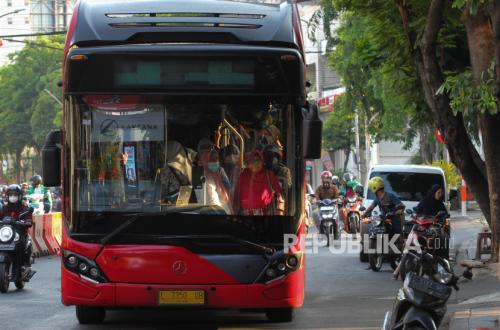
REPUBLIKA.CO.ID, JAKARTA – Deputy Chairman of Commission V of the Indonesian House of Representatives, Syaiful Huda, has urged the Indonesian Government to immediately take revolutionary steps to reform the national public transportation system. This is in response to the escalation of the conflict in the Middle East, which has led to the closure of the Strait of Hormuz, triggering a surge in global energy prices and threatening domestic economic stability.
“The energy crisis we are facing now must serve as a catalyst for the government. We cannot keep getting trapped in reactive policies like working from home (WFH) every time oil prices spike. The permanent solution is to shift public mobility from private vehicles to adequate public transportation,” said Syaiful Huda in his statement on Monday (6/4/2026).
Huda emphasised that Indonesia’s dependence on private fossil fuel vehicles makes national resilience highly vulnerable to fluctuations in world oil prices. According to him, reforming mass transportation is no longer just an issue of urban comfort, but a strategy for defending energy sovereignty.
“There must be a clear roadmap so that public transportation in Indonesia truly becomes the backbone of comfortable, affordable, and accessible transport in all areas,” he said.
He criticised the stalled development of public transport in various major cities due to budget efficiency. Huda encouraged the central and regional governments to synergise in accelerating the Buy The Service (BTS) system.
“Currently, the mass transportation that runs well and is relatively integrated is only in Jakarta. Meanwhile, other major cities like Bandung, Surabaya, Semarang, Medan, Makassar, Palembang, very much need serious handling of the availability of adequate mass transportation,” he said.
This PKB politician asked the government to boldly redirect part of the fuel subsidies for private vehicles to strengthen operational subsidies or Public Service Obligation (PSO) for public transport. This step aims to keep mass transportation fares affordable and expand services.
“If it’s affordable, we are confident that public transportation will become the rational choice for the public amid the high cost of fuel,” he said.