
Anticipating El Nino, Makassar Appoints BPBD as Water Crisis Command for Six Districts
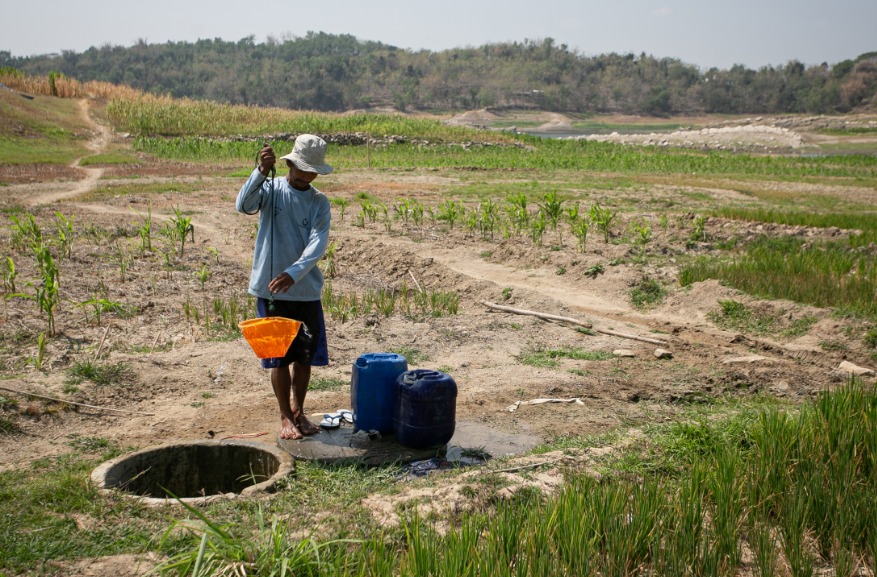
The threat of an extreme El Niño is forcing the Makassar City Government to act swiftly. Mayor Munafri Arifuddin has emphasised that preparedness is no longer an option, but a necessity.
Amid rising global vigilance regarding the potential for the most severe El Niño in decades, the Makassar City Government is taking proactive measures. Since last April, the administration has held emergency meetings involving the Regional Secretary, the BPBD, the Public Works Department, the Fire Department, the Health Office, the Social Office, and all sub-district heads across Makassar.
“The water crisis is not merely an issue of availability; it has wide-ranging chain effects. Communicable diseases could increase, educational activities and health facilities could be disrupted, and there is the potential for social conflict,” stated the Mayor, affectionately known as Appi.
Appi has taken decisive action by appointing the BPBD as the command centre (leading sector) for crisis management. All Regional Government Organisations (OPD) and sub-district heads have been instructed to work in an integrated manner under the coordination of this agency.
“The command lies with the BPBD. They are the primary actors in ensuring the entire process runs smoothly, including water availability and distribution,” said Appi.
Moving beyond mere concepts, he requested that handling scenarios be developed down to the most detailed technical levels. He noted that simulations must no longer be mediocre.
“We must know exactly how many minutes it takes for water to reach the community, who delivers it, and how it is distributed. We must precisely calculate the water sources, the number of vehicles, distribution points, and storage,” he added.
Notably, Appi is encouraging the creation of pilot areas to serve as models for integrated crisis management simulations. This step is considered crucial, given that the impact of El Niño is not limited to drought, but also has the potential to raise food prices due to crop failure and trigger a surge in cases of respiratory infections, skin diseases, and tuberculosis.
The Head of the Makassar BPBD, Fadli Tahar, revealed data indicating that at least six districts are predicted to experience the most significant impacts: Tallo, Panakkukang, Tamalanrea, Biringkanaya, Manggala, and Ujung Tanah.
“Tallo is the most vulnerable area, particularly in the Buloa area, which still suffers from a lack of clean water even during the rainy season,” explained Fadli.
Drawing from experience during the 1997–1998, 2015–2016, and 2023 periods—which led Makassar to declare a drought emergency status—the BPBD has been in a state of pre-alert since March-April, conducting direct field surveys.
“The data is already available, but we continue to go into the field to ensure the latest drought levels serve as the basis for intervention,” he added.
Working not alone, the BPBD is collaborating with humanitarian organisations such as Dompet Dhuability, the Indonesian Red Cross (PMI), Baznas, as well as volunteers from Kalla Rescue and Bosowa Peduli, in an integrated single-command operation.
“We have formed an integrated single-command operation so that the distribution of aid and handling can be faster and more effective. Clear standard operating procedures are already in place,” Fadli asserted.
The peak impact of El Niño is expected to occur through October, with the highest intensity predicted for that month. Meanwhile, the Fire Department has been placed on maximum alert in high-risk areas, given that the risk of fire is certain to increase drastically due to dry conditions and hot winds.
“Do not panic, but we must be prepared. The important thing is that we are able to calculate and ensure the availability of resources,” concluded Appi.