
Anticipating Drought and Air Pollution, Jakarta BPBD and BMKG Conduct Weather Modification Operations
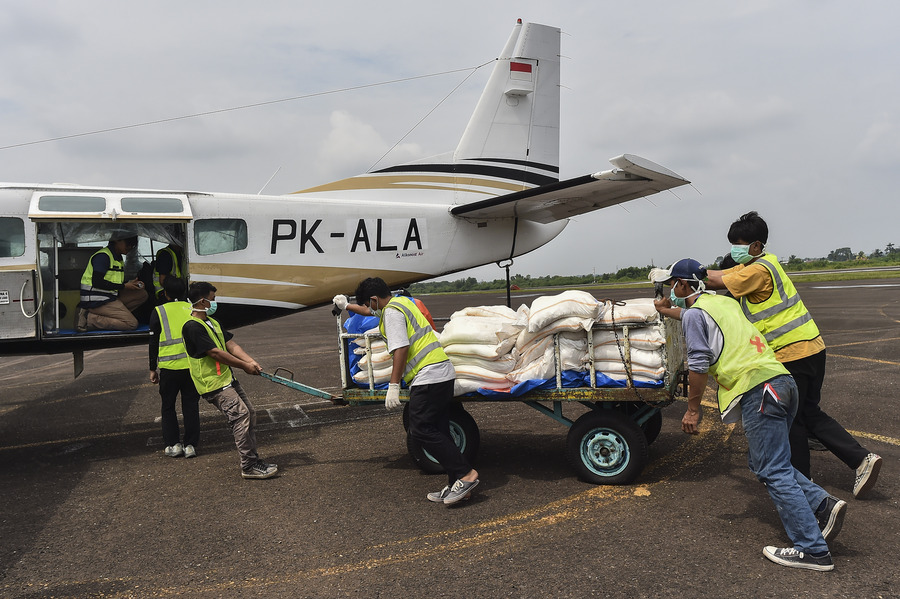
The Provincial Government of DKI Jakarta, through the Regional Disaster Management Agency (BPBD) together with the Meteorology, Climatology, and Geophysics Agency (BMKG) and Smart Cakrawala Aviation, is carrying out a Weather Modification Operation (OMC) as an anticipatory measure to face the threat of the dry season.
Head of the DKI Jakarta BPBD, Marulitua Sijabat, said the operation is part of mitigation efforts against the impact of drought as well as air quality conditions in several areas of Jakarta.
“We are making a joint effort to protect Jakarta from the potential threat of the dry season. This weather modification is being carried out in locations we have monitored, including points with relatively high pollutant figures,” said Marulitua Sijabat at Pondok Cabe Airport, South Tangerang, Banten, on Friday (28/8).
According to Maruli, the implementation of the OMC refers to the results of real-time atmospheric monitoring as well as recommendations provided by the BMKG.
The operation was carried out after five administrative city areas in Jakarta entered Alert status in the meteorological drought early warning. This condition is marked by Days Without Rain (HTH) that have lasted for at least 31 consecutive days.
In addition to the threat of drought, Jakarta’s air quality before 20 August 2026 was also recorded as being in the unhealthy category for the last 26 days.
The Weather Modification Operation Post at Pondok Cabe Airport began operating on 21 August 2026. Up to 26 August 2026, the team had carried out 24 flight sorties with a total operating time of approximately 21 hours.
The operation uses two Cessna Caravan 208B aircraft operated by Smart Cakrawala Aviation.
During its implementation, the aircraft seed clouds that are considered to have the potential to produce rain. Under certain conditions, seeding is also directed at a number of priority locations that, based on monitoring, have poor air quality or high PM2.5 concentrations.
The results of the operation on 27 August 2026 showed rain falling in several areas of Jakarta. Initial evaluation also recorded a decrease in pollutant concentrations in several areas ranging from 23 to 50 per cent. The highest temporary decrease was recorded at 57 per cent.
“The OMC has succeeded in optimising rain potential in several locations. We also see a decrease in pollutant figures, but the results are still being evaluated because atmospheric conditions are very dynamic,” said Maruli.
Despite the positive results from the operation, the DKI Jakarta BPBD emphasised that the OMC is not the only strategy for addressing Jakarta’s air quality problems.
“The decrease in PM2.5 seen in the interim evaluation is certainly something we are observing, but the OMC is not a single solution. Air quality problems must be addressed comprehensively and consistently from the source of the pollution,” Maruli stressed.
The DKI Jakarta Provincial Government continues to run a number of air quality control programmes outside the implementation of the OMC. These efforts include air quality monitoring, motor vehicle emission supervision, emission control from the industrial and business sectors, strengthening public transport, and public education.
The public is also encouraged not to burn waste and to use water wisely during the dry season period.
“We position the OMC as one of the mitigation instruments based on data and atmospheric conditions. The operation is only carried out when it is technically feasible and can indeed provide benefits based on BMKG recommendations,” explained Maruli.
From a technical perspective, BMKG OMC supervision team member Sutrisno explained that the methods and materials used in seeding are adjusted to atmospheric conditions.
During the dry season period, one of the methods applied is water mist. This method uses a mixture of water and SLS (Sodium Lauryl Sulfate) surfactant aimed at helping to bind pollutants in the air.
“In this weather modification, the method used is different from during the rainy season. In the dry season, we use a surfactant mixed with water to help bind pollutants and reduce pollutant figures in the DKI Jakarta area,” said Sutrisno.
In addition to this method, the OMC team can use CaCl2 or calcium chloride if monitoring results show cloud growth that meets the criteria.
The seeding material is used to assist the condensation process so that naturally formed rain potential can be optimised.
“When monitoring results show cloud growth that meets the criteria, CaCl2 seeding material can be used to assist the cloud condensation process. This method is carried out jointly by considering the existing atmospheric conditions,” Sutrisno revealed.
Source: jawawa.id (https://jawawa.id/newsitem/anticipating-drought-and-air-pollution-jakarta-bpbd-and-bmkg-conduct-weather-modification-operations-1787921436)
Originally published by Media Indonesia (https://mediaindonesia.com/megapolitan/927153/antisipasi-kekeringan-dan-polusi-udara-bpbd-dki-bmkg-jalankan-operasi-modifikasi-cuaca), translated from Indonesian