
Anticipating an earlier dry season, this is the preparation by the farming group in West Jakarta
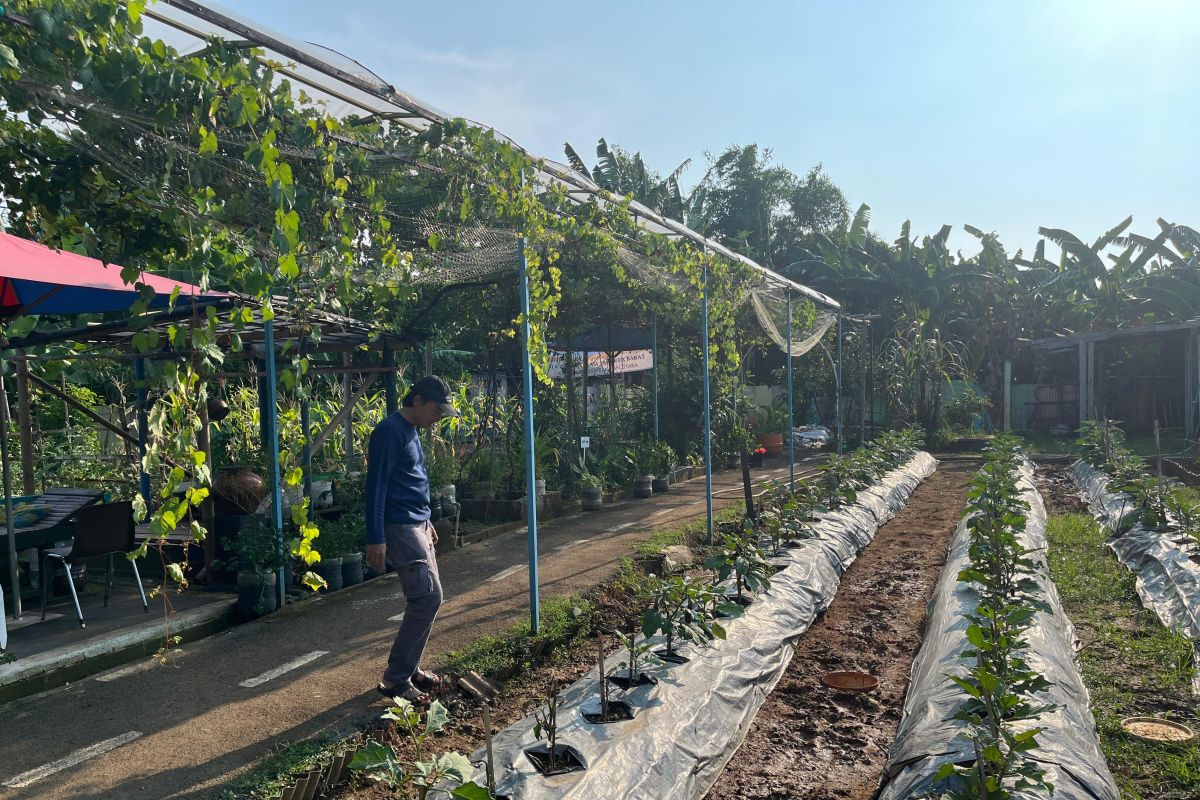
Jakarta (ANTARA) - The GSG 07 Farming Group (Poktan) in Kembangan, West Jakarta, is already preparing to face the prolonged dry season predicted by the Meteorology, Climatology, and Geophysics Agency (BMKG), which is expected to arrive earlier than usual.
One of the farmers, Mulyadi (55), said he has prepared containers to collect rainwater.
“We have made rainwater catchers using drums to collect rainwater. The water can be used to irrigate plants outside. Several have been made here, just as a precaution if there’s no water, we can irrigate the plants with this water,” Mulyadi said at the location on Monday.
Although water availability is not a problem for Mulyadi at his farming site, the prolonged dry season must still be managed to ensure plants can be irrigated regularly.
“Because here, getting water is not difficult, so it’s still safe,” he explained.
However, according to him, during the dry season, the main challenge is regulating plant irrigation regularly.
“The most important thing is regular watering, that’s it. It’s different from the rainy season,” he said.
Meanwhile, the Chairman of Poktan GSG 07 Kembangan, Kasmin, said the dry season is actually very good for plant growth, especially for hydroponic crops and similar ones.
“If it gets rainwater, it’s not good, and for all plants, the soil pH is different too. For hydroponics here, all in this medium, the hot season is good,” said Kasmin.
For example, with pak choi plants, he said, during the hot season, these plants are harvested faster and the yield is better compared to the rainy season.
“The difference is in the growth. Because in the rainy season, it’s not hot. Whereas in hydroponics, it requires heat,” he explained.
According to Kasmin, the dry season is more detrimental to rice farmers in the regions, as it requires water from reservoirs.
“Rice really needs water, so drought could become a problem,” he stated.
Furthermore, Kasmin said that Poktan GSG 07 is specifically for residents of RW 07 in several RTs who want to learn gardening and similar activities.
The harvest of vegetables and fruits is prioritised for the needs of surrounding residents.
“If outsiders want to buy here, they can, but we prioritise the residents in this area,” explained Kasmin.
On the 3,500 square metre plot, residents plant various types of vegetables and also raise fish as a form of food security.
Various types of plants are grown, from chillies, grapes, honeydew squash, eggplants, to long beans. For fish, residents raise catfish and tilapia.
Poktan GSG 07 also has hydroponic plants in two locations. At those sites, residents plant water spinach, spinach, and pak choi, which can be sold.
Previously, the Meteorology, Climatology, and Geophysics Agency (BMKG) predicted that the 2026 dry season in Indonesia could arrive earlier than usual.
This condition is triggered by global climate dynamics impacting reduced rainfall in several regions of Indonesia, including Jakarta.
Deputy for Climatology at BMKG, Dr. Ardhasena Sopaheluwakan, said there is a main factor causing the dry season to come earlier than usual.
“The main factor is the variability of Indonesia’s climate, the entry of the Australian monsoon wind,” said Ardhasena via a short message in Jakarta on Monday.
According to Ardhasena, the dry season will impact the entire Jakarta area.
“All of Jakarta will be affected,” he said.
Source: jawawa.id (https://jawawa.id/newsitem/anticipating-an-earlier-dry-season-this-is-the-preparation-by-the-farming-group-in-west-jakarta-1776707440)
Originally published by Antara (Indonesian) (https://www.antaranews.com/berita/5534923/antisipasi-kemarau-datang-lebih-awal-ini-persiapan-kelompok-tani-di-jakbar), translated from Indonesian