
Antarctica’s Thwaites Glacier Is Melting Faster, Threatening Sea Levels
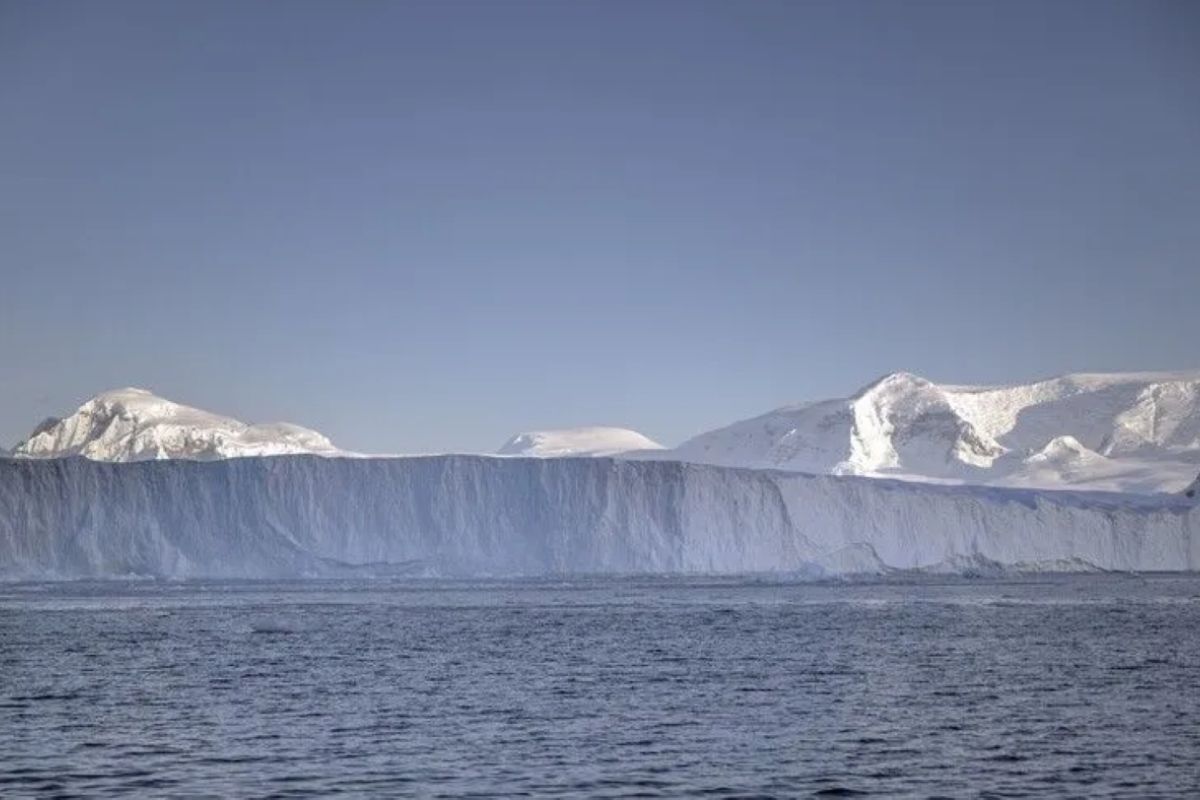
Istanbul (ANTARA) — One of the world’s largest glaciers is melting much faster than previously estimated and could contribute up to twice as much to global sea-level rise as earlier projections suggested by the end of this century.
A new study published this week in the journal Nature Communications found that Antarctica’s Thwaites Glacier is rapidly losing ice as warm ocean water seeps several kilometres beneath it, melting the ice from below.
The researchers estimate that this process could cause Thwaites to contribute up to 30 millimetres (1.2 inches) to global sea-level rise by 2100, even without additional warming beyond conditions seen in recent years.
Previous conventional ice-sheet models estimated that Thwaites would contribute about 15 millimetres (0.6 inches) to global sea-level rise by 2100.
Thwaites is nicknamed the Doomsday Glacier because of the potentially serious consequences if it collapses. It covers about 192,000 square kilometres in West Antarctica—roughly the size of Senegal and larger than the US state of Florida.
The glacier is part of the much larger West Antarctic Ice Sheet. Along with other glaciers, including Pine Island Glacier, Thwaites acts as a buttress, limiting the flow of large quantities of ice from land into the ocean.
Thwaites currently accounts for about 4 per cent of global sea-level rise. It has lost more than one trillion tonnes of ice since 2000, and continues to lose around 50 billion tonnes each year.
Scientists have closely monitored the glacier since discovering in the 1980s that ice in the region was retreating rapidly.
Warm ocean water flowing beneath the ice sheet is considered one of the main factors. Human-driven climate change, particularly warming associated with fossil-fuel emissions, is raising ocean temperatures and putting greater pressure on glaciers around the world.
The new study focused on Thwaites’ grounding zone, where ice that was resting on bedrock begins to float on the ocean.
Earlier models often treated the grounding line as a fixed boundary. In the new study, however, researchers modelled a wider zone where repeated tidal movements lift and lower the ice sheet, allowing warm seawater to penetrate further beneath it.
Lead author Mattia Poinelli, a project scientist at the University of California, Los Angeles (UCLA), said the process, known as tidal pumping, allows warm water to reach much deeper beneath the ice and trigger intense melting.
The new modelling also raises concerns that Thwaites could lose contact with the underwater Mouginot Ridge, a structure that currently helps hold back the glacier’s movement.
Simulations consistent with recent observations indicate about a 60 per cent chance that the glacier will detach from the underwater ridge by 2100, with this potentially happening as early as the late 2030s.
The researchers warned that this change could accelerate the glacier’s retreat and increase the risk of sea-level rise and flooding for coastal communities worldwide, beyond previous estimates.
Source: jawawa.id (https://jawawa.id/newsitem/antarcticas-thwaites-glacier-is-melting-faster-threatening-sea-levels-1792255823)
Originally published by Antara (Indonesian) (https://www.antaranews.com/berita/5793957/gletser-thwaites-di-antartika-mencair-lebih-cepat-ancam-muka-laut), translated from Indonesian