
ANTARA Survey: Customer Satisfaction with KAI During Lebaran Return Flow Reaches 91.4 Percent
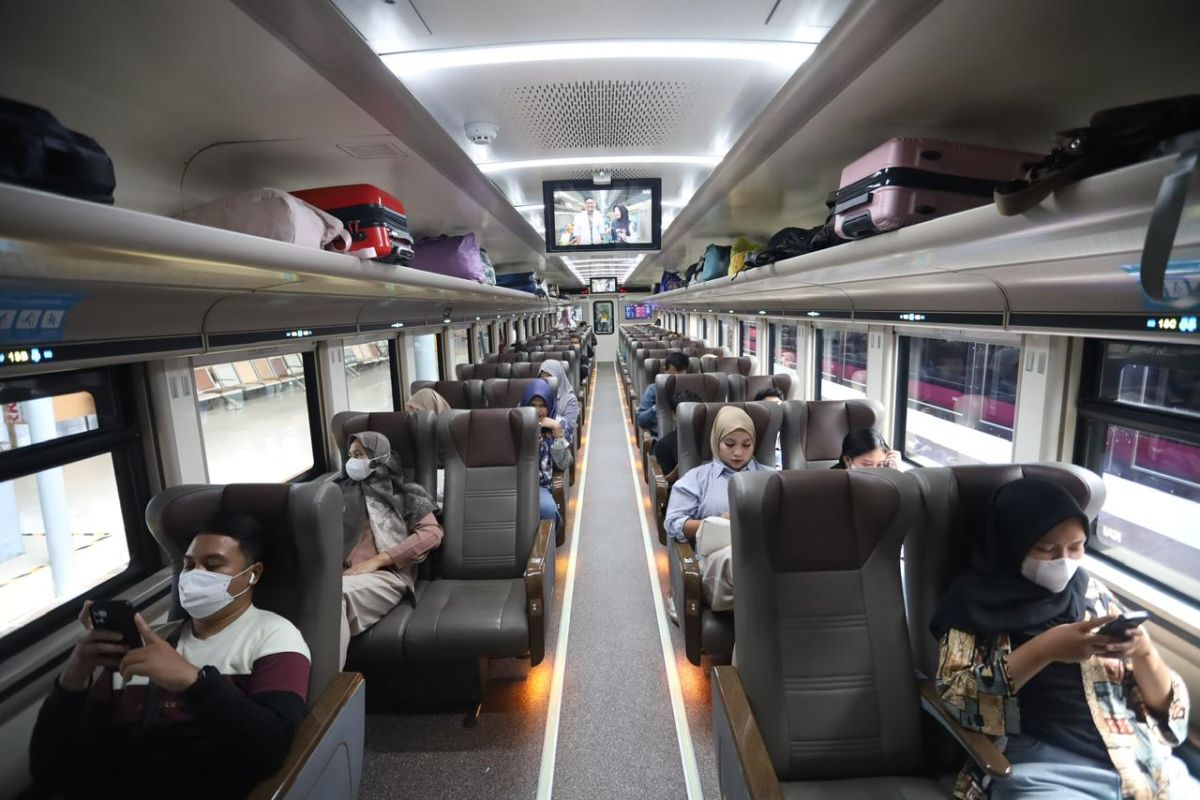
A survey conducted from 24-29 March 2026 involved 537 KAI users across 10 stations in five major cities: Jakarta (Gambir and Pasar Senen Stations), Yogyakarta (Tugu and Lempuyangan Stations), Bandung (Bandung and Kiaracondong Stations), Semarang (Tawang and Poncol Stations), and Surabaya (Turi and Gubeng Stations).
ANTARA’s Director of Commercial, Business Development, and IT, Rachmat Hidayat, stated that the survey results reflect the success of KAI’s customer-based service transformation.
“A satisfaction rate exceeding 90 percent indicates that KAI’s services not only meet but also surpass customer expectations, particularly during critical moments like the Lebaran return flow,” Rachmat said in his statement in Jakarta on Monday.
Based on respondent characteristics, the majority of KAI users surveyed were Generation Z at 70 percent, followed by millennials at 16.8 percent and Generation Alpha at 9.3 percent. In terms of gender, 54.7 percent of respondents were female and 45.3 percent male.
The survey also showed that security and comfort are the main foundations of customer experience in using KAI services. Additionally, travel time efficiency and KAI’s contribution to reducing congestion are the primary reasons people choose trains as a mode of transport.
The survey recorded that more than 90 percent of ticket transactions were conducted online through various digital channels, including the Access by KAI application.
Social media also serves as an important source of information, with Instagram used by 61.6 percent of respondents and TikTok by 24.4 percent.
In terms of intermodal integration, 81.6 percent of respondents gave positive ratings. Meanwhile, on accessibility, 92.2 percent of respondents rated KAI services in urban areas as easily accessible.
The survey also noted changes in passenger service preferences. Manual boarding remains the primary choice with 58.1 percent of respondents, but the use of face recognition technology reaches 41.9 percent.
Customer expectations have also shifted towards value-added services. Free WiFi on trains is the primary need with 55.5 percent of respondents, followed by options for women-only carriages and large baggage facilities at 11.2 percent each.
Additionally, needs for services for the disabled and executive waiting rooms emerge as specific requirements in certain segments.
Improvement notes provided by respondents include enhancing the Access by KAI application system, cleanliness of toilets at stations and on trains, comfort of waiting rooms, and variety of food menus with more affordable prices.
Rachmat emphasised the importance of continuous innovation to address increasingly dynamic customer needs.
“We see a shift in customer expectations towards value-added services. This is a strong signal for KAI to continue strengthening digitalisation, improving service quality, and delivering a more personal and inclusive travel experience,” he said.
The survey used a mixed-methods approach, both quantitative and qualitative, with 80 percent of questions using the Likert scale and 20 percent open-ended questions to explore insights.
The assessment focused on four main aspects: services and facilities at stations, services on trains, ticket purchasing, and KAI’s social impact.