
ANTARA Research: Eid al-Fitr Homecoming Train Passenger Satisfaction Reaches 92.1 Percent
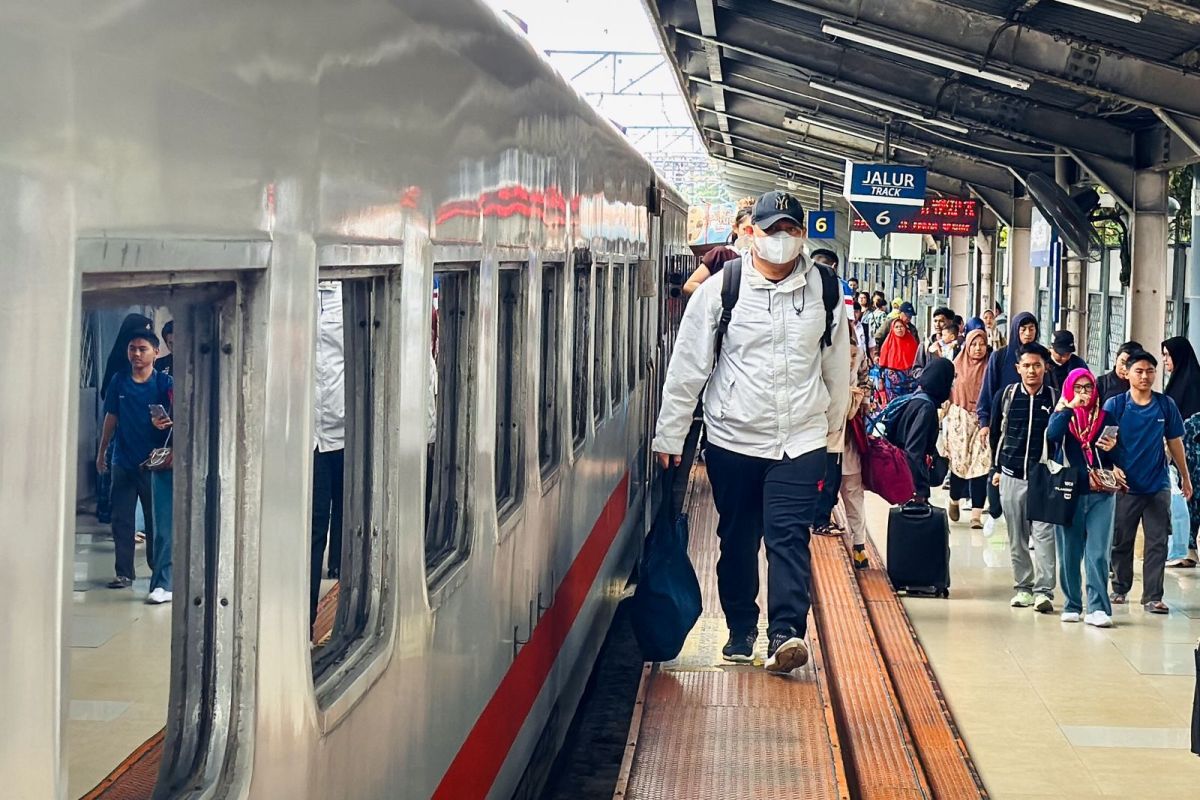
Jakarta - Results from research conducted by NEXT, ANTARA News Agency’s business research unit, indicate that public satisfaction with PT Kereta Api Indonesia (Persero)’s services during the 2026 Eid al-Fitr homecoming rush reached 92.1 percent.
The survey was carried out on 20-21 March 2026, involving 536 respondents selected from major stations on Java island, namely Gambir and Pasar Senen stations (Jakarta), Tugu and Lempuyangan stations (Yogyakarta), Bandung and Kiaracondong stations (Bandung), Tawang and Poncol stations (Semarang), and Pasar Turi and Gubeng stations (Surabaya).
ANTARA’s Commercial Director for Business Development and IT, Rachmat Hidayat, stated that the research results demonstrate increasing public trust in trains as a mode of homecoming transportation.
“The findings from NEXT by ANTARA research show that trains are not only chosen for comfort but also for time efficiency and the level of security perceived by the public, especially during the Eid al-Fitr homecoming period,” Rachmat said in Jakarta on Tuesday.
He added that the digitalisation of services has played a crucial role in enhancing the travel experience for the public.
“The dominance of online ticket purchases and high satisfaction with the boarding process indicate that the digital transformation of train services has provided significant convenience for users,” he said.
The research noted that respondents were dominated by women at 56 percent and men at 44 percent. The majority of respondents were from Generation Z at 66 percent, followed by millennials at 18.3 percent, Generation Alpha at 8.6 percent, and Generation X at 6.3 percent.
By occupation, the largest group of respondents were students or university students at 41.2 percent, followed by private sector employees at 35.1 percent and entrepreneurs at 7.1 percent.
Regarding station services, the majority of respondents rated KAI facilities as good. Cleanliness of waiting areas was rated good by 86.6 percent of respondents, toilet cleanliness by 84.3 percent, and staff responsiveness by 91.1 percent.
In the boarding process, 61.2 percent of passengers still used manual boarding, while 38.8 percent used face recognition.
Satisfaction with the boarding process reached 93.7 percent.
Additionally, intermodal integration was rated good by 86 percent of respondents, and ease of access to KAI services in urban areas reached 93.7 percent.
For onboard services, economy class was the primary choice for respondents at 58 percent, followed by executive class at 36.9 percent and business class at 4.3 percent.
Respondents also rated carriage comfort as good at 88.2 percent, train room cleanliness at 92 percent, and onboard staff responsiveness at 92.6 percent.
Meanwhile, train toilet cleanliness was rated good by 79.6 percent of respondents, and canteen or restaurant facilities by 86.7 percent.
In terms of ticket purchasing, 86.6 percent of respondents bought tickets through online services, with 82.2 percent rating the ticket buying process as easy.
However, 47.7 percent of respondents considered ticket prices relatively expensive, while 40.9 percent viewed prices as neutral.
The research also highlighted the positive social impact of using trains. 32.3 percent of respondents stated that trains help save travel time, 30.8 percent believed it reduces congestion, 16 percent felt security was better guaranteed, and 15.5 percent found travel access easier.
Furthermore, 80.6 percent of respondents said KAI’s environmental commitment influences their decision to use trains, and 93.3 percent rated KAI’s contribution to supporting urban public transport as very good.
The survey also recorded high user loyalty. 93.9 percent of respondents stated they would use trains again, and 93.5 percent were willing to recommend KAI to relatives or close ones.