
Antam’s Downstreaming Business Surges: The Evidence
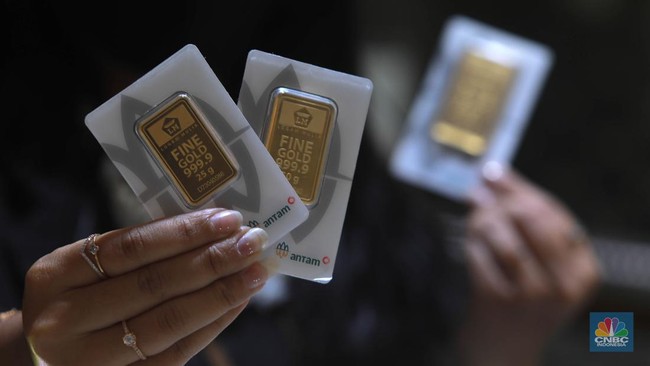
Jakarta, CNBC Indonesia — PT Aneka Tambang Tbk (ANTM), or Antam, is beginning to reap the benefits of its downstreaming development. The progress is seen as a new catalyst for the company’s performance and its shares.
Phintraco Sekuritas analyst Indra Setyadi said Antam continues to strengthen downstreaming in the battery and aluminium ecosystems. Electric vehicle (EV) battery ecosystem development includes a rotary kiln electric furnace (RKEF) project, which has reached the engineering, procurement and construction (EPC) stage, while the high-pressure acid leach (HPAL) project is awaiting investment approval.
He said Antam’s broader vision is to establish an integrated EV battery value chain with support from strategic partners.
In the aluminium ecosystem, Indra said the Mempawah Smelter Grade Alumina Refinery (SGAR) is operational and recorded alumina sales of 350,000 tonnes in the first half of 2026, with sales targeted to reach 700,000 tonnes by year-end.
“SGAR contributed Rp257.6 billion in profit to Antam through PT Borneo Alumina Indonesia (BAI) in the first half of 2026. The profit contribution is expected to increase as production rises,” Indra said in a research report, cited on Thursday (15 October 2026).
According to official Antam data, SGAR is located in Sungai Kunyit, Mempawah Regency, West Kalimantan, and is managed by BAI, a joint venture between Antam and Inalum. Phase I of SGAR has production capacity of one million tonnes a year.
Under the plan, 550,000 tonnes of alumina will be allocated to meet Inalum’s domestic needs, while the remaining approximately 450,000 tonnes will be destined for export markets.
Indra said the expansion of downstreaming is also supporting Antam’s bauxite business, as SGAR’s ore requirements are supplied by the company’s mines. In the first half of 2026, Antam’s bauxite sales rose 24.4% to around 1.3 million wet metric tonnes (wmt), in line with SGAR beginning operations.
In other downstream segments, ferronickel sales increased 32% to around 7,600 tonnes of nickel, while chemical-grade alumina sales rose 10.2% to approximately 100,400 tonnes.
Overall, Antam recorded revenue of Rp62.71 trillion in the first half of 2026, up around 6.3% from the same period a year earlier. Gold remained its largest source of revenue, followed by nickel, then bauxite and alumina. Net profit reached Rp6.91 trillion, an increase of 34% compared with the first half of 2025.
With EBITDA growth and a greater profit contribution from associated entities, particularly BAI, Phintraco Sekuritas forecasts Antam’s 2026 net profit could reach around Rp11.6 trillion, a 61.6% increase.
Phintraco Sekuritas maintained its buy recommendation on ANTM shares, with a target price of Rp4,840. The target implies price-to-earnings ratios of approximately 10 times for 2026 and 9.6 times for 2027, and suggests potential upside of around 56%.
Meanwhile, Antam’s Director of Downstreaming Strategy and Downstream Operations, I Dewa Bagus Sugata Wirantaya, said downstreaming development is aimed at strengthening links across the ecosystem, from Antam’s mineral resources to processing industries and downstream products, thereby creating added value.
“Antam continues to develop downstreaming to increase the added value of the mineral resources we own. In the EV battery ecosystem, the battery-cell manufacturing facility in Karawang began operating in 2026. For bauxite, the development of the alumina ecosystem strengthens the value chain from bauxite to alumina and is an important part of our efforts to build an increasingly integrated and diversified business portfolio,” Dewa said.
“Our focus is to ensure that every downstreaming development strengthens Antam’s value chain while contributing sustainably to the company’s growth and benefiting the Indonesian people. That is why each project is carried out in a measured way, so value creation can continue to increase as downstream operations are strengthened,” Dewa added.