
Antam accelerates readiness of Buli HPAL project towards construction
Our current focus is on accelerating the completion of these matters so that construction can begin immediately.
Jakarta (ANTARA) - PT Aneka Tambang Tbk (Antam) is accelerating the completion of licensing, land acquisition, and readiness for the HPAL project in Buli, East Halmahera, so that the nickel processing project can promptly enter the construction phase.
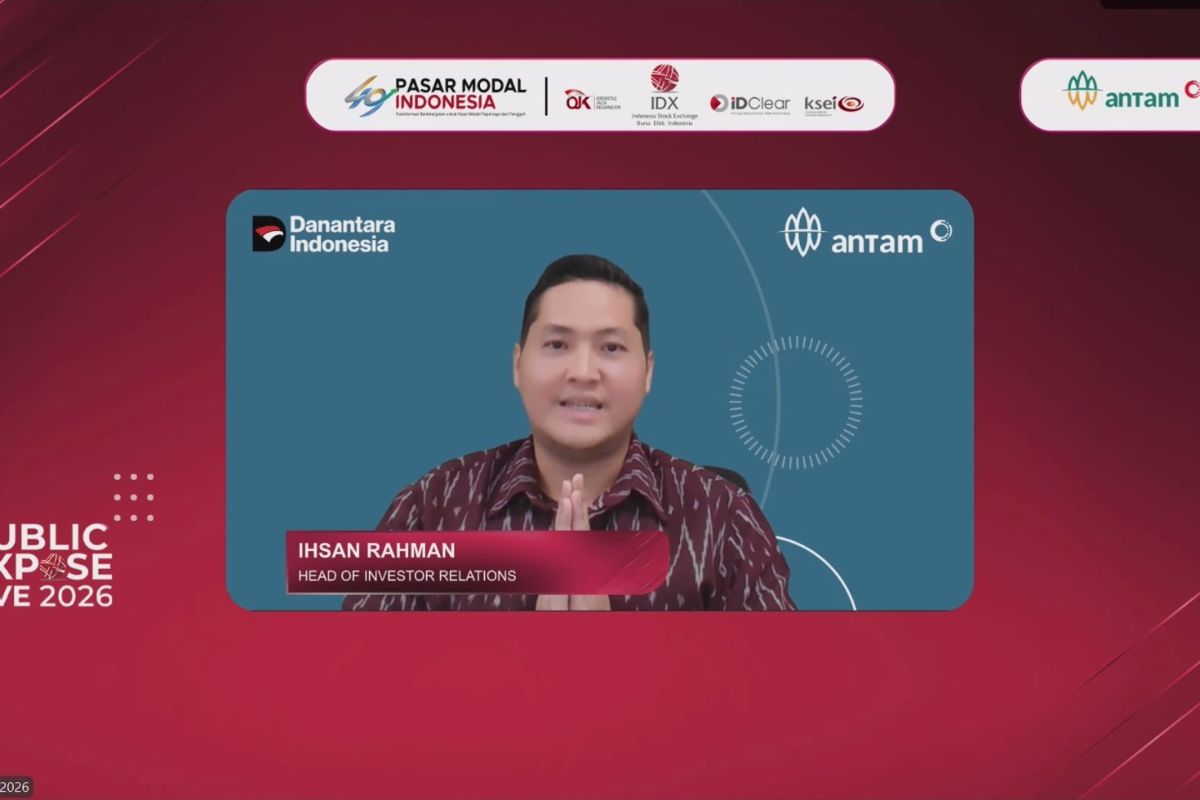
Antam’s Head of Investor Relations, Ihsan Rahman, stated that HPAL, or high-pressure acid leaching, is a vital component of the company’s electric vehicle (EV) battery value chain development.
“Our focus at this time is to accelerate the completion of these matters so that we can immediately begin construction,” said Ihsan during the 2026 Public Expose Live held online in Jakarta on Thursday.
HPAL is a high-pressure acid leaching technology used to process laterite nickel ore. In the Buli project, the facility is intended to produce mixed hydroxide precipitate (MHP) as an intermediate product to support the raw material requirements of the electric vehicle battery ecosystem.
According to the company’s presentation, the Buli HPAL project is currently in the stage of reviewing the final investment decision (FID). The project is being developed alongside the CBL consortium, which consists of CATL, Brunp, and Lygend.
Antam holds a 30 per cent stake in the joint venture. The HPAL facility is designed with a capacity of 55,000 tonnes of MHP per year, with a project schedule spanning 2026–2028 and an estimated cost of approximately 1.9 billion US dollars, equivalent to around Rp33.35 trillion.
The development of HPAL is part of the company’s efforts to increase the added value of low-grade limonite nickel ore by processing it into higher-value products.
“Antam can monetise low-grade limonite nickel ore into higher value-added products, thereby increasing the economic value of Antam’s nickel resources while opening new sources of growth,” said Ihsan.
In the company’s presentation, the EV battery project value chain includes nickel ore mining, nickel processing facilities and industrial zones, HPAL, battery materials, battery cells, and recycling.
Ihsan noted that the electric vehicle battery project is still in the development and preparation phase. Several technical stages, including licensing, still need to be completed before construction can proceed.
“There have indeed been schedule adjustments due to various technical permits,” said Ihsan.
According to him, Antam continues to prioritise the value-added enhancement of nickel into MHP for electric vehicle battery needs as one of its nickel business development priorities.
In addition to HPAL, this value chain includes a nickel processing project using Rotary Kiln Electric Furnace (RKEF) technology in Buli to produce nickel pig iron (NPI). Antam holds a 40 per cent stake in the project, which has a capacity of 88,000 tonnes of NPI per year.
The RKEF project has a schedule of 2025–2027 with an estimated cost of approximately 1.4 billion US dollars, or around Rp24.57 trillion. According to Antam’s presentation, the project is currently in the engineering, procurement, and construction (EPC) stage.
Ihsan stated that the company is also continuing to implement internal efficiencies within its nickel business, including cost reductions in ferronickel smelters, optimisation of energy use, and the regulation of nickel ore blending.
“With demand from the stainless steel and EV battery sectors continuing to rise, we are confident that nickel will serve as a strong pillar for the company’s margins in the medium to long term,” said Ihsan.