
Answering the new challenges of the world economy after the G7
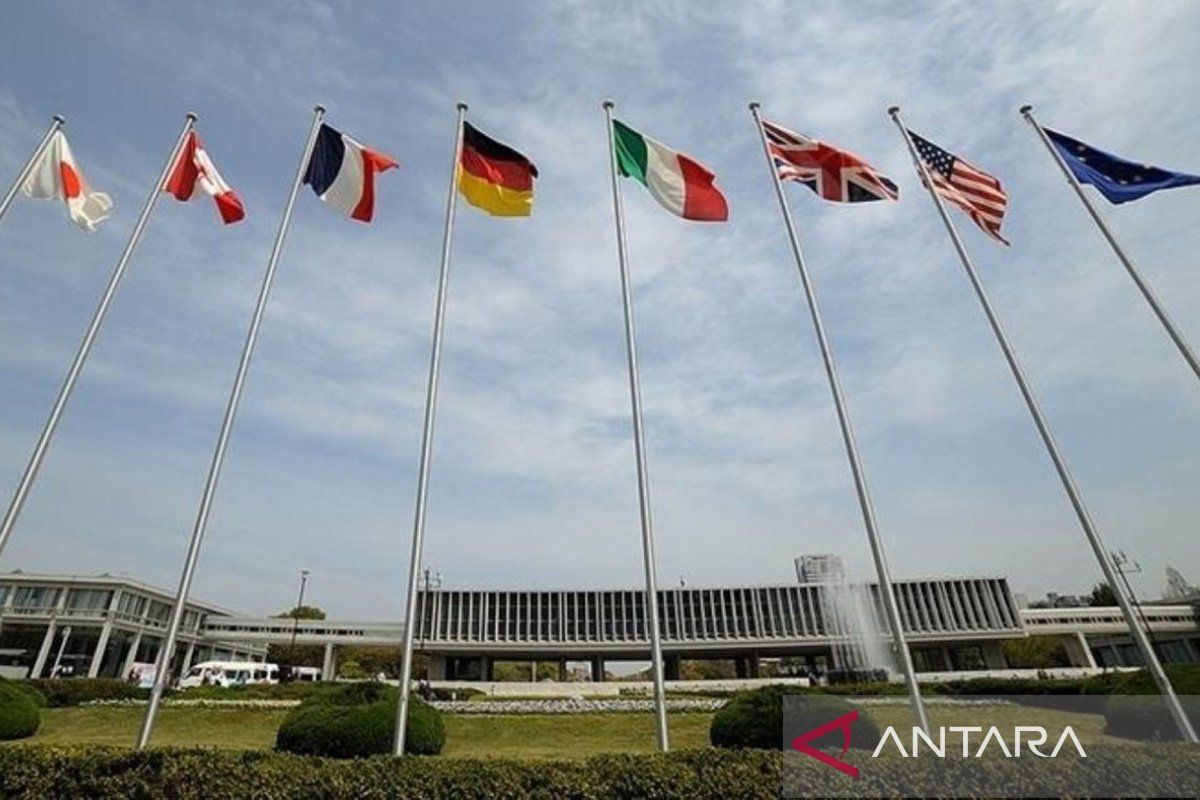
Jakarta (ANTARA) - The world will not wait for countries that merely rely on the luck of natural resources, and the 2026 G7 Summit in Évian, France, served as a stark reminder of this reality. The opportunity to become a major actor in the future global supply chain remains wide open, but it demands far bolder and more calculated steps.
We must immediately establish national standards that exceed global expectations, strengthen our position in various Global South forums to ensure our voice is heard, and accelerate the energy transition so that national industry is truly ready to face an increasingly competitive green economy era.
Our nation’s strength does not lie in how well we follow the policy currents of developed countries, but in how intelligently we define our own rules of the game amidst the struggle of the world’s economic giants. If Indonesia can orchestrate the downstream processing of critical minerals with indisputable sustainability standards, we will no longer be a mere pawn on the geopolitical map, but a key player determining where the global supply chain will dock.
The future of the national economy is not written in Évian, but at home, through targeted policies and the courage to lead.
Diplomacy as a Buffer
Indonesia’s position as a bridging country, connecting the development agenda of developing nations with the technological needs of advanced countries, is a strategic key to facing the future. This role demands a far more aggressive economic diplomacy. Every bilateral negotiation undertaken by the government must be directly linked to technology transfer and tangible foreign capital involvement in the national industrial ecosystem, rather than merely being trapped in burdensome debt schemes.
Amidst the threat of global market fragmentation, Indonesia must remain steadfast in holding its free and active foreign policy as a diplomatic compass, unswayed by the interests of any particular bloc. We need not be trapped in the forced dichotomy of Western versus Chinese spheres of influence. Instead, diplomatic independence will serve as a bulwark for the domestic economy in maintaining stability.
The geopolitical shift triggered by the US-Iran peace agreement following the G7 summit provides significant breathing room for our domestic economy. The decline in oil price volatility following the reopening of the Strait of Hormuz must be seized as a golden moment to pursue healthier fiscal consolidation. This stability is the fundamental capital for us to restructure the economy towards greater productivity.
However, we must realise that stability is only a temporary condition. The threat of global supply chain disruption will always lurk behind every shift in the world’s political map. Therefore, strengthening economic diplomacy capacity, combined with an independent foreign policy, will serve as the main buffer to keep Indonesia resilient amidst a world of ever-changing uncertainty.