
Answering Industry Challenges, ISS Indonesia: Banking Needs Adaptive Workplace Transformation
Amid regulatory developments and accelerating digitalisation, the banking industry is required to run more efficient operations while maintaining service quality and compliance. This condition encourages organisations to build adaptive operations to maintain competitiveness and prepare for the future. Therefore, workplace solutions are an important aspect of operations that can improve productivity, efficiency and compliance, while creating a better experience for employees and customers.
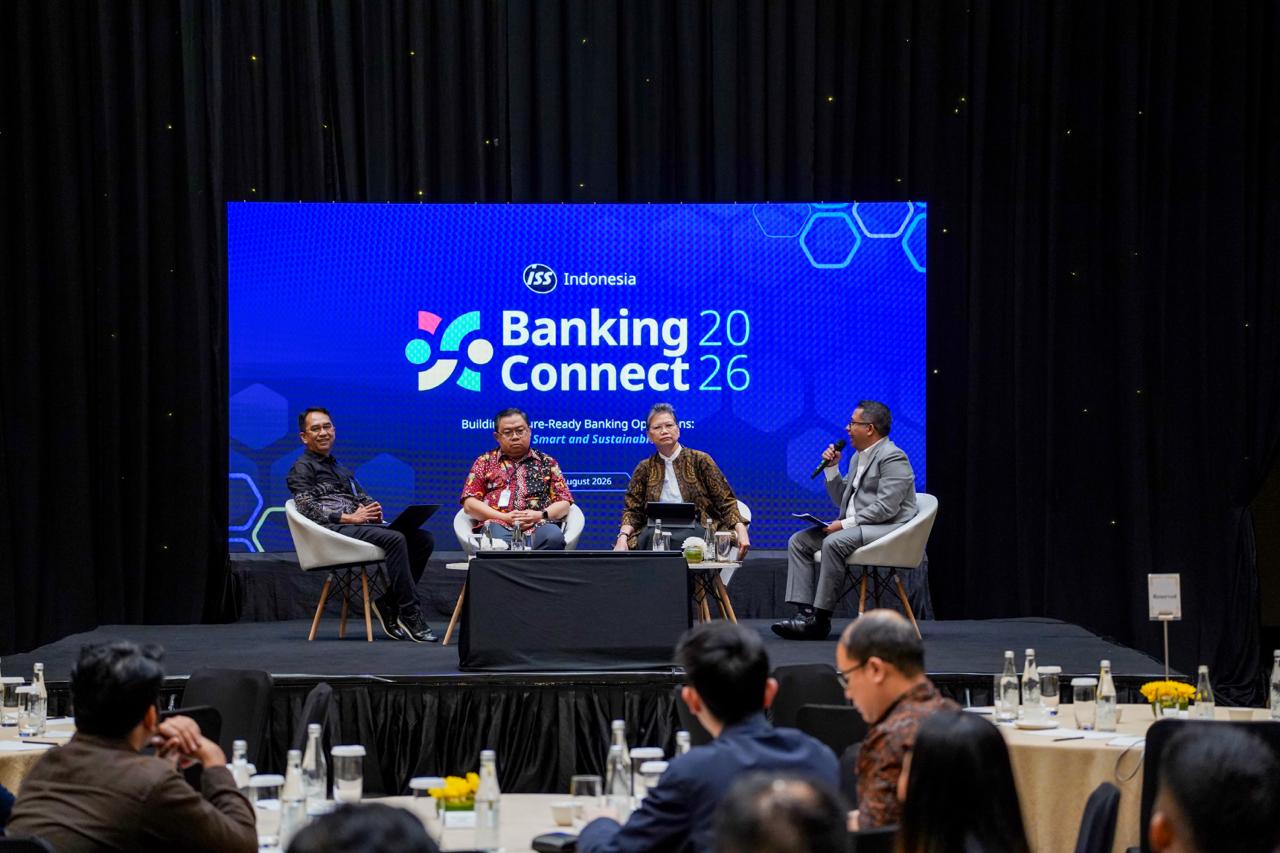
Responding to this need, ISS Indonesia held Banking Connect 2026 with the theme ‘Building Future-Ready Banking Operations: Lean, Smart and Sustainable’. The forum brought together regulators, business associations and banking industry players to share perspectives on developments in labour regulations, including outsourcing management, as well as the use of technology in building more efficient, adaptive and sustainable operations.
Banking Connect 2026 featured speakers from various perspectives, including the Ministry of Manpower represented by Andi Awaluddin, Head of the Wage Development Team, who is also Head of the Labour Law Drafting Team, discussing developments in labour regulations.
From the business community, Myra M. Hanartani, Chair of the Regulatory and Institutional Relations Committee for Employment at APINDO, shared perspectives on how businesses are anticipating regulatory dynamics. Meanwhile, Norwin Zebua, Vice President of Outsourcing Management at PT Bank Central Asia Tbk, shared experiences in managing outsourcing and operational compliance in the banking sector. The forum was attended by more than 40 banking practitioners from various leading institutions in Indonesia.
From the business perspective, Myra M. Hanartani highlighted various challenges currently faced by businesses in maintaining business continuity and competitiveness amid rapid change. ‘The business world currently faces challenges in the form of rising operational costs, regulatory dynamics, and the readiness of human resources that match industry needs. To face these conditions, companies need to implement five main steps, namely comply, prepare, streamline, productive, and adapt to remain competitive and sustainable amid evolving business and technological changes,’ said Myra M. Hanartani.
Meanwhile, Andi Awaludin emphasised that the development of labour regulations needs to maintain a balance between worker protection and business sustainability. ‘Labour development is based on the principle of balance, namely protecting workers’ rights to a decent livelihood while supporting the investment climate and business sustainability. Going forward, labour regulations must not only be adaptive to labour market dynamics, but also visionary in anticipating various changes, including the development of artificial intelligence (AI) and the gig economy,’ said Andi Awaludin.
As a provider of Integrated Facility Management (IFM), ISS Indonesia sees that regulatory developments, technology and efficiency demands can be supported by workplace solution transformation that is more measurable and output-based. Especially in banking, which is implementing hybrid working, an approach is needed that can integrate human resources, processes and technology to support more adaptive and efficient operations.
The right workplace solution can also help minimise operational risk and improve compliance in banking, which is a highly regulated industry. In addition, quality workplace solutions can deliver memorable service moments for banking employees and customers. Positive experiences and service consistency also contribute to increased engagement and company competitiveness in attracting and retaining the best talent.
‘Banking requires workplace solution transformation that can integrate people, processes and technology. Through output-based Integrated Facility Management (IFM) services, ISS Indonesia helps banks carry out workplace transformation to improve operational efficiency, support regulatory compliance, and strengthen engagement with employees and customers,’ said Muhammad Sofyan.
The forum also highlighted how the use of technology can support banking workplace transformation. Digital operations and smart buildings enable banks to improve resource efficiency, optimise energy and facility management, and support better and faster decision-making based on real-time data. Through Banking Connect 2026, ISS Indonesia hopes to strengthen collaboration among stakeholders while encouraging the acceleration of workplace transformation for the banking sector.