
Anomaly in the Rice Economy: Urgent Policy Changes Needed
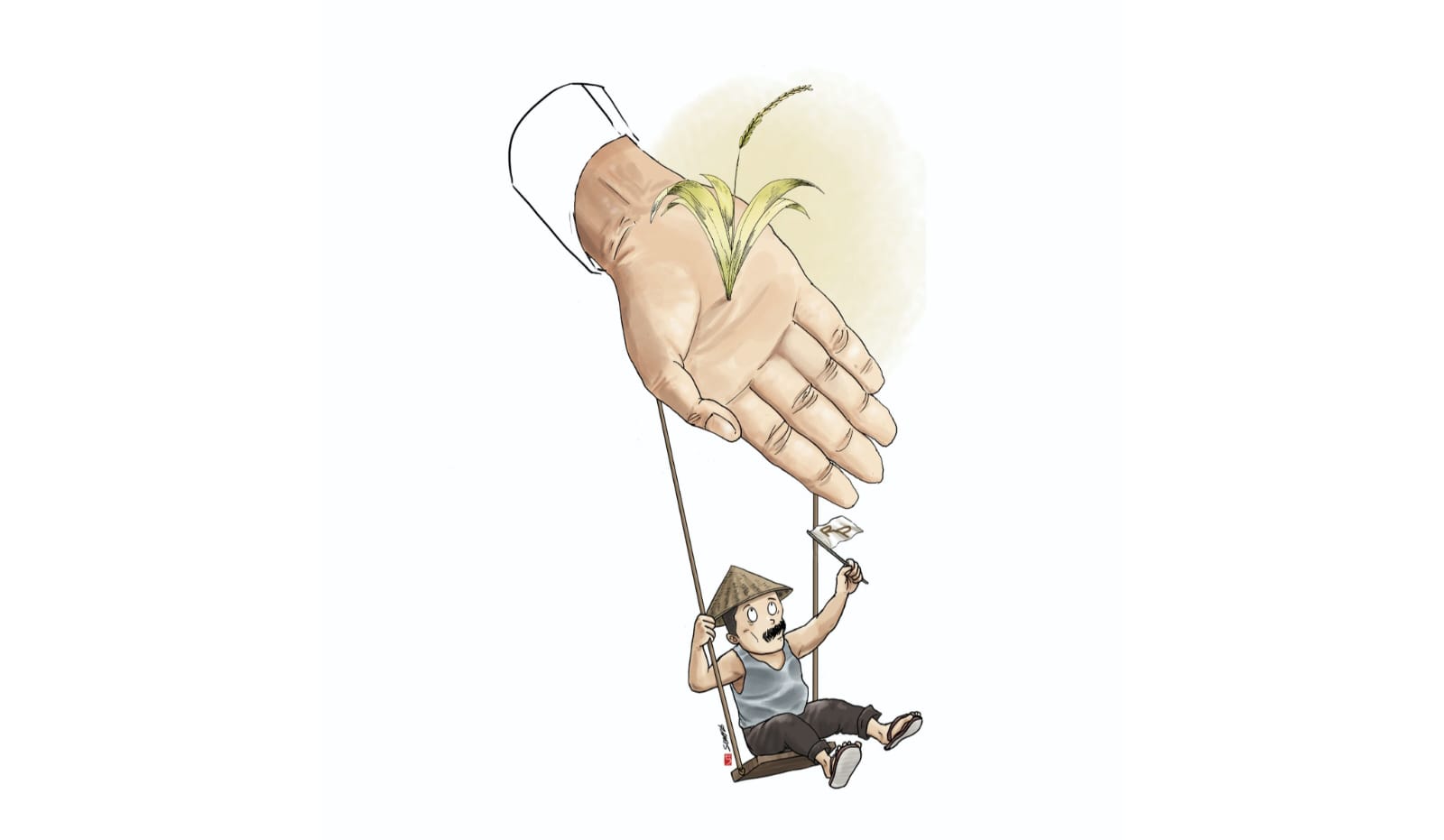
Routine monthly reports from the Central Statistics Agency (BPS) in early July 2026 indicated that volatile food prices were the largest contributor (5.58%) to the June 2026 inflation rate of 3.34% (yoy). The 2026 inflation rate is predicted to be higher than the government’s official target of 2.5% plus or minus 1% due to the dominant influence of volatile food items such as rice, red chillies, broiler chicken meat, bird’s eye chillies, and shallots. The contribution of core inflation was only 2.76%, and the contribution of administered prices was not too large at 3.42%. Therefore, the surge in food prices is an urgent agenda that the government must resolve to keep Indonesia’s economic development on the expected track.
Specifically regarding rice prices, BPS also noted a serious anomaly where prices remain high despite reports of high production and record government rice reserves (CBP) of 5.2 million tonnes controlled by Perum Bulog. Daily price data from Bank Indonesia’s Strategic Food Price Information Centre (PIHPS-BI) showed that the average rice price on 17 July 2026 was recorded at Rp16,500/kg, with medium-quality 2 rice at Rp16,100/kg. This average rice price had increased by Rp1,200/kg (7.84%) and the price of medium 2 rice had increased by Rp800/kg (5.23%) from prices at the start of the Red and White Cabinet administration in late October 2024.
The impact of the 2026 dry season is beginning to show, with the paddy harvest area declining over the last three months, falling 3.16% in March, 15.57% in April, and 2.47% in May 2026, as reported by BPS. In early July, BPS also reported a decline in the Farmer’s Terms of Trade (NTP) across all agricultural sub-sectors except the food crops sub-sector. Although NTP is not the sole measure of farmer welfare, most paddy farmers in Indonesia are net consumers, so the rise in rice prices also hits them hard. It is true that the price of unhusked rice at the farm level has been raised to Rp6,500/kg for dry harvested paddy (GKP) of all qualities. This policy is stipulated in Presidential Instruction (Inpres) Number 6 of 2025 concerning the Procurement and Management of Domestic Grain/Rice and the Distribution of Government Rice Reserves, and operationally in the National Food Agency Head’s Decree Number 14 of 2025 concerning the Government Purchase Price (HPP) and Refraction of Grain and Rice. The price of paddy at the farm level now exceeds Rp7,000/kg, making it quite difficult for rice milling businesses to survive in challenging economic conditions.
This article analyses the economic anomaly of rice, using official report data from BPS and other state institutions such as PIHPS-BI and Perum Bulog. First, a theoretical explanation of the rice economy anomaly is provided, supplemented by several supporting arguments. In 2025, when the symptoms of rising rice prices were in their early stages, the government responded positively by planning to improve the design of food price stabilisation policies, rather than giving unproductive emotional responses that invite unproductive debate. The conclusion of this article outlines the urgent policy changes needed to mitigate worse impacts and improve the rice economy environment to be more conducive for farmers, businesses, and consumers.
In economic theory, the reported achievement of rice self-sufficiency in 2025 was due to a 13% increase in rice production. Theoretically, the rice supply curve should shift to the right, resulting in a lower equilibrium price. The equilibrium price did not fall because rice purchases by Bulog (known as procurement) and the private sector also increased. This means the rice demand curve also shifted to the right, even more than the supply curve shift, causing the equilibrium price to rise at a higher equilibrium point. As of 15 July 2026, the domestic CBP stock was recorded at 5.1 million tonnes and imported CBP stock at 164,000 tonnes, making the total rice equivalent stock controlled by Bulog 5.2 million tonnes. Here, Bulog’s function has changed to become the first buyer in the rice economy, rather than the buyer of last resort as designed in food price stabilisation policy according to conventional economic theory.
Rice economy business actors are currently experiencing difficulties in running their businesses because the field price of paddy has far exceeded the HPP. They feel they are obtaining very thin profit margins, especially if they must sell rice below the Highest Retail Price (HET), as regulated in the National Food Agency Head’s Decree Number 299 of 2025. The new HET for rice is Rp13,500/kg for medium quality and Rp14,900/kg for premium quality, for Zone 1 (Java, Lampung, and South Sumatra). The HET for Zone 2 and Zone 3, or Eastern Indonesia, is even higher, at Rp15,500/kg for medium quality and Rp15,800/kg for premium quality. As a result, many private rice business actors choose to become contractors or subcontractors for Bulog, or provide rice milling services for Bulog, to survive and run their businesses.
The state currently appears not to be developing rice economy institutions, leading to an inefficient rice value chain and distribution system. The problem of the rice logistics system, especially in Eastern Indonesia, remains unaddressed, particularly in disadvantaged, remote, outermost, and border areas (3TP). For example, the average price of rice in Central Kalimantan is currently Rp19,550/kg, in South Kalimantan Rp19,300/kg, in Papua Rp19,150/kg, and in North Maluku Rp17,650/kg. In addition, the accumulation of stock in Bulog warehouses has now become a logistical and fiscal burden.