
Anis Matta: The Middle East at a Crossroads in a New Order
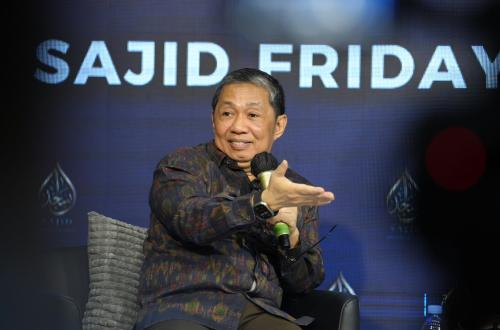
JAKARTA — Indonesian Deputy Foreign Minister Muhammad Anis Matta believes the prolonged conflict in the Middle East could become a turning point in the emergence of a new geopolitical order. The war involving the United States, Israel and Iran is not merely a military confrontation, he said, but also reveals shifting power balances, the declining effectiveness of external dominance and opportunities for Islamic countries to build strategic autonomy.
According to Anis, the Middle East is at a historic crossroads that could determine the future of international relations. If countries in the region can overcome divisions and reach a common understanding on security, the changes could give rise to a geopolitical architecture no longer wholly dependent on the United States.
Anis made the remarks at the SAJID Friday Morning Talk forum in Jakarta on Friday, 16 October 2026. He outlined several strategic developments that he believes are reshaping the balance of power in the Middle East, and proposed five priorities for Indonesia to advance in order to strengthen the position of the Islamic world internationally.
Anis said the current conflict had raised fundamental questions about whether superpowers can use military force effectively to achieve political objectives. The United States, which for decades has been the main guarantor of security for several Middle Eastern countries, is now facing a test of its own military capabilities, he said.
“This war shows that the United States, the great superpower we once thought invincible, is not quite so formidable on the ground. Its limits have become clear,” Anis said.
US dominance faces a test
Anis said US and Israeli military operations against Iran had not fully achieved their expected strategic objectives. He listed goals he saw as connected to the conflict, including regime change in Tehran, curbing Iran’s influence and that of allied groups, weakening its military capabilities, and ending its nuclear programme.
In his view, Iran’s ability to sustain its resistance shows that advanced weapons technology does not always translate into political and military success. He said this was beginning to change global perceptions of the United States, which has long been regarded as almost unchallenged in power.
One factor Anis highlighted was the strategic position of the Strait of Hormuz. The narrow passage linking the Gulf to international waters is a vital artery for energy trade, meaning that disruption to shipping could have economic consequences extending far beyond the Middle East.
Anis described the severe pressure on shipping through the Strait of Hormuz during the conflict. He estimated that traffic had fallen sharply on a route normally used by around 150 to 200 cargo ships a day.
He cautioned that about one-fifth of the world’s energy supply is linked to this trade route. Prolonged disruption could therefore create problems far more serious than simply higher oil and gas prices.
Anis said the main risk lay in the interruption of energy supplies needed by many sectors of the economy. If energy shipments are disrupted and production facilities damaged, economic pressures could develop into a longer-lasting crisis.
He also warned of possible knock-on effects in fertiliser and food markets. Gulf countries, including Qatar, play an important role in the global fertiliser industry, so disruptions to production and distribution could affect farming in countries around the world.
According to Anis, the current energy crisis could cause further difficulties during the next agricultural production season. With fertiliser availability falling and food-production costs rising, countries reliant on imports could face greater pressure on food security.
He also raised the possibility of increased military escalation if the parties to the war fail to achieve their aims through conventional operations. In his view, discussion of the risk of nuclear weapons being used demonstrates how dangerous the situation could become if the conflict continues without a political settlement.
However, Anis’s assessment of military gains, control of the Strait of Hormuz and the possibility of nuclear escalation remains a geopolitical analysis that requires verification against developments on the ground. The war’s final outcome and its strategic consequences cannot yet be determined.
Source: jawawa.id (https://jawawa.id/newsitem/anis-matta-the-middle-east-at-a-crossroads-in-a-new-order-1792122718)
Originally published by Republika (https://news.republika.co.id/berita/tmzd4t451/anis-matta-timur-tengah-di-persimpangan-tatanan-baru), translated from Indonesian