
Anies Baswedan Flags Rupiah Decline and Deteriorating Purchasing Power, Calls on Government to Be Honest with the People
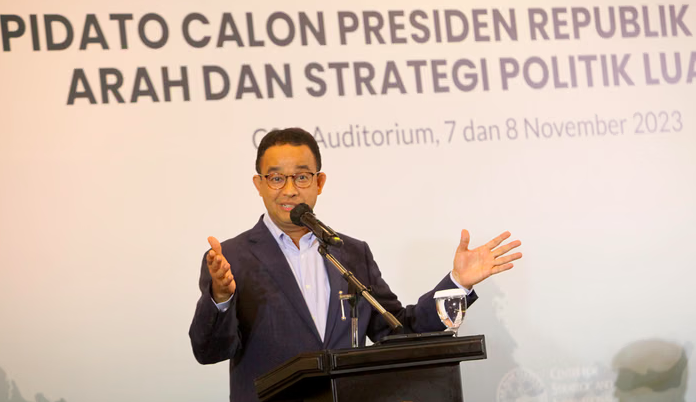
Former Jakarta Governor Anies Baswedan has reminded the government to adopt an open and honest stance in facing what he calls increasingly challenging economic and geopolitical conditions. He argues that transparency and policy certainty are what the public and markets need most amid rising pressures.
‘I am following closely what is happening in this country and explaining that conditions are normal. The rupiah has fallen to its lowest level in history,’ Anies said, according to his personal Instagram post on Wednesday 20 May.
He also highlighted various issues experienced by the public, from rising prices of essentials, to shrinking employment opportunities, and weakening household purchasing power.
‘Prices are rising, employment opportunities are narrowing, household purchasing power is weakening, savings are being eroded. And this affects the livelihood of Indonesians. The challenges ahead are long,’ he said.
The former 2024 presidential candidate also referred to global conditions that he believes are increasingly uncertain. According to him, geopolitical conflicts and threats from extreme weather could worsen pressures on society.
‘Geopolitics are heating up, conflicts loom in the Middle East, and scientists warn that the strongest El Niño in history is already in front of us. One test alone is hard; now several are arriving together. The severity is multiplying,’ he said.
In such a situation, Anies believes the public and market players need policy certainty, not merely soothing narratives without a clear basis.
‘In this situation, what the market and the public need most is one thing: certainty. Not false calm, not issues sugar-coated with candy,’ he stated.
According to Anies, certainty can only arise from the government’s transparency and honesty in communicating the actual conditions to the public.
‘The certainty that comes from transparency and honesty, from a clear direction, from a government that knows where this nation is being steered. Unfortunately, that is what we are not getting,’ he said.
He also criticised how the government communicates information to the public. Anies believes the data published often only shows the positive side, while problems that are bad tend to be hidden.
‘Data is cherry-picked, only the good is shown, the bad is concealed. Officials’ comments on serious situations often sound light or even flippant. Policies change—today this, tomorrow something different,’ he said.
In his view, such conditions cause markets and investors to lose confidence.
‘Markets are confused, the public is confused, investors hold back and some even flee,’ Anies said.
Furthermore, Anies criticised the government’s example in budget management amid difficult economic conditions for the people.
‘At a time when people are asked to tighten their belts, the government is busy with things that are not priorities. Waste above, tightening below. This appears to be insensitivity,’ he stated.
Anies said warnings about Indonesia’s economic conditions have come from many quarters, including domestic economists and international institutions.
‘Warnings have come from everywhere. From domestic economists, from international financial institutions, from national and international media monitoring Indonesia. It is impossible that they are all wrong together at the same time,’ he said.
Therefore, he urged the government to stop concealing problems and begin to reveal real conditions to the public.
‘There is no more sleeping pills for the public. Open the data as it is. Speak honestly about the problems. Provide a clear and consistent policy direction,’ Anies urged.
He invited the public to prepare for the challenges ahead, which he believes remain heavy, both economically and in terms of extreme weather threats.
‘Throughout all this, we must remain optimistic that we can get through it. As long as we walk with our eyes open, not with delusions. We can do this. But one condition: let us be serious. Let us take this nation seriously,’ he concluded. (Dev/P-3)
According to Saan, the direct appearance of President Prabowo at the plenary podium to read the KEM-PPKF was concrete evidence of the government’s seriousness. Perry Warjiyo, Governor of Bank Indonesia (BI), believes the rupiah should have room to strengthen supported by a lower current account deficit. BI Governor Perry Warjiyo is confident the rupiah will strengthen in July–August 2026 after a 50 basis point increase in the BI rate to 5.25% for external stability.
Bank Indonesia (BI) believes the rupiah will stabilise again, even potentially strengthen in July–August 2026. Markets responded positively to the government’s fairly high growth target for 2027.
Minister of Finance says global economic uncertainty occurs every year in all countries, not just Indonesia. Keeping subsidies is clear evidence of the government’s stance in favour of the people. He notes that consumption during this Eid al-Fitr was more selective.
The Government of Wonosobo Regency, Central Java, acknowledges a decline in public purchasing power in the early of Ramadan. Amid weaker purchasing power and changing consumer behaviour post-pandemic, the premium housing market shows new direction.
Copyright @ 2026 Media Group - mediaindonesia. All Rights Reserved