
Anggito Abimanyu Says JFF 2026 Will Build a Financially Mature Generation
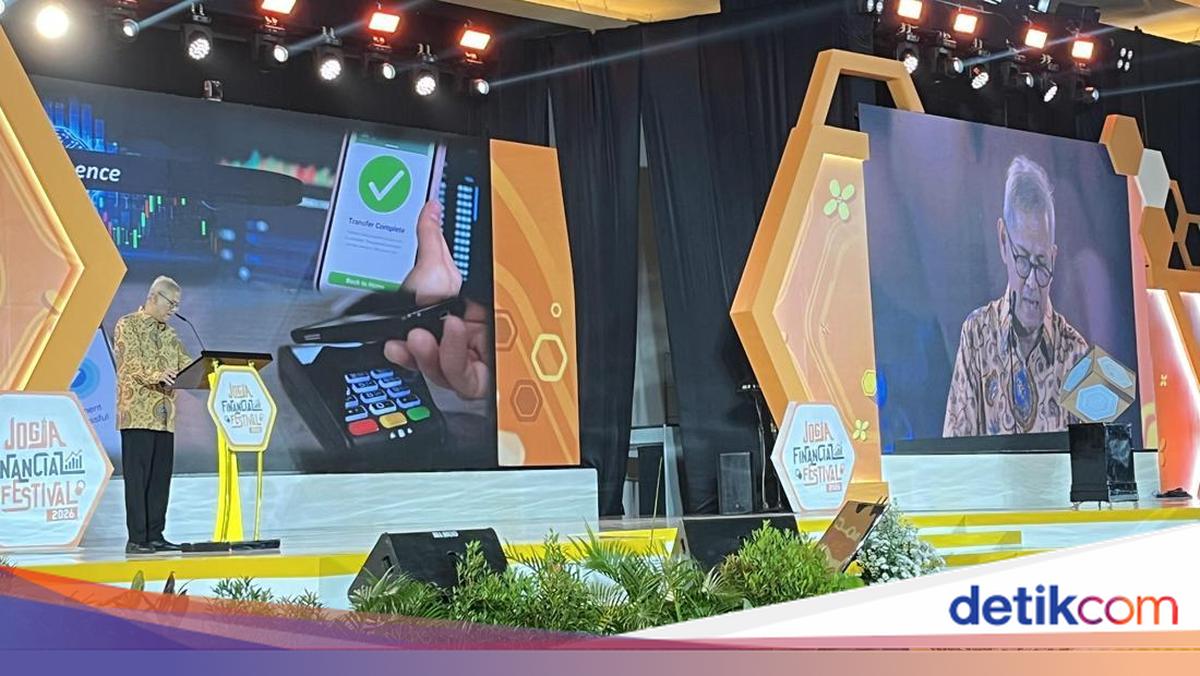
Following successful events in Surabaya and Medan, the Financial Festival was held in Jogja today. The Chair of the Board of Commissioners of the Deposit Insurance Corporation (LPS), Anggito Abimanyu, said the event aims to build a generation that is digitally literate and financially mature.
The Jogja Financial Festival (JFF) runs over two days, beginning Friday 22 May and continuing on Saturday 23 May at the Jogja Expo Center (JEC). The event seeks to boost financial literacy and financial inclusion among the public, particularly young people.
JFF acts as a platform that brings together stakeholders in the financial sector, from policy-makers, regulators, and financial industry players, to academics and the wider public, to discuss and share perspectives.
Anggito Abimanyu, chair of the LPS, highlighted the rapid development of financial technology that has not been matched by public literacy.
He said the public is living in an era in which financial technology is evolving very quickly, ranging from digital transactions to technology-based investments.
“We are entering an era where money moves faster than human understanding of financial risk itself,” Anggito said in his remarks at Jogja Financial Festival 2026 at the Jogja Expo Center on Friday 22 May 2026.
He noted that developments in Artificial Intelligence (AI), digital transactions, and new investment products bring many benefits. However, on the other hand, public financial literacy is lagging behind the industry’s growth.
“Artificial Intelligence (AI) is starting to replace many of our business models. Digital financial transactions occur in seconds. Financial investment products are growing and diversifying, bringing benefits. Yet, at the same time, the resilience of financial literacy has not grown as fast as the industry’s development,” he explained.
In addition, Anggito also addressed the proliferation of illegal online lending, digital gambling, and bogus investments that exploit the low level of public understanding.
“Illegal online lending is growing rapidly, digital gambling infiltrates through technology platforms, financial crime is booming, and fake investments continue to exploit the low level of public understanding,” he said.
Anggito stressed that Indonesia must not allow technological development to outrun the ethics and financial responsibility of its people.
Nevertheless, he is optimistic that Indonesia’s younger generation has great potential to become drivers of the national economy. He noted that Indonesia has around 190 million people of productive age who are closely connected with technology and the digital world.
“They are not just consumers of financial apps, but productive investors, budding entrepreneurs, creators of innovation, and drivers of the national economy,” he said.
On that occasion, Anggito said that Financial Festival 2026 is not only an exhibition of financial institutions and an economic seminar. The festival is described as a space for collaboration among regulators, industry, universities, creative communities, and the younger generation.
He said more than 10,000 participants are expected to attend. Several activities will be held, from financial education, involving MSMEs and creative communities, to the Jogja City Run, which thousands of runners participate in.
“We want to start a new movement, building a generation that is not only digitally literate but also financially mature,” he concluded.