
Andrie Yunus in the Human Rights Struggle Movement
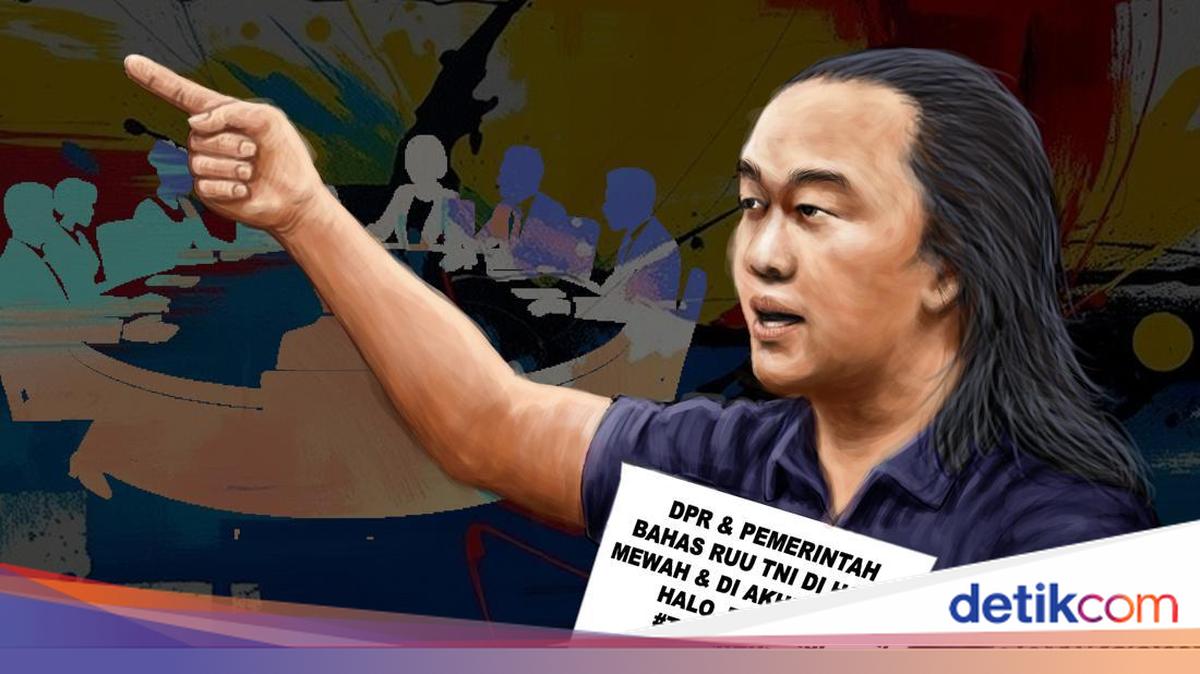
Andrie arrived at the Emergency Installation of the Central National General Hospital Dr Cipto Mangunkusumo (RSCM) in Jakarta with burns spreading across his face, neck, chest, and arms. The chemical liquid exposure damaged about 20 percent of his body surface. However, the most worrying aspect was his right eye, where the cornea suffered severe damage, drastically reducing vision.
“The right eye was indeed found to be exposed to sulphuric acid, a highly corrosive substance. There is a potential for blindness, but there is also a chance of recovery,” said Fadhil Alfathan, part of the advocacy team accompanying Andrie, to detikX.
For the time being, the medical team at RSCM chose to completely cover that eye. The area was bandaged, rested, and left for the next four months before being reassessed to determine if it can still be saved or not.
Treatment so far has proceeded in layers. Dead skin tissue was removed, and some was replaced with grafts to cover the open wounds. At the same time, the condition of the right eye showed signs of worsening.
Blood flow was disrupted, tissue thinned, and inflammation continued. One operation after another was performed, from patching tissue to temporarily closing the eyelid to keep the eyeball intact amid the risk of permanent damage.
Towards the end of March, some wounds on the body began to dry and be covered with new skin. Recovery was progressing, though not fully. The right eye remained the most fragile point because the cornea thinned, even experiencing leakage at one point.
Behind the wounds that have not fully healed, there is a long history of Andrie that has made his name known, not as a victim, but as someone who has stood by victims.
In courtrooms, street actions, and long conversations about law, Andrie Yunus has been part of those who work, accompany, explain, and endure alongside human rights struggle victims.
Rusin still remembers that first meeting well. July 2021, in the courtroom for the case of wrongful arrest and criminalisation of his child in Tambelang, Bekasi. Andrie was not only a legal companion but also a teacher, introducing what human rights are, what justice means, and how to fight for it. Until the high court decision freed his child, the relationship did not stop.
Portrait of Andrie Yunus (right) as the lawyer for Fatia Maulidiyanti and Haris Azhar on charges of defaming Luhut Binsar Pandjaitan. At the end of the trial, the judge acquitted Fatia and Haris of all charges.
Photo: Personal document of Andrie Yunus
“Very intense,” said Rusin to detikX. “I’ve even come to see him like my own child,” he continued.
After the case was resolved, the relationship did not break. Rusin said Andrie still made time to contact him, invite him to some events, and even help with his life.
“Even now, Bang Andrie is still funding my studies,” he said.
The laptop he uses, shoes, books, everything came from Andrie. He added, emphasising that he did not want to sound excessive, for him Andrie is like a wingless angel who came into his life.
Now, after the acid splashing incident or ‘attempted murder’, a distance has suddenly been created. Rusin can only visit the hospital once a week, meeting Andrie’s family outside the treatment room.
“It’s been a month since I could communicate directly,” he said.
Rusin feels the loss, but he hopes Andrie recovers and justice continues for him.
“(I) met his parents, mum, dad, and siblings. So much loss, even my wife cried because we haven’t been able to meet Bang Andrie yet. Usually, he likes to visit our home. Even up to now, what lingers in me and my family is Bang Andrie’s figure as one of my human rights mentors and personal legal mentor,” he said.
Similar stories come from people who have known him longer, long before his name emerged in advocacy work. That history was actually evident since his university days. Andrie Yunus once served as Chairman of the Student Executive Board at Sekolah Tinggi Hukum Jentera, a small space with a limited number of students that became the place where he honed his way of advocating for human rights.
He entered Jentera as a scholarship recipient and from the start showed interest in justice access issues. That interest he then carried to his thesis, which discussed the role of paralegals in helping society, especially vulnerable groups dealing with the law.
One of the slides from the Advocacy Team for Democracy (TAUD) presentation regarding the alleged attempted murder case of Andrie Yunus, presented in the Working Meeting with Commission III of the House of Representatives (DPR RI), Tuesday (31/3/2026).
Photo: Andhika Prasetia/DetikFoto
Lecturer at Sekolah Tinggi Hukum Jentera Indonesia, Bivitri Susanti, has known Andrie since 2016 when he first entered Sekolah Tinggi Hukum Jentera as a student.
“First impression was just ordinary,” she said to detikX. In the initial class she taught on academic skills development, Andrie was just one of several new students learning critical thinking, dissecting social issues, and understanding law in a societal context.
The change was felt when Andrie started getting active in campus organisations. As part of the Student Executive Board, he moved in a very limited space, with few students and not much mass mobilisation power.
But it was there, according to Bivitri, that Andrie found his own way. “They weren’t too worried about the small numbers,” she said.
She remembers one action when Andrie, along with some other students, joined in cementing their feet in front of the Palace, participating in the Kendeng farmers’ protest. “Not many people, but he bravely joined.”
In another moment, when the Reformasi Dikorupsi demonstration wave broke in 2019, Andrie and his friends did not come as a large mass. They chose another role, becoming part of street paramedics.
“Jentera couldn’t bring ma”