
Andrie Yunus Case Deemed to Make Revision of Military Justice Law Urgent
JAKARTA, KOMPAS.com - The acid attack on KontraS activist Andrie Yunus is seen as having driven the urgency for revising the Military Justice Law.
The serious burns covering 24 per cent of Andrie’s face, eyes, and chest are not merely physical injuries but also a symbolic message of terror for human rights defenders.
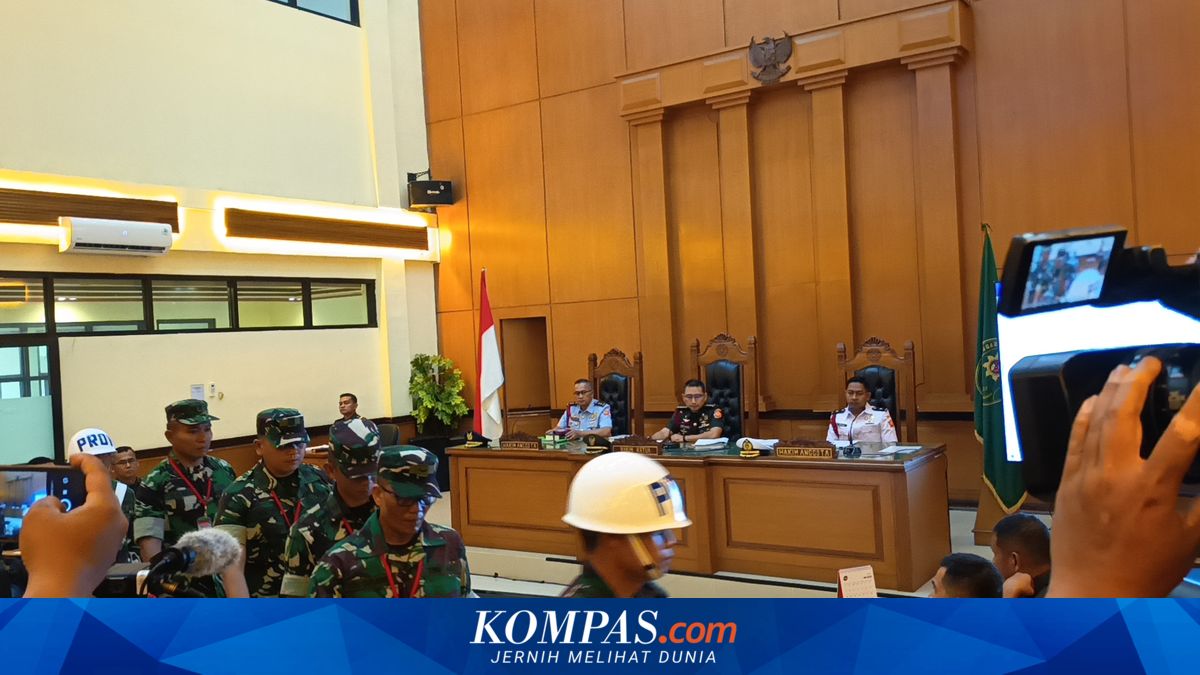
The incident on 12 March 2026, which occurred after a discussion on remilitarisation at the Indonesian Legal Aid Foundation (YLBHI) office, was subsequently followed by legal proceedings in the military court, despite many activists demanding a civilian court as the venue for seeking justice.
This situation gained further strength after it was revealed that the four alleged perpetrators were active members of the TNI’s Strategic Intelligence Agency (Bais).
“This fact changes the narrative from a mere street crime to a serious issue regarding the abuse of power and the fragility of protections for civil liberties,” said Professor of Law at UIN Sunan Ampel Surabaya, Sri Warjiyati, as quoted from a Kompas.com column on Wednesday (29/4/2026).
“The crucial issue that has now come to the surface is the judicial mechanism for the perpetrators. This is where the urgency that can no longer be delayed lies: the revision of Law No. 31 of 1997 on Military Justice,” said Sri.
She highlighted that the Military Justice Law has so far focused more on the perpetrator’s status as a military member rather than the type of criminal offence committed.
“This means that any military member who commits a crime, whether corruption or violence against civilians, is still tried in the military judicial environment, which is closed and exclusive,” said Sri.
“This paradigm clearly contradicts the principle of equality before the law, as affirmed in Article 27 paragraph (1) of the 1945 Constitution,” she stated.
Criticism of the stagnation in military justice reform also emerged in the Constitutional Court hearing for Case No. 260/PUU-XXIII/2025.
The applicant’s expert, Al Araf, viewed the slowness of the Military Justice Law revision as a form of neglect of the constitutional mandate.
“In terms of legal politics, the need for change has long been recognised but not followed up. This shows neglect of the constitutional mandate,” said Araf.
He emphasised that since the beginning of the reform era, the legal design has been directed towards limiting the jurisdiction of military courts.