
Andrie Yunus Acid Attack Case Tests Military Law Accountability and Transparency
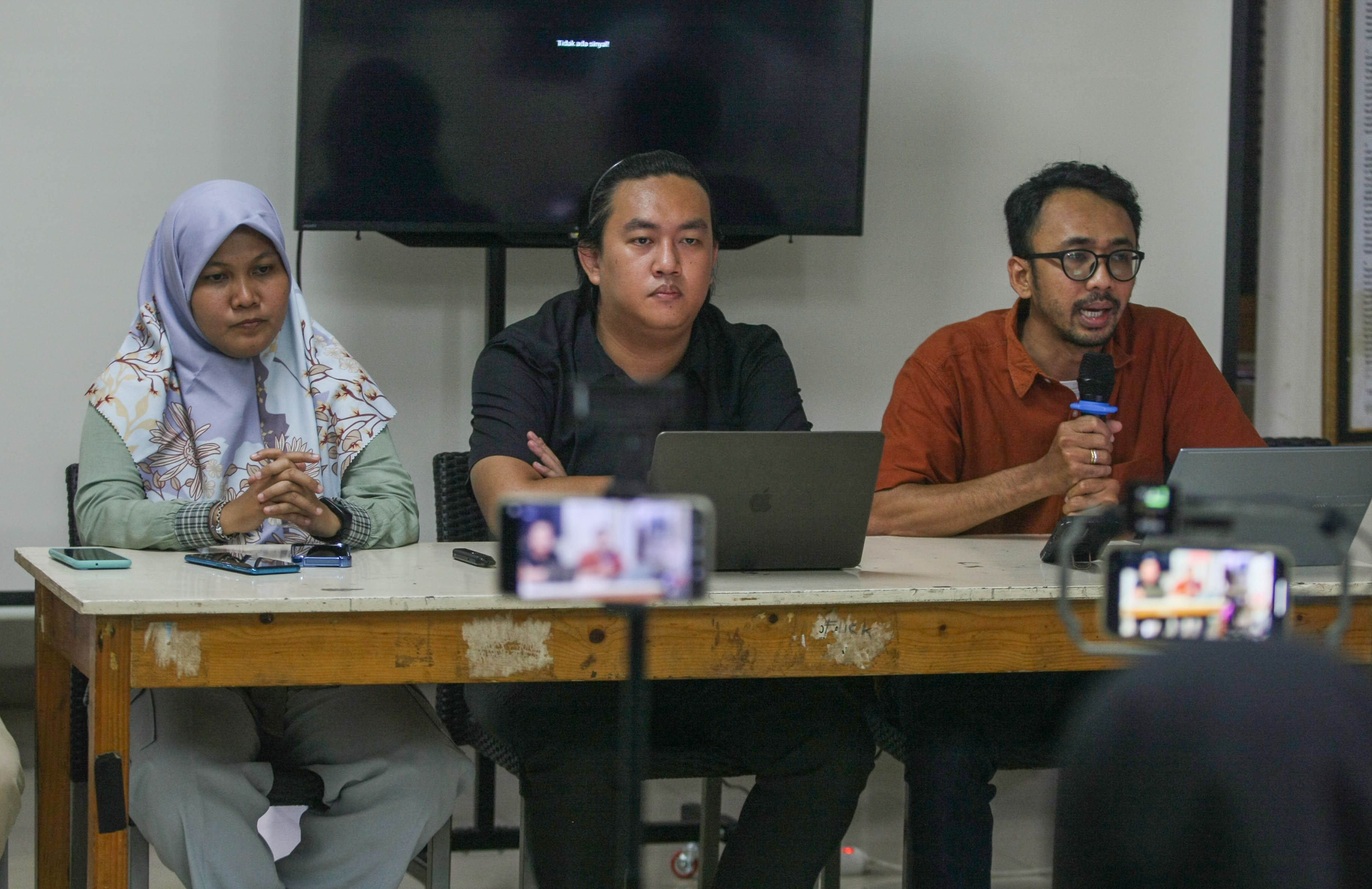
Political and military analyst from Universitas Nasional (UNAS), Selamat Ginting, has highlighted the importance of accountability in handling the alleged acid attack on KontraS activist Andrie Yunus. According to him, the involvement of TNI personnel in this case serves as a test for the credibility of the military justice system in the eyes of the public.
Selamat Ginting explained that in the military world, the principle of lex specialis applies, where soldiers are subject to laws that are often much harsher than civilian law. However, he stressed that this legal specificity must not become a closed space immune from public oversight.
“Military law is indeed designed to be harsh, even incorporating layered disciplinary sanctions up to the death penalty in certain contexts. However, justice is not only measured by the severity of sanctions but also by the openness and accountability of the process,” Selamat stated in his comments on Friday (20/3/2026).
Ginting outlined that the military system has unique mechanisms such as the Authority to Punish Superiors (Ankum), which allows direct imposition of disciplinary sanctions without awaiting formal trials. Additionally, active soldiers are subject to the Military Criminal Code (KUHPM), which holds them to far higher standards of responsibility than civilians.
Nevertheless, he acknowledged significant challenges in building public trust. Many parties often doubt the transparency of military justice when dealing with civilian victims.
“The main issue is not merely the severity of punishment, but the legitimacy of the process. The military must address public doubts through the professionalism of Military Police investigations and the transparent role of Military Prosecutors in prosecutions,” he added.
Regarding jurisdiction, Ginting noted that if the perpetrator is an active soldier and the victim is a civilian, the judicial mechanism can be directed towards a connectivity system or military court in accordance with Law No. 31 of 1997. He reminded that oversight functions such as the TNI Inspectorate and the TNI Legal Development Agency must operate optimally to ensure legal certainty.
He also compared this situation to the past case of KPK investigator Novel Baswedan. The difference is that in Novel’s case, the perpetrator was a police officer, a civilian armed apparatus, thus subject to civilian law. In contrast, in the Andrie Yunus case, the active military status of the perpetrator demands special but still democratic legal treatment.
Furthermore, Selamat emphasised that a strong military is not only one capable of harsh internal punishment but one that dares to be accountable externally.
“The Andrie Yunus case is a reminder that lex specialis must still be monitored and aligned with democratic principles. If transparency is maintained, this legal specificity will become the foundation of a TNI professionalism beloved by the people,” he concluded.
The Legal Aid Centre of the Indonesian Advocates Association urges President Prabowo Subianto to form a fact-finding team for the acid attack case on KontraS activist Andrie Yunus.
According to him, the law enforcement process for this case, handled by Polda Metro Jaya, is a positive step.
Prabowo also stated that the state will not tolerate any form of violence against citizens, including against activists voicing criticism.
Margarito emphasised that in a democratic rule-of-law state, the primary aspect to uphold is the professionalism of law enforcement apparatus.
The Ministry of Human Rights stated that the acid attack case on KontraS activist Andrie Yunus has strategic dimensions, attracting widespread public attention as well as international scrutiny.
The Legal Aid Centre of the Indonesian Advocates Association urges President Prabowo Subianto to form a fact-finding team for the acid attack case on KontraS activist Andrie Yunus.
Founder of Lokataru Foundation, Haris Azhar, asserted that the handling of the acid attack case on KontraS activist Andrie Yunus must be brought to the general court.
Prabowo also stated that the state will not tolerate any form of violence against citizens, including against activists voicing criticism.
Setara Institute calls for the formation of an independent Fact-Finding Team for the acid attack case on Andrie Yunus. Four BAIS TNI members have been detained, and Commission III of the DPR has formed a task force.
The Ministry of Human Rights stated that the acid attack case on KontraS activist Andrie Yunus has strategic dimensions, attracting widespread public attention as well as international scrutiny.