
Andre Rosiade Urges Padang to Turn Flood-River Sediment into a Source of Revenue
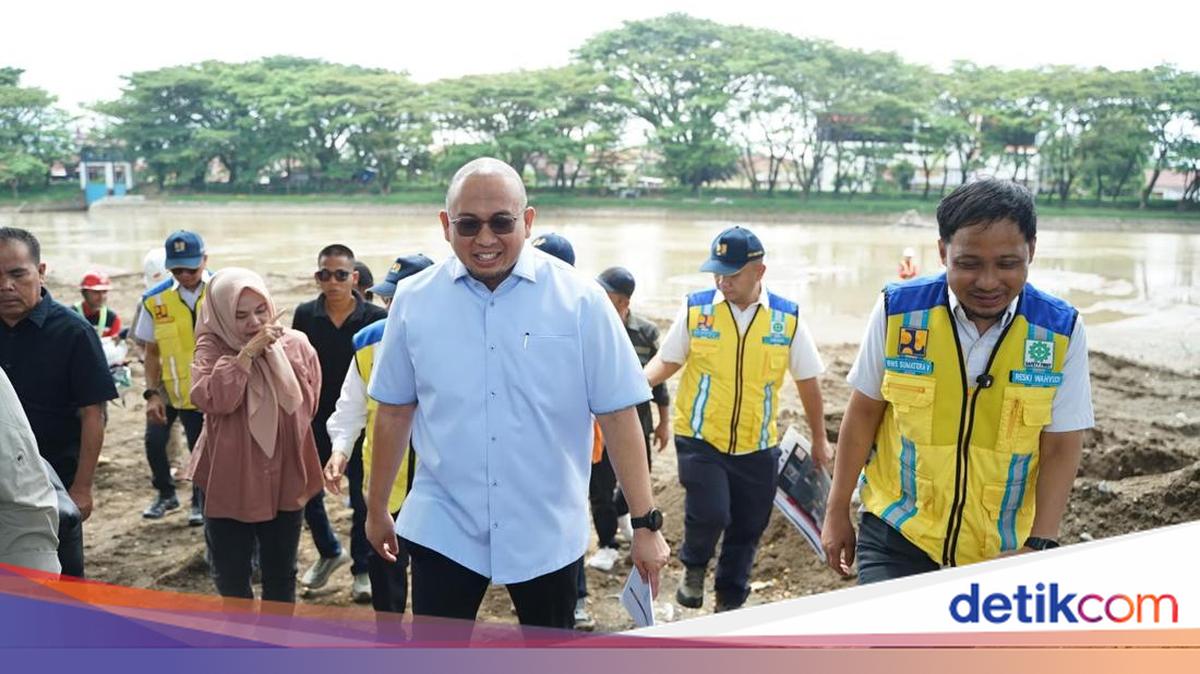
Deputy Chairman of Commission VI of the House of Representatives Andre Rosiade, from the Gerindra Party, has asked Padang City Government to assess the use of sediment dredged from rivers. He urged officials to examine its economic potential as a possible source of locally generated revenue (PAD).
Andre made the proposal while inspecting post-flash-flood recovery work in Muaro Panjalinan, Koto Tangah district, Padang, with Reski Wahyudi, head of the West Sumatra V River Basin Agency (BWS Sumatera V Padang).
Andre said the economic value of sand and sediment removed from rivers during disaster response should be studied further. If technically, environmentally and legally feasible, the material could be put to legal use rather than being sent entirely to disposal sites.
“BWS Sumatera V Padang colleagues said that around 700,000 cubic metres of material had been dredged from the Batang Kuranji. But after the major flood on 10 October, another 500,000 cubic metres of sediment came in. That is a very large amount,” Andre said in a statement on Thursday (29 October 2026.
“I have asked the agency to co-ordinate with Padang City Government to assess whether material deposited by the floods can be used and provide additional PAD for the city,” he said.
Andre stressed that the proposal did not mean river material could immediately be sold without assessment. The government must establish the material’s status and suitability for use, consider environmental impacts, and ensure that management and local revenue arrangements comply with regulations.
“If it is permitted under the rules, we should find a solution. Material that could potentially be used should not simply become a disposal burden,” he said.
He said the material’s use should be studied so the regional government could make use of it, while river-management work continued.
“Everything must be properly assessed, so that river management remains the priority and any use of the material can also benefit the region,” said Andre, chairman of the Indonesian Minang Family Association (IKM).
During the inspection, Andre also thanked President Prabowo Subianto and Public Works Minister Dody Hanggodo for central government support for disaster response and river normalisation in West Sumatra.
Andre said sediment dredging and river reinforcement required substantial funding and co-ordination among agencies. Central and regional governments, along with technical teams, must therefore ensure that the work delivers the greatest possible benefit to the public.
“We are grateful to President Prabowo and Public Works Minister Dody Hanggodo. The government has prepared a large budget for West Sumatra’s recovery,” Andre said.
“We can now see the work taking place on the ground. We should also consider how it can deliver the greatest benefit, including the possibility of using sediment to increase local revenue,” he said.
Reski Wahyudi, head of BWS Sumatera V Padang, said dredging sediment from the Batang Kuranji was challenging because floods carried more material downstream. Around 700,000 cubic metres had been removed from the river channel, he said, but the major flood on 10 October 2026 was estimated to have deposited a further 500,000 cubic metres.
“When floods occur, material from upstream is carried downstream again. That is why it is not enough to dredge sediment only in the lower reaches. Ideally, we need to build sediment-control structures upstream so the material is not continually carried down during heavy rain,” Reski said.
Reski said BWS Sumatera V had co-ordinated with Padang City Government on sites for material removed through dredging. In its presentation, the agency identified 41 disposal points to support material management and reduce transport costs.
On the proposal to use the material as a source of local revenue, Reski said it needed to be assessed jointly with the regional government, particularly to determine a mechanism that complied with regulations.
Recurring floods pose a particular challenge to work on the Batang Kuranji and Batang Air Dingin rivers. Both are the main focus of work in Padang because of the scale of flood impacts and the sediment carried into downstream areas.
The government is therefore not only normalising river channels but also preparing permanent measures, including dams, check dams, embankments and sediment-control structures. The work forms part of the post-disaster rehabilitation and reconstruction programme for water resources.
BWS Sumatera V said the rehabilitation and reconstruction allocation for Padang was around Rp782 billion. The total allocation for emergency response and the rehabilitation and reconstruction of water resources across West Sumatra was around Rp4.3 trillion.
Andre said he hoped co-ordination between BWS Sumatera V and Padang City Government would lead promptly to an assessment of sediment use without reducing the priority given to flood management.
“The most important thing is public safety, and river management must continue,” he said.
“At the same time, we want to see whether there is an opportunity to manage dredged material properly and create added value for Padang. If it can help increase local revenue in accordance with the rules, it is certainly worth assessing,” Andre said.
Source: jawawa.id (https://jawawa.id/newsitem/andre-rosiade-urges-padang-to-turn-flood-river-sediment-into-a-source-of-revenue-1793256791)
Originally published by detikcom (https://news.detik.com/berita/d-8729264/andre-rosiade-dorong-sedimen-sungai-akibat-banjir-jadi-sumber-pendapatan-padang), translated from Indonesian