
Andaman Gas Must Be Optimised for Aceh's Progress, Says Expert
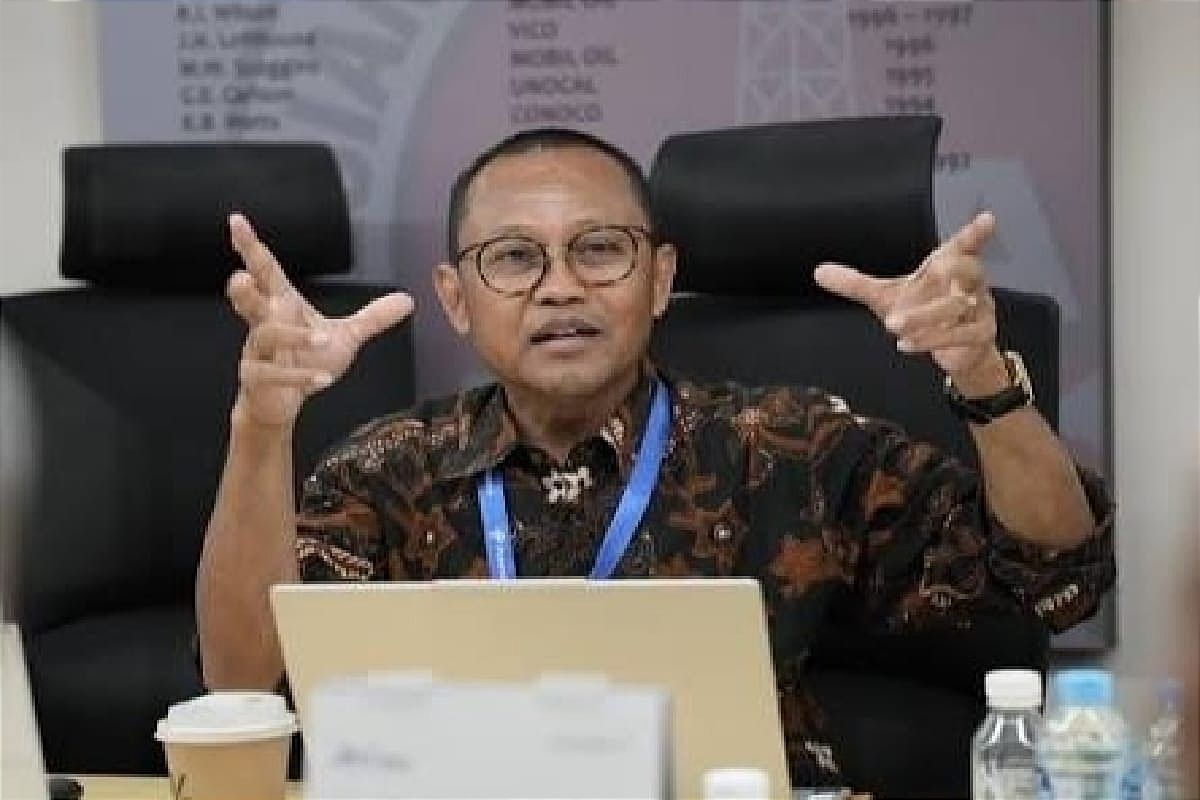
Banda Aceh (ANTARA) - Energy economics expert A Rinto Pudyantoro of Universitas Pertamina has suggested that gas production from the Andaman Block findings should be used to support progress and welfare for the people of Aceh.
“The development of the Andaman block is not merely an energy project, but an opportunity for Aceh to improve its economic structure,” said A Rinto Pudyantoro in a statement in Banda Aceh on Friday.
Rinto said the success of the Andaman project should not be measured solely by the scale of upstream oil and gas investment, the number of wells drilled, or the volume of gas produced.
The measure of success for the Andaman project, he continued, is how many new industries emerge, how many young Acehnese secure quality jobs, and how many local companies move up the value chain.
“As well as how much of an improvement in community welfare can be genuinely felt,” he said.
As is known, Minister of Energy and Mineral Resources Bahlil Lahadalia has approved the Plan of Development (PoD)-1 for the Tangkulo field in the South Andaman Working Area.
The Tangkulo field is estimated to be capable of producing around 300 million cubic feet of gas per day (MMSCFD). An initial gas sales commitment of 160 MMSCFD has been agreed with PT PLN (Persero).
In the PoD-1 phase, the Andaman project will use a hybrid offshore-onshore development concept. Gas produced from offshore wells will first be processed using a Floating Production Storage and Offloading (FPSO) vessel.
The clean gas will then be transported through an approximately 80-kilometre subsea pipeline to an Onshore Receiving Facility (ORF) to be built in the Arun Special Economic Zone (KEK) in Lhokseumawe.
The Aceh government has stated that Andaman gas must not be viewed merely as a source of revenue-sharing funds, but also as an opportunity for industrial and regional economic development in Aceh.
Rinto considered the Aceh government’s view highly visionary and worthy of attention, because regions that successfully escape dependence on natural resources are not those that simply receive royalties or revenue shares.
“Regions that successfully escape dependence on natural resources are those capable of building downstream industries, expanding employment opportunities, developing local companies, and improving human resource quality,” he said.
In his view, Aceh possesses assets that many other provinces lack for building its industry and economy. For instance, the existence of the Arun Lhokseumawe Special Economic Zone (KEK) provides a strong foundation for gas-based industrial development.
Furthermore, port infrastructure, industrial estates, utility networks, experienced human resources, and proximity to international shipping routes are all highly valuable assets.
“If combined with long-term gas supply, this area has the potential to develop into a hub for methanol, ammonia, petrochemical, hydrogen, and other basic chemical industries,” said Rinto Pudyantoro.