
Andalas University Academics Develop Acoustic Sensor for Soybean Quality Detection
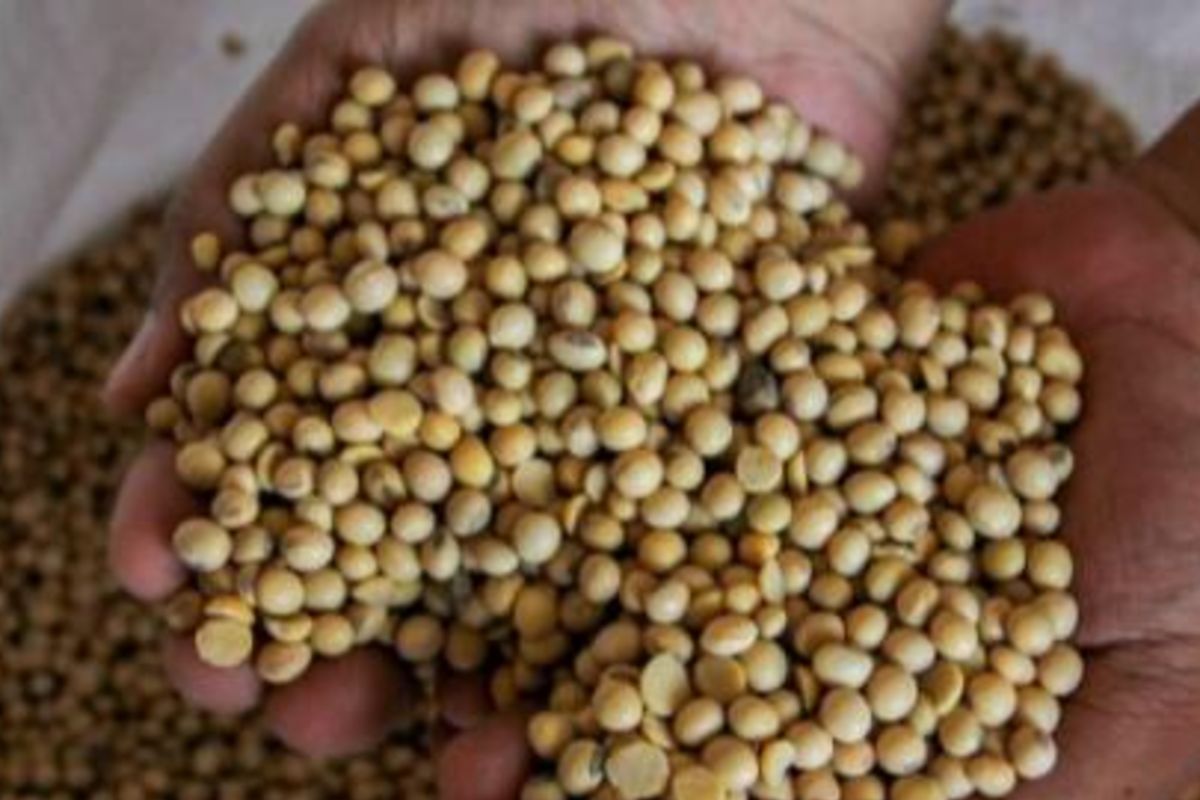
Padang (ANTARA) - Academics from Andalas University (Unand) in West Sumatra have developed a technology to detect soybean seed quality using acoustic wave sensors, which can identify seed characteristics based on moisture levels.
“The acoustic response from soybean seeds changes according to differences in moisture content. This indicates that the resulting sound can be utilised to obtain information regarding the characteristics of the seeds,” said Khairical Agustoria, a lecturer from the Department of Agricultural and Biosystems Engineering, Faculty of Agricultural Technology at Unand, in Padang on Saturday.
He explained that the research was conducted by observing the sound characteristics produced by soybean seeds after impact, subsequently linking these sounds to the moisture content of the seeds.
According to him, the use of acoustic data offers an opportunity to reduce dependence on manual assessments, which can lead to inconsistent results between different individuals. Furthermore, inspection speed is limited when the volume of products to be checked reaches thousands or even millions of grains. This is where the vital role of sensors begins to transform working methods.
He suggested that the use of acoustic sensors could be further developed by combining them with other measurement technologies, such as cameras for recognising colour and shape, sensors for measuring moisture content, and computer systems to process various measurement results. Integrating this information can help improve the identification process of agricultural product characteristics.
He stated that the use of sensors and data processing is aimed not only at accelerating work but also at helping to obtain more measurable information regarding the condition and characteristics of agricultural yields.
“The data obtained from sensors can provide a clearer picture of the condition of agricultural products. Therefore, this technology is not merely about making the inspection process faster, but also about helping to produce more objective assessments,” he said.
He noted that Indonesia’s dependence on soybean imports remains high. Soybean needs are still largely met by foreign supplies, as domestic soybean production is currently unable to meet demand.
“During the 2019–2023 period, the proportion of soybean imports ranged between 94.64% and 97.66%, whereas domestic production in 2024 met only about 13.5% of national requirements,” he said.
He stated that the utilisation of such technology could help accelerate the processes of measurement, grading, and management of agricultural yields based on measurable characteristics, thereby potentially supporting the increase in the economic value of products.
He noted that the development of agricultural technology requires not only the creation of machinery but also testing and adjustments to ensure it can be applied in the field.
He mentioned that the acoustic response of soybean seeds is influenced not only by moisture content but also by the size and mass of the seeds. Therefore, the technology must undergo sensor calibration, data processing, algorithm training, and testing under real-world conditions.
He added that beyond technical aspects, the implementation of this technology must also consider costs and user skills to ensure it can be utilised effectively by farmers.