
Ancient Virus Traces Reveal How Snails Evolved to Lay Eggs Out of Water
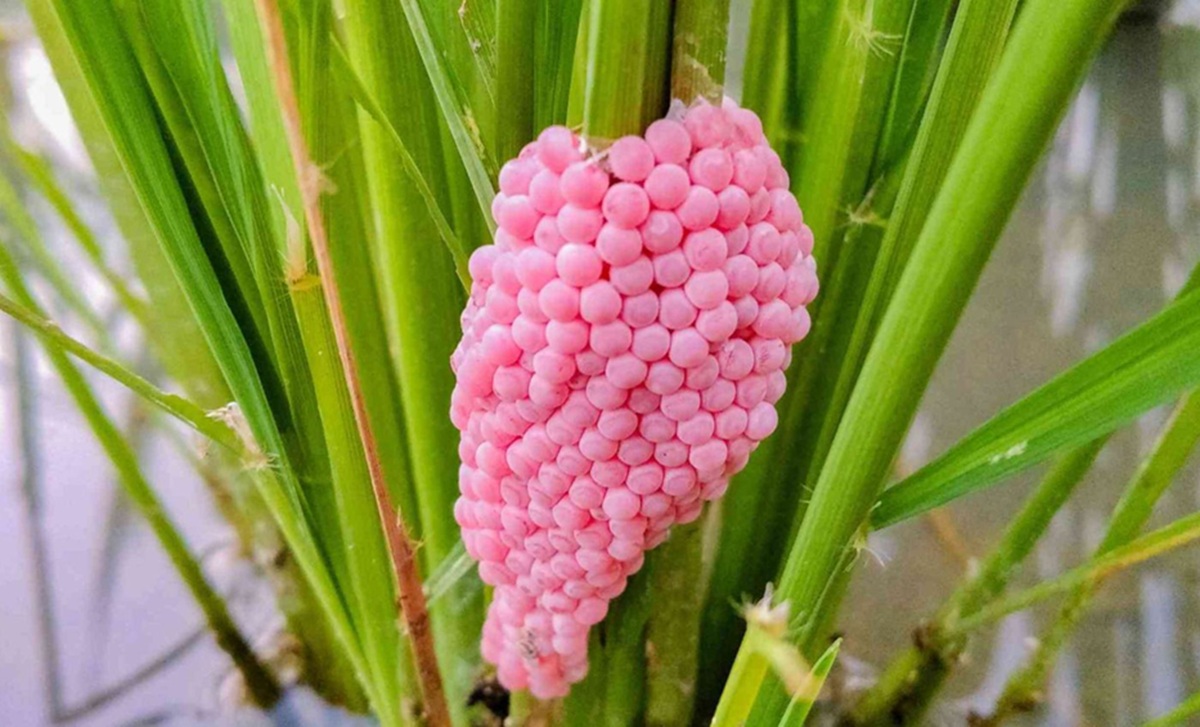
Freshwater snails generally spend their entire life cycle in water, including when laying eggs. Their embryos usually develop safely among submerged aquatic plants or rocks. However, some species like the apple snail do something unusual. They emerge from the water and glue their bright pink egg clusters onto plant stems, walls, or other dry surfaces. A recent study led by Professor Jack Chi-Ho Ip, an evolutionary biologist at Lingnan University in Hong Kong, has finally unravelled the mystery of this extreme adaptation. The evolutionary secret lies not in the snail’s own genes, but in a gene ‘borrowed’ from an ancient virus. While comparing the DNA of apple snail species that lay eggs on land with their close relatives that still lay eggs in water, the research team focused on the protective fluid filling each egg. This fluid is dominated by a protein called PV1, which constitutes over 80 percent of the total protein in eggs laid on land. When traced using specialised software, the origin of PV1 led the scientists to a surprising discovery. The protein’s structure and sequence did not match any other animal, but closely resembled proteins from viruses, including a type that infects birds. The team estimates the initial infection occurred in a common ancestor around 145 million years ago, during the Jurassic period when dinosaurs still dominated the Earth. The viral gene slipped into the snail’s DNA, established itself, and was continuously copied over generations, eventually triggering a major evolutionary leap. Borrowing the gene was only the first step, as evolution then drastically altered the protein’s function. The PV1 protein in land-laying apple snails evolved to have twice as many water-repellent components as their water-laying relatives. This ability helps the eggs retain internal moisture and withstand harsh sunlight exposure outside water. Furthermore, PV1 is known as one of the most robust proteins capable of binding red-orange pigments, giving apple snail eggs their characteristic bright colour as a warning to predators. The findings, published in the journal Advanced Science, not only solve a biological puzzle but also provide a new weapon for the agricultural sector. Apple snails are known as one of the most destructive pests in wetlands and carriers of parasites dangerous to humans. Knowing that the virus-derived PV1 protein is key to the eggs’ survival out of water, scientists can now design methods to block this protein to halt pest reproduction without using harmful chemical pesticides.