
Anatomy of Lawfare and the Illusion of Energy Stability
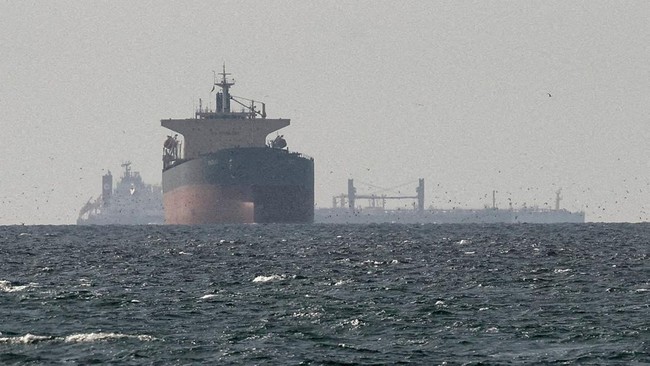
The global geopolitical and economic order, which experienced extreme volatility in the first half of the 2020s, witnessed a crucial turning point by mid-2026. A surprising agreement between the United States and the Islamic Republic of Iran officially allowed Tehran to resume crude oil sales to international markets. This monumental event was marked by a highly symbolic action on global maritime routes: Iranian oil tankers safely traversed the US naval blockade, a sight considered impossible just months earlier without triggering open war. The trade deal instantly eased military tensions that had inflamed the Middle East and sent a disinflationary shockwave through global commodity markets.
For Indonesia, a net oil importer whose fiscal space is highly sensitive to global energy price fluctuations, the easing of the Iran-US conflict brings a breath of fresh air alongside a complex macroeconomic puzzle. On one hand, the decline in global crude oil prices back to levels seen before the Strait of Hormuz closure offers an opportunity to lower domestic fuel prices. On the other hand, the global economic transition never occurs in a vacuum. Behind the price drop lies a labyrinth of other factors, ranging from the economic slowdown in major consumer countries and the commoditisation of artificial intelligence computing as ‘The New Oil’, to the weakness of international law in anchoring peace.
For years, the Strait of Hormuz and the Persian Gulf were the epicentre of a shadow war. Military tensions involving proxies, tanker seizures, and pre-emptive strikes against strategic facilities placed a high geopolitical risk premium on every barrel of oil traded on the NYMEX and Brent exchanges. This dynamic spontaneously reversed when political realism defeated war rhetoric. Through a new agreement often referred to by the market as the ‘Trump Deal’, the US chose to ease energy sanctions on Tehran in exchange for global supply stability and limited verifiable non-proliferation commitments. The physical manifestation of this deal was clear when Iranian-flagged Very Large Crude Carriers (VLCCs) sailed past US Navy warships in the Strait of Hormuz without military interception. The psychological and physical impact on the energy market was immediate. The risk premium that had previously pushed oil prices towards triple digits vanished. The market, which had feared a total supply disruption from the Persian Gulf, now braced for a flood of new Iranian supply. This normalisation of crude liquidity acted as a catalyst for the collapse of global oil prices, ending speculation that the world was marching towards a Third World War via the energy route.
Although the Iran-US deal was the primary triggering event, the decline in global oil prices cannot be attributed to a single variable. Market analysis in June 2026 shows a convergence of three major macroeconomic factors that caused crude oil prices to seemingly hit a floor of despair, even as Iranian supply returned. First, the slowdown in global demand and macroeconomic pressure from China reflect a harsh reality. China, the main locomotive of global energy demand for two decades, is undergoing a massive structural adjustment. Manufacturing data and domestic consumption figures indicate a stagnation in commodity demand. As the world’s second-largest economy decelerates, a global supply surplus is automatically created, forcing Brent crude prices down consistently. Second, a fundamental techno-economic paradigm shift is occurring where global capital attention is being divided. Hydrocarbon energy no longer stands alone as the world’s most strategic commodity. In global financial markets, a new narrative has crystallised: AI computing power is ‘The New Oil’. The global effort to turn AI computing power into a tradeable commodity on futures exchanges has altered the investment landscape. Hedge fund speculators and giant financial institutions now view data centre capacity, advanced semiconductors, and clean electricity supply as new liquid assets offering higher yields than traditional crude oil futures contracts. Consequently, capital diversification away from the oil commodity sector has reduced the buying pressure that previously inflated energy prices. Third, despite the abundant Iranian supply and the shift to AI, oil prices are not in a free fall without a bottom. Why is oil predicted to have bottomed out? The answer lies in the intrinsic marginal cost of production and producer intervention strategies. OPEC+ member countries, along with shale oil producers in the US, have a psychological threshold where drilling operations are no longer profitable if prices fall too deep.
Source: jawawa.id (https://jawawa.id/newsitem/anatomy-of-lawfare-and-the-illusion-of-energy-stability-1782813137)
Originally published by CNBC Indonesia (https://www.cnbcindonesia.com/opini/20260630153846-14-746899/anatomi-lawfare-dan-ilusi-stabilitas-energi), translated from Indonesian