
Anas Urbaningrum Revives Issue of Separating the 2029 Presidential and Legislative Elections
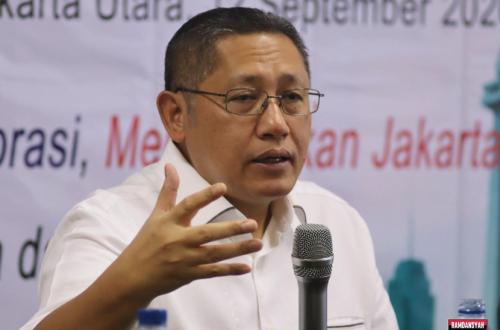
REPUBLIKA.CO.ID, JAKARTA — Politician Anas Urbaningrum is pushing for the presidential election (Pilpres) and legislative election (Pileg) in 2029 to be held at separate times. According to him, this separation should form part of the reform of the rules governing the 2029 general election.
Anas considers the proposal relevant to discuss now, especially as a number of political party leaders have begun preparing themselves for the 2029 presidential contest.
“If party leaders want to run for president, that is perfectly normal. It would actually be odd if they did not prepare themselves for it,” said the former Democratic Party chairman and founder of the Nusantara Awakening Party in a written statement issued on Tuesday.
According to Anas, preparations for the 2029 presidential election should not merely focus on the figures who will run. The regulatory framework underpinning the election must also be prepared and improved promptly.
One issue he highlighted is the timing of the legislative and presidential elections. Anas proposed that the two be separated once again, as was the case in the 2004 general election.
He believes there are several reasons to separate the two contests. One of the simplest concerns the requirements for a political party or coalition of parties to nominate a presidential and vice-presidential ticket.
Anas argued that if the results of the 2029 legislative election are used as the basis for presidential nominations, then the parties entitled to a presidential ticket would be those that have just received a mandate from voters in the 2029 legislative polls.
“The ‘ticket’ into the playing field should be the result of the 2029 legislative election. Put plainly, a fresh political ticket freshly printed at the legislative election. Not a stale ticket printed five years earlier,” he said.
According to him, this mechanism would make the basis for presidential nominations more current, as it would draw on the results of a legislative election that has just taken place.
Anas also touched on the possibility of the Constitutional Court ruling that all political parties contesting the election have the right to nominate presidential and vice-presidential candidates. If that provision is adopted into law, he said, it should refer to parties contesting the 2029 election.
Beyond separating the timing of the legislative and presidential elections, Anas reminded that many other issues in the design of the 2029 election remain unresolved. These include the electoral system, seat allocation for each electoral district, and the parliamentary threshold.
For this reason, Anas urged the government and the House of Representatives to promptly repair, refine, and enact the package of political laws that will underpin the 2029 general election.
However, he stressed that the legislative process must not take place behind closed doors. Deliberations between political parties on important substance within the electoral law are, in his view, entirely normal. Nevertheless, space for public participation must be opened in earnest.
“Political negotiations between parties to discuss important provisions of the law are commonplace. They will inevitably happen. But opening up space and inviting the public to get involved will clearly make the law better and more widely accepted,” Anas said.
He believes the legitimacy of an election is not determined solely by the process of casting and counting votes. Public trust is also heavily influenced by how the rules of the game are formulated and established from the outset.
“Elections that the public trusts are clearly important. That includes how the rules of the game are formulated and set,” he said.
Anas acknowledged that legislative authority rests with the executive and the legislature. However, he argued that involving society is an essential part of a democratic and high-quality legislative process.
As such, deliberations on the political laws for the 2029 election should not be merely an arena for elite political negotiation. The public must be treated as an important part of the process of shaping the rules that will determine the direction of national political competition over the next five years.
Source: jawawa.id (https://jawawa.id/newsitem/anas-urbaningrum-revives-issue-of-separating-the-2029-presidential-and-legislative-elections-1789466022)
Originally published by Republika (https://news.republika.co.id/berita/tlefl7393/anas-urbaningrum-cuatkan-isu-pilpres-dan-pileg-2029-dipisah), translated from Indonesian