
Analysts Stress Importance of Regulatory Balance in a Democratic State
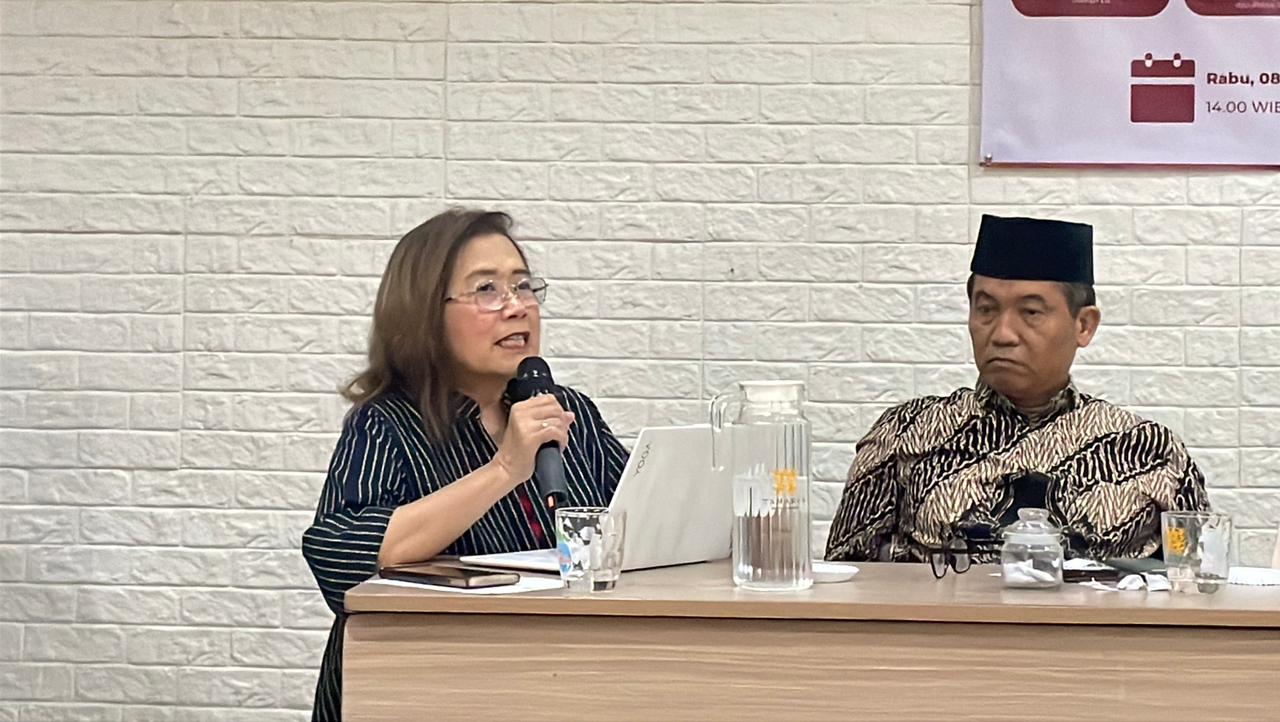
A number of academics and governance researchers have discussed the dynamics of civil-military relations and the importance of maintaining institutional professionalism in Indonesia. The effort to strengthen the system of checks and balances and comprehensive regulatory reform was the main focus of a public discussion titled ‘Military, Business, and Politics: Lessons from Military Coups in Various Countries’ held in Central Jakarta on Wednesday (8/7/2026).
Head of the Indonesia 2045 Laboratory (LAB 45), Jaleswari Pramodhawardani, expressed the view that conventional civil-military threats, such as physical coups, are no longer relevant to Indonesia’s current political stability. She argued that attention should now be directed at how regulatory processes and institutional placements operate within legal corridors to maintain systemic balance. ‘The threat to Indonesia operates within a seemingly stable system, through legitimate legal instruments,’ Jaleswari said. She noted that regulations such as the enactment of Law No. 5/2026 on the National Police and the revision of Law No. 3/2025 on the Indonesian National Armed Forces (TNI) provide greater space for active personnel to occupy civilian posts, requiring careful bureaucratic management to align with the spirit of professional governance.
Meanwhile, Public Policy and Governance Researcher Gian Kasiri presented findings on a trend of expanding non-defence roles that began in 2014. Based on an institutional risk matrix he compiled, the involvement of defence elements in civilian governance requires special attention and caution to ensure civilian supremacy and inter-institutional oversight mechanisms function optimally. His research recorded the placement of active and retired officers in strategic government positions, ranging from ministerial posts and agency heads to commissioner roles at major state-owned enterprises such as PT Timah, PT PLN, PT Telkom, and MIND ID. According to Gian, this phenomenon marks an institutional transformation that tests the dynamics and quality of good governance in the country.
Meanwhile, Ibnu Sina Chandranegara, Professor of Constitutional Law at the University of Muhammadiyah Jakarta, highlighted structural strengthening issues that remain as post-reform homework. He detailed several substantive notes, including the continuation of the transparent transfer and audit of TNI business activities as mandated by Article 76 of the 2004 TNI Law, aimed at achieving state budget independence. Ibnu also noted the trend of placing active personnel in civilian bureaucracy, which requires proportional limits, and stressed the need to enhance the House of Representatives’ oversight function regarding defence doctrine and budgeting to move beyond mere procedural formality. He argued that clarity of economic base and institutional independence are essential pillars for a healthy political bargaining balance.
In response, the speakers formulated three strategic recommendations for future regulatory strengthening. First, to continue transparent governance by completing the audit and gradual transfer of military businesses to state control. Second, to apply the precautionary principle and strict interpretation of exceptions (exceptio est strictissimae interpretationis) regarding the placement of active personnel in civilian bureaucratic structures. Third, to reinforce national defence regulations to affirm that strategic policy decisions rest with elected political authorities, while defence institutions focus fully on their role as professional technical executors.