
Analysts Say Jokowi's Political Safari Unlikely to Boost PSI's Electoral Prospects
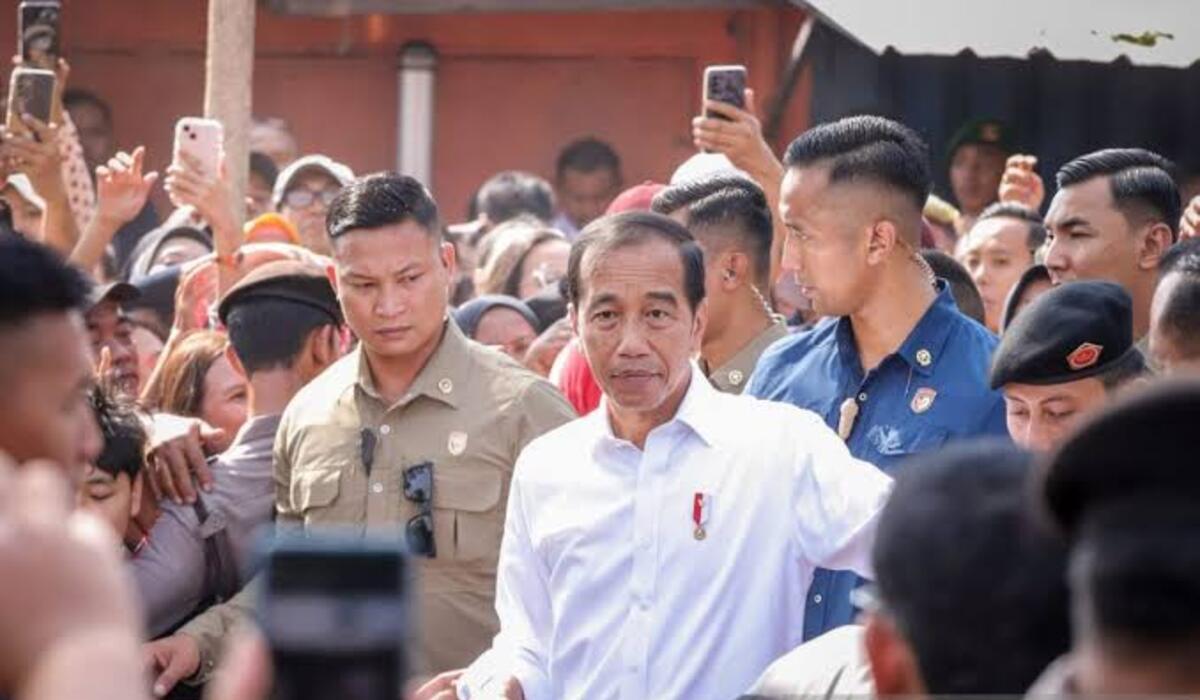
The political safari undertaken by Indonesia’s 7th President, Joko Widodo (Jokowi), is considered unlikely to provide a significant electoral boost for the Indonesian Solidarity Party (PSI). Political communication analyst from Esa Unggul University, M. Jamiluddin Ritonga, assessed that the lack of public enthusiasm during Jokowi’s inaugural visit to Lampung signals that the former president’s political influence is waning.
“The minimal public enthusiasm during Jokowi’s first visit to Lampung is a signal that the former president’s political appeal is no longer as strong as it was a few years ago,” Jamiluddin told Media Indonesia on Tuesday. He noted that the situation in Lampung contrasted sharply with the 2019 Presidential Election, where Jokowi secured approximately 59.71 percent of the vote. During the recent political safari, the public appeared to go about their daily activities as usual, and there was even some rejection from local residents.
“Looking at Jokowi’s visit to Lampung, the hope of boosting PSI’s electability seems overly ambitious. There was no visible public enthusiasm to welcome Jokowi. People generally continued their normal routines, and there was even a protest from a group of housewives,” he stated. Jamiluddin believes this situation reflects that Jokowi no longer possesses the political mobilisation power he had while serving as president. “This indicates that Jokowi’s dominance has faded. Public trust in Jokowi appears to have also declined. Jokowi is no longer a political magnet that can ‘hypnotise’ the public to follow his will,” he said.
Based on these conditions, he views the chances of Jokowi lifting PSI’s vote share enough to enter the House of Representatives (DPR) in 2029 as relatively small. In fact, he considers the political safari to carry significant political risk. “Hoping that Jokowi can help deliver PSI to Senayan is a relatively small chance. This political safari is like gambling because it is full of speculation to fulfil his political desires. Jokowi’s political ambition could be greater than PSI’s electoral gains,” he remarked.
Jamiluddin also highlighted the strategy of PSI targeting the voter base that has traditionally been a stronghold for the Indonesian Democratic Party of Struggle (PDIP). According to him, nationalist groups and the ‘wong cilik’ (common people) have strong loyalty to PDIP, making them difficult to sway. “The real battle will be between Jokowi and PDIP in competing for the nationalist vote. However, the ‘wong cilik’ group generally consists of militant PDIP supporters loyal to the Sukarno lineage, particularly Megawati Soekarnoputri. As long as PDIP is led by the Sukarno family, it will be difficult for Jokowi to divert their votes to PSI,” he explained. Based on this, he assessed that targeting the same voter niche as PDIP could be a political misstep for PSI. “If they target PDIP’s mass base, Jokowi will likely fail to deliver PSI to Senayan. PSI may remain a minor party,” he concluded.