
Analysts say governance reform is key to preventing corruption in regional elections
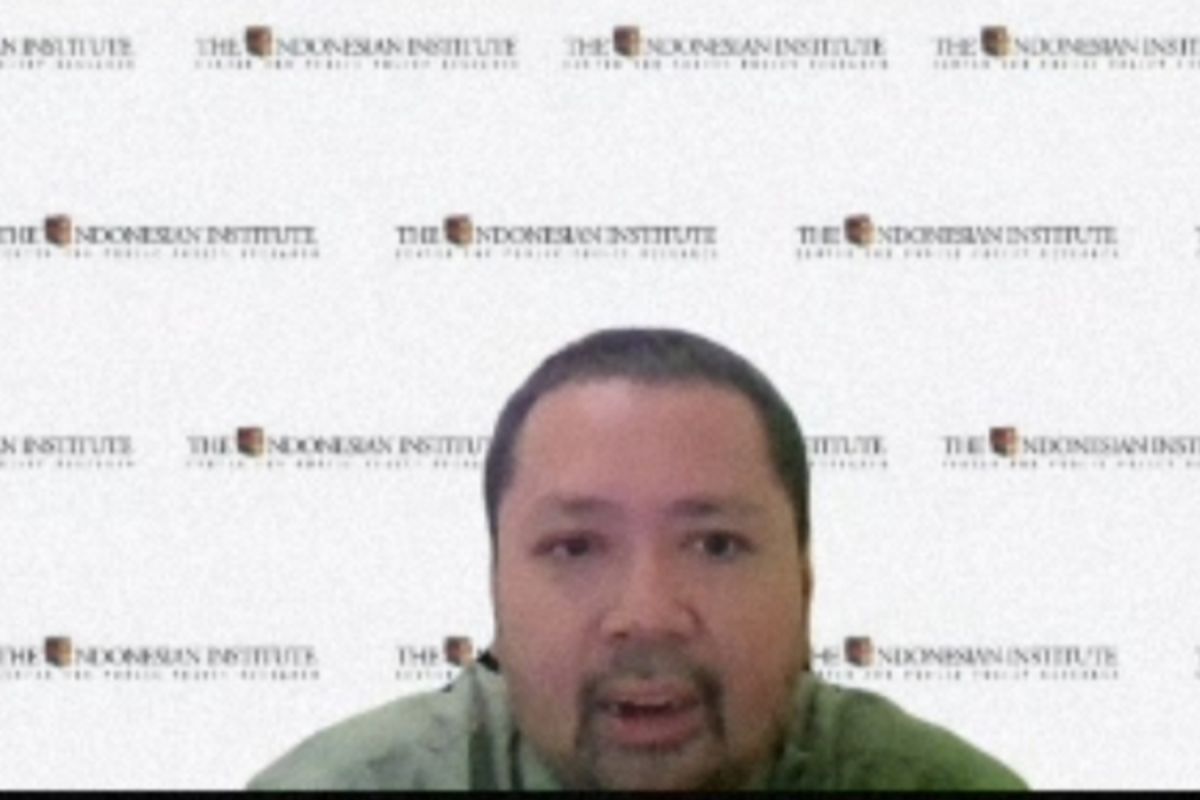
Jakarta (ANTARA) - Arfianto Purbolaksono, a public policy analyst at The Indonesian Institute (TII), has said that efforts to prevent corruption in the organisation of regional head elections (pilkada) should focus on strengthening governance, oversight and political system reform, rather than relying solely on changes to the electoral mechanism.
Speaking at an online discussion in Jakarta on Wednesday, titled “Assessing the Future of Local Democracy Following the Constitutional Court Ruling on the Pilkada System”, Arfianto acknowledged that high political costs are indeed one of the challenges in regional elections.
However, he noted that corrupt practices are also shaped by the integrity of state officials, the effectiveness of oversight and the quality of governance.
“Corruption will not necessarily decrease simply because regional heads are elected through regional legislatures (DPRD). This is because it is not only a matter of expensive political costs, but also other factors such as oversight, the integrity of the regional heads themselves, and even the central government,” Arfianto said.
According to him, past experience shows that money politics also occurred when regional heads were chosen through the DPRD, so changing the electoral mechanism would not necessarily eliminate the potential for irregularities.
Therefore, he said, reform of campaign financing, transparency in political processes and consistent oversight across all stages of the regional elections must be given attention.
Arfianto also urged political parties to improve their cadre development and recruitment processes for regional head candidates so as to prioritise capacity, integrity and democratic mechanisms.
“Internal reform within political parties is needed to encourage capable cadres through democratic and accountable processes to compete in regional head elections,” he said.
Echoing this view, Dimas Ramadhan, a researcher at Populi Center, argued that corruption and money politics can occur under both direct elections and elections via the DPRD, so the solution cannot be limited to changing the electoral mechanism.
“The electoral mechanism does not resolve problems of corruption or vote buying and so on. The clear fact is that money politics, corruption and the like occur under both systems. In direct elections as well as closed elections through the DPRD, there are transactions taking place,” Dimas said.
He added that improving the quality of regional elections must be accompanied by fixing political party governance through sustained cadre development, transparent candidate selection and accountable organisational management.
Meanwhile, M. Busyro Asmuni, a politics lecturer at UPN Veteran Jakarta, said that strengthening internal party democracy is an essential foundation for producing regional head candidates with integrity.
“I believe the first step is indeed to strengthen internal party democracy. How can candidate selection be based on integrity?” said Busyro.
To curb the high political costs that often drive corruption, Busyro also recommended regulatory reform concerning the transparency of political financing.
“I believe we also need to push for a law on political party financing. The state has the authority to correct and evaluate how money flows in and out, so that political parties cannot act freely,” he said.
In addition, Busyro emphasised the importance of political education for the public through collaboration between educational institutions, civil society organisations, research institutes and non-governmental organisations, so that public participation in democracy becomes more qualified and helps build a politically aware society.