
Analysts Reveal Impact of Latest MSCI Review on IHSG
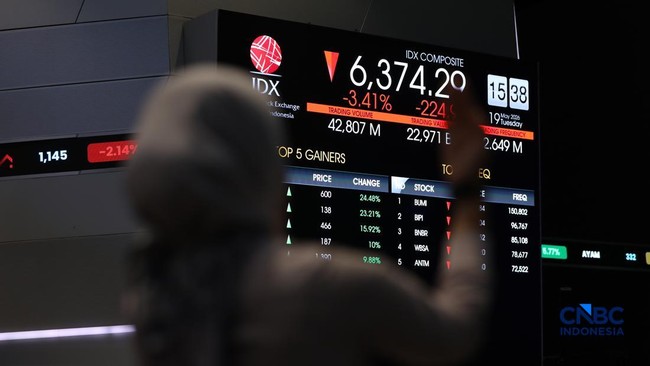
MSCI released its Global Market Accessibility Review 2026 on Friday (19/6/2026). Several analysts view the report as a warning regarding transparency and governance issues in the domestic capital market, although Indonesia’s status as an Emerging Market is still considered safe. In this year’s review cycle, MSCI noted more upgrades than downgrades among Emerging Market countries. However, Indonesia was one of two developing nations that experienced a downgrade due to concerns over opaque share ownership structures and indications of coordinated trading activity deemed to disrupt the price formation process. Head of Research at Kiwoom Sekuritas, Liza Camelia Suryanata, stated that the MSCI report brings both good and bad news for Indonesia. On one hand, the downgrade in the Information Flow assessment confirms several foreign investor concerns regarding share ownership transparency, free float quality, availability of company information in English, and alleged coordinated trading. According to Liza, MSCI’s spotlight is now not only on disclosure standards but also on the integrity of the price discovery process in the Indonesian stock market. This indicates growing global investor attention to market governance quality, transparency, and the credibility of share price formation. Despite the downgrade in the Information Flow assessment, Indonesia still received strong ratings on various other market accessibility indicators. Aspects such as openness to foreign ownership, capital flows, investor registration, market regulation, trading infrastructure, and the availability of investment instruments remain at good levels. ‘The risk of Indonesia being downgraded to Frontier Market status is still relatively low because MSCI classification is determined by three main pillars: economic development level, market size and liquidity, and market accessibility,’ Liza said on Friday (19/6/2026). She believes the more realistic impact of the MSCI report is an increase in the risk premium attached by global investors to Indonesia. MSCI’s findings could reinforce the narrative that while Indonesian stock valuations are attractive, they remain overshadowed by transparency issues and price formation quality. This narrative is seen as consistent with market conditions in recent months, marked by significant net selling by foreign investors, concerns over free float transparency, and questions regarding controlling shareholder structures at several issuers. Additionally, the price movements of some stocks are considered to be increasingly detached from company fundamentals. Separately, Samuel Sekuritas Research Analyst Prasetya Gunadi Ahnaf Yassar explained that MSCI downgraded Indonesia’s Information Flow criterion rating from ‘+’ to ‘-’. This downgrade reflects concerns over free float transparency, share price formation quality, and market investability levels. Nevertheless, Prasetya believes that several policies already implemented by regulators, such as mandatory disclosure of shareholders above 1%, the High Shareholding Concentration (HSC) framework, and the roadmap to increase the minimum free float to 15%, are sufficient to maintain Indonesia’s classification as an Emerging Market. ‘Market accessibility, together with economic growth, market size, and liquidity, are the key determinants of whether Indonesia is classified by MSCI as a Developed, Emerging, Frontier, or Standalone Market,’ Prasetya clarified in his written statement. Meanwhile, BRI Danareksa Sekuritas stated that the MSCI downgrade on the Information Flow aspect shows that share ownership transparency remains a primary concern for global investors. Indications of coordinated trading are also seen as potentially reducing the quality of price discovery and market efficiency. ‘Indonesia’s status remains Emerging Market, but governance and transparency issues continue to be a focus for global investors,’ they said.