
Analysts and Investment Managers Prepare for Selling Pressure on Indonesian Shares
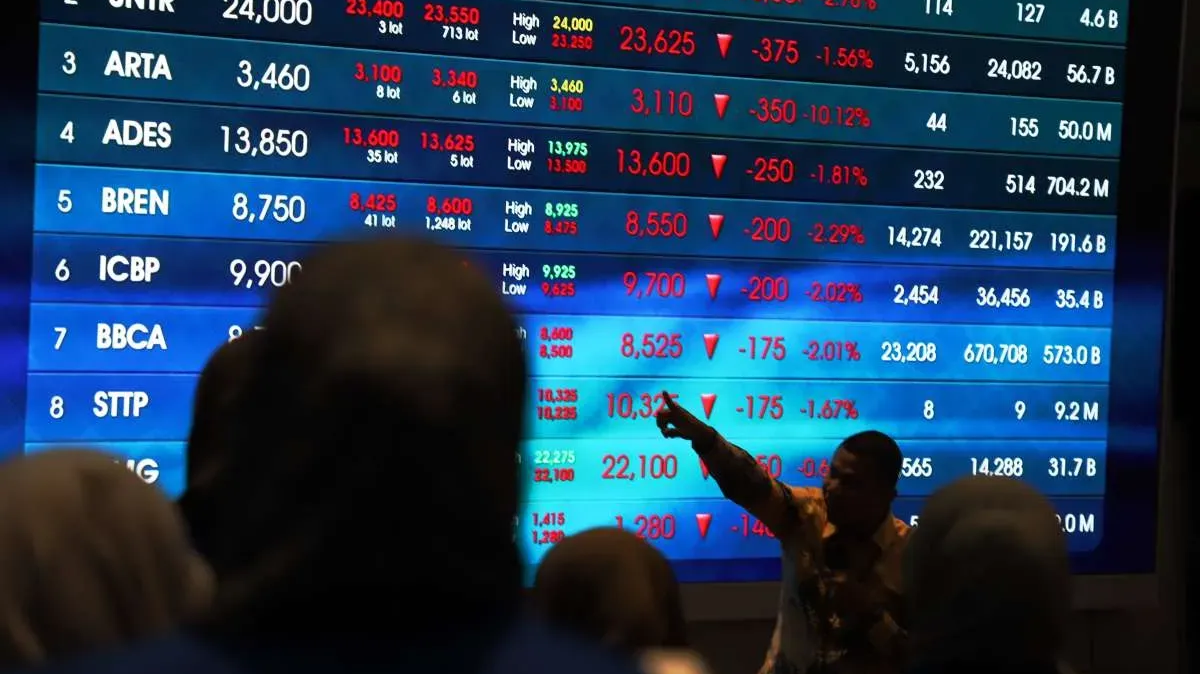
MSCI’s potential reclassification of the Indonesian stock market has heightened market participants’ concerns about the possibility of large-scale share sales by foreign investors. At a meeting of securities analysts and investment managers at the Indonesia Stock Exchange (IDX) on Sunday (18 October 2026), closer coordination between the government and businesses was among the main issues discussed, according to Investasi.
The forum, which began at around 1pm Western Indonesian Time, discussed developments in the capital market and measures needed to safeguard liquidity and financial system stability. Participants also prepared for the possibility that selling pressure from overseas investors could continue.
Research by Mandiri Sekuritas, received on Sunday (18 October 2026), said MSCI’s decision was inconsistent with input the organisation had previously given to the main regulator and leading investment management firms in Indonesia.
That input had been discussed at several meetings over the preceding months. Nevertheless, the latest developments indicate that efforts to improve transparency and governance have not allayed concerns about a possible change to Indonesia’s market classification.
The IDX reported that Indonesia scored relatively highly on MSCI’s market accessibility criteria compared with other Emerging Markets. Its score was also higher than Vietnam’s, despite Vietnam being classified as a Frontier Market.
The difference between the accessibility assessment and MSCI’s decision has prompted speculation that the policy may be based on considerations beyond technical factors. Domestic market participants are also weighing the possibility of geopolitical factors or other capital-market governance issues.
Mandiri Sekuritas said preparations for a change in market status remained necessary, including in the event that Indonesia is classified as a Standalone Market. It said contingency planning was important despite regulators’ efforts to improve transparency, governance and enforcement.
“Therefore, market participants have stressed the need to prepare for the possibility that MSCI reclassifies Indonesia as a Standalone Market, regardless of the regulators’ extensive efforts to improve transparency, governance and enforcement,” the research note said.
Potential increase in foreign capital outflows
Market participants expect selling pressure on Indonesian shares to persist for days, weeks or even months. The risk is linked to global institutional investors’ need to reduce their Indonesian shareholdings if the threat of reclassification grows.
Selling strategies are expected to vary by investor type. Global passive fund managers may only sell if a change in classification is formally implemented, while active fund investors could act earlier to manage risk or take advantage of arbitrage opportunities.
Pressure on the Indonesian stock market has already been evident since MSCI imposed a temporary freeze on index changes, amid the possibility of a reclassification to Frontier Market status. During that period, the Indonesian stock market recorded net foreign outflows of around Rp100 trillion.
Mandiri Sekuritas warned that the next wave of pressure could be greater if Indonesia moves to Standalone Market status. Some market participants believe that change could have more serious consequences than a downgrade to Frontier Market status.
“We estimate that foreign investors, both those linked to MSCI indices and those that are not, currently hold Indonesian shares included in various MSCI indices worth at least US$40 billion,” it said.
Enforcement and financial stability in focus
Alongside the risk of a change in classification, developments in capital-market law enforcement are also attracting attention. The Financial Services Authority (OJK) has reported that it is investigating an increasing number of suspected capital-market regulatory violations, and further enforcement announcements are expected.
Mandiri Sekuritas also highlighted potential capital outflows from the stock market as a threat to domestic macroeconomic and political stability. These flows could affect currency stability as well as liquidity in the financial system.
In response to the uncertainty, Mandiri Sekuritas’ research recommended a more cautious investment approach. Managing liquidity was identified as a priority in case market conditions deteriorate.
“We therefore recommend a more defensive stance towards Indonesian equities and prioritising the preservation of liquidity going forward,” it said.
IDX invites feedback from market participants
The IDX organised the meeting with analysts and investment managers to explain the latest situation in the capital market and hear participants’ views. The forum provided an opportunity to exchange information amid heightened attention to MSCI’s decision.
PT Kustodian Sentral Efek Indonesia (KSEI) President Director Samsul Hidayat said the discussion had yielded a number of views on market developments. He said the participants’ contributions could help provide a constructive understanding of the current situation.
“I heard there was quite a bit of feedback [from market participants] and discussion about current conditions. The input may well be constructive,” Samsul said at the IDX building on Sunday (18 October 2026).
What happens next will depend on MSCI’s decision, global investors’ response and regulators’ efforts to strengthen transparency and governance in Indonesia’s capital market. Potential foreign outflows and the need to maintain liquidity remain key concerns for market participants.
Source: jawawa.id (https://jawawa.id/newsitem/analysts-and-investment-managers-prepare-for-selling-pressure-on-indonesian-shares-1792367417)
Originally published by demokratis.co.id (https://demokratis.co.id/analis-antisipasi-tekanan-jual-saham), translated from Indonesian